


Exploring South Korea’s Network-Based, Multifaceted Diplomatic Strategy in an Era of U.S.-China Strategic Competition
— Stable Management of South Korea-China Relations Based on the U.S.-ROK Alliance —

Sang-man Lee
Visiting Professor
Institute of Far Eastern Studies, Kyungnam University
Institute of International Studies, Shandong University
Introduction: The Moolenaar Letter and Misconceptions About South Korean Diplomacy
In a recent letter to Secretary of State Marco Rubio, John Moolenaar, Chairman of the U.S. House of Representatives Select Committee on Strategic Competition between the United States and the Chinese Communist Party (China Select Committee), expressed concerns about South Korea’s expanding relations with China and the future of the ROK-U.S. alliance. The letter addressed a broad range of issues, including increased exchanges between the South Korean and Chinese leaders, South Korean companies’ semiconductor production in China, South Korea’s regulations affecting U.S. companies, South Korea’s potential response in the event of a crisis in the Taiwan Strait, intelligence sharing between South Korea and the United States, and the transfer of wartime operational control. Taken together, these concerns reflect questions about whether South Korea’s strategic direction may be shifting.
Chairman Moolenaar’s concerns are noteworthy in that they underscore the importance of the ROK-U.S. alliance. However, the various examples cited in the letter and the logic connecting them reflect factual misunderstandings or overinterpretations of South Korea’s diplomatic, security, and economic policies.
Above all, interpreting expanded exchanges between South Korean and Chinese leaders as evidence of an immediate “closer alignment with China” or a broader strategic shift does not adequately reflect the realities facing South Korean diplomacy. South Korea must maintain the ROK-U.S. alliance as the central pillar of its security in responding to North Korea’s nuclear and missile threats while simultaneously managing stable relations with China, a geographically adjacent country with which South Korea maintains deep economic ties.
South Korea’s diplomacy toward China is not intended to replace the ROK-U.S. alliance. Rather, as U.S.-China strategic competition intensifies, it is increasingly characterized by pragmatic relationship management aimed at preventing unnecessary miscalculation and conflict on the Korean Peninsula and in the broader region, while protecting South Korea’s national interests through continued communication with China.
Therefore, South Korea’s response to the Moolenaar letter should not be framed as a choice between China and the United States. It is important to explain accurately that South Korea’s actual foreign policy reflects a complex structure in which the ROK-U.S. alliance remains the central pillar of its security, while relations with China are managed in a stable and pragmatic manner.
Expanding South Korea-China Summit Exchanges Does Not Weaken the ROK-U.S. Alliance
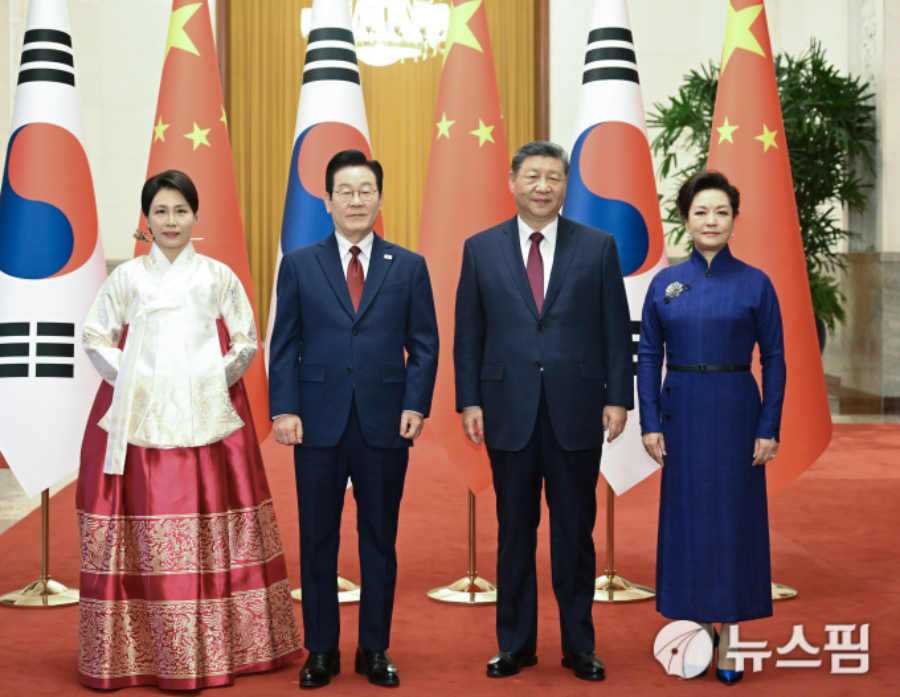
It is true that South Korea-China summit diplomacy has recently been rapidly restored. President Lee Jae-myung paid a state visit to China in January 2026 and held a summit with Chinese President Xi Jinping; the two countries signed 15 cooperation agreements across a range of areas, including science and technology, digital affairs, the environment, transportation, small and medium-sized enterprises, industrial complexes, and food safety. At the time, President Lee expressed his determination to make 2026 the first year of a full restoration of South Korea-China relations.
Chairman Moolenaar viewed this expansion of summit-level exchanges as evidence of strategic rapprochement between China and South Korea. In particular, he interpreted President Xi Jinping’s emphasis on their shared history of resistance to Japanese imperialism as an attempt by China to drive a wedge between the United States, South Korea, and Japan.
However, viewing summit-level exchanges in themselves as evidence of strategic alignment constitutes an overinterpretation. Since the establishment of diplomatic relations, South Korea and China have shared overlapping interests across a broad range of areas, including economic and trade relations, people-to-people exchanges, the North Korean nuclear issue, peace on the Korean Peninsula, and disputes in the Yellow Sea and other maritime areas. Particularly as North Korea’s nuclear and missile capabilities continue to advance and U.S.-China strategic competition persists, maintaining high-level communication with China does not constrain South Korea’s diplomatic and security options; rather, it can expand the space available for crisis management.
If summits between South Korean and Chinese leaders were to weaken the ROK-U.S. alliance, South Korea would effectively find itself in a situation in which its relationship with the United States deteriorated every time it held a summit with China. Such an interpretation is overly binary and does not reflect the realities of international relations. South Korea is an ally of the United States and maintains a strategic cooperative partnership with China. Although an alliance and a strategic cooperative partnership differ in nature, they are not inherently mutually exclusive.
In fact, from South Korea’s perspective, stable management of relations with China can also help reduce the burden on the ROK-U.S. alliance. As the risk of direct confrontation between the United States and China increases, South Korea’s ability to maintain communication channels with China can play an important role in managing inadvertent escalation and potential crises on the Korean Peninsula and in Northeast Asia.
South Korea’s Economic Relations with China Reflect the Reality of Global Supply Chains, Not “Integration into China”
The Moolenaar letter cited Samsung Electronics’ Xi’an plant and SK hynix’s Wuxi and Dalian production facilities, expressing concern that China could leverage the production networks of South Korean companies to influence supply chains serving the United States and its allies. However, interpreting South Korean companies’ production facilities in China solely as evidence of strategic dependence on China fails to adequately account for the historical development of South Korea’s global production structure.
The decisions by Samsung Electronics and SK hynix to establish production facilities in China were part of global business strategies developed well before the intensification of U.S.-China strategic competition. China has long been one of the world’s largest manufacturing and consumer markets, and South Korean companies have used China as a major production and sales hub to serve global markets.
Of course, South Korea recognizes that production facilities in China could have implications for economic security, particularly in advanced semiconductors and other critical technologies. However, it would be a significant analytical leap to conclude from this that South Korea is being drawn into China’s supply-chain strategy. South Korean companies are already expanding large-scale investments in major markets, including the United States. Increased investment in the United States and the development of production capacity there are important pillars of ROK-U.S. economic and security cooperation. Accordingly, the continued operation of existing production facilities in China and the expansion of investment in the United States are not mutually exclusive policies.
The reality for South Korea is not a choice between “China or the United States,” but rather that it is simultaneously connected to multiple markets and supply chains, including those of the United States, China, Europe, ASEAN, and India. Given this complex economic structure, assessing South Korean companies’ production facilities in China solely as a risk to the ROK-U.S. alliance could result in viewing the global competitive environment facing South Korean companies through an excessively security-centric lens.
Claims of Discrimination Against U.S. Companies and Actual Regulatory Cases
Another key issue raised by Chairman Moolenaar is the claim that South Korea’s platform regulations are more stringent for the U.S. company Coupang but relatively lenient for Chinese companies such as AliExpress and Tmall. However, a review of actual regulatory cases in South Korea indicates that this characterization does not fully reflect the facts.
In 2024, the Personal Information Protection Commission imposed a fine of 1.978 billion won and an administrative penalty of 7.8 million won on AliExpress for violations of the law, including violations involving the cross-border transfer of personal information, and issued a corrective order and recommendations for improvement. It also imposed a fine of 1.369 billion won and an administrative penalty of 17.6 million won on Temu in 2025 for violations of the Personal Information Protection Act.
Conversely, South Korean regulatory authorities have also imposed substantial sanctions on Coupang. In 2026, the Personal Information Protection Commission imposed a fine of 624.681 billion won and an administrative penalty of 16.8 million won on Coupang for violations including failures to implement required security measures and the collection of personal information without a legal basis, and issued corrective orders. At the time, this represented the largest-ever fine imposed in connection with personal information protection.
Therefore, when the regulatory actions involving AliExpress, Tmall, and Coupang are considered together, it is difficult to conclude that the South Korean government systematically applies lenient standards to Chinese companies while imposing stricter standards on U.S. companies. The key principle that the South Korean government should make clear is straightforward: any company operating in South Korea, regardless of nationality, is subject to South Korean law and must comply with the same legal standards governing personal information protection, consumer protection, fair trade, and product safety.
South Korean regulatory authorities have also maintained the principle that they investigate and impose penalties for personal data breaches without distinguishing between public- and private-sector entities. Of course, foreign companies, including U.S. firms, may raise concerns regarding the procedures and enforcement of specific regulations. South Korea should also be prepared to listen carefully to procedural concerns raised by foreign companies. However, the existence of sanctions against particular companies and the characterization of those sanctions as discriminatory policies targeting a specific country are two distinct issues.
In particular, given that sanctions have been imposed on both Coupang and Chinese-owned platforms, characterizing South Korea’s entire platform regulatory framework as “discrimination against U.S. companies” does not adequately reflect the nature of South Korea’s domestic regulatory system.
South Korea-China Supply Chain Consultations Are Not Intended to Exclude the United States
Chairman Moolenaar also raised concerns that export-control and supply-chain consultations between South Korea and China could provide China with insight into the policies of U.S. allies. However, the fact that South Korea consults with China on supply-chain issues cannot reasonably be viewed as incompatible with economic-security cooperation between South Korea and the United States. South Korea conducts substantial trade with China, and China remains an important supply-chain partner. Given existing economic linkages with China in critical minerals, materials and components, logistics, and trade, refraining from consultations with China altogether could actually create greater uncertainty for the South Korean economy.
South Korea’s discussions with China on supply-chain stability are not intended to align with China’s strategic objectives, but rather to manage potential supply-chain disruptions that could affect South Korean companies and the national economy. At the same time, South Korea is strengthening cooperation with the United States in economic security, advanced technologies, and supply chains. Accordingly, South Korea-China supply-chain consultations and ROK-U.S. economic-security cooperation are not mutually exclusive.
In fact, South Korea’s diplomacy operates within a structure in which multiple networks function simultaneously. The ROK-U.S. alliance serves as the central pillar of security; economic relations with China constitute a sphere of practical interdependence; and cooperation with Japan, Europe, ASEAN, India, and Central Asia provides a foundation for diversifying supply chains and markets.
South Korea’s Position on the Taiwan Strait Is Not One of “Excluding a Joint Response”
Chairman Moolenaar assessed, based on President Lee Jae-myung’s remarks regarding the Taiwan Strait, that South Korea had effectively ruled out the possibility of supporting a regional joint response in the event of a Chinese attack on Taiwan. However, South Korea’s position on the Taiwan Strait does not amount to unconditionally accepting China’s demands or denying the United States’ role in the region.
South Korea fundamentally maintains that peace and stability in the Taiwan Strait are important and emphasizes the principle that cross-strait differences should be resolved through peaceful means. The fact that South Korea emphasizes peace and stability in the Taiwan Strait does not automatically require it to commit in advance to participation in specific military contingencies. Conversely, it would also be inappropriate to conclude that South Korea rejects the regional role of the ROK-U.S. alliance simply because it has not publicly committed to a military response to a particular scenario.
The primary focus of South Korea’s security policy remains maintaining peace on the Korean Peninsula and addressing North Korea’s nuclear and missile threats. It is also clear that a military conflict in the Taiwan Strait could have significant implications for South Korea’s security and economy. Therefore, South Korea’s cautious approach to the Taiwan Strait should be understood not as a concession to China, but as a pragmatic approach that takes into account both the security environment on the Korean Peninsula and the broader regional strategic context.
In particular, should tensions in the Taiwan Strait escalate, South Korea’s maritime trade routes, semiconductor supply chains, energy supplies, and financial markets could all be affected, as could the possibility of military action by North Korea. South Korea’s emphasis on peace and stability in the Taiwan Strait stems precisely from its assessment of these interconnected risks.
The Transfer of Wartime Operational Control Is Not a Weakening of the ROK-U.S. Alliance, but a Process of Its Evolution
The transfer of wartime operational control was also addressed in the Moolenaar letter in the context of trust and security cooperation between South Korea and the United States.
However, South Korea’s pursuit of the transfer of wartime operational control is not intended to distance the country from the ROK-U.S. alliance. As the South Korean Ministry of National Defense has explicitly stated, the transfer of wartime operational control is a process of strengthening the South Korean military’s capacity to lead combined defense operations on the foundation of a strong ROK-U.S. alliance. The South Korean government’s current policy agenda also calls for pursuing a conditions-based OPCON transfer while securing “comprehensive deterrence capabilities based on the ROK-U.S. alliance.” During their May 2026 meeting, the defense ministers of the two countries discussed key alliance issues, including the OPCON transfer and alliance modernization, and agreed to strengthen future cooperation.
Therefore, viewing the OPCON transfer as a process through which South Korea is drifting away from the United States in security terms fails to accurately characterize the evolution of the alliance, which is being pursued through mutual agreement between the two countries. The ROK-U.S. combined defense posture will continue, and military cooperation between the two countries will remain in place following the OPCON transfer. The Ministry of National Defense has also separately clarified that the current ROK-U.S. Combined Forces Command structure will remain in place following the transfer.
Ultimately, the OPCON transfer being pursued by South Korea should not be viewed as a choice between the “ROK-U.S. alliance” and “independent national defense,” but rather as a process of expanding South Korea’s military responsibilities and capabilities within the alliance.
Regarding Intelligence Sharing, It Is Necessary to Distinguish Between Specific Incidents and the Alliance as a Whole
Chairman Moolenaar raised the issue of trust between South Korea and the United States, citing controversy surrounding the disclosure of U.S. classified information involving Unification Minister Jeong Dong-young and the possibility that U.S. intelligence authorities could restrict information sharing as a result. There can be no disagreement that protecting classified information and maintaining confidentiality within the alliance are critical. Because the ROK-U.S. alliance relies on a high degree of intelligence sharing and an integrated combined defense posture, information-security issues must be managed with the utmost rigor.
However, remarks by a particular individual or media reports concerning isolated incidents should not be equated with the overall intelligence-sharing framework of the ROK-U.S. alliance. Given that the scope, substance, and circumstances surrounding any actual restrictions on intelligence sharing have not been sufficiently established publicly, caution is warranted before concluding that South Korea is withdrawing from its intelligence partnership with the United States based on such speculation.
The foundation of ROK-U.S. intelligence sharing is the sustained maintenance of institutional trust and robust security procedures, rather than political debates surrounding individual incidents. South Korea fully recognizes the security value of intelligence shared by the United States and does not dispute the importance of ROK-U.S. cooperation in intelligence, surveillance, and reconnaissance to the security of the Korean Peninsula.
Major security issues, including the nuclear-powered submarine program and the transfer of operational control, are also being pursued through consultations between South Korea and the United States. Rather than interpreting these efforts as an attempt by South Korea to diminish the United States’ security role, it is more accurate to understand them as part of a broader process of strengthening South Korea’s own defense capabilities while enhancing the roles and functions of the ROK-U.S. alliance.
South Korea’s Foreign Policy Is Neither “Pro-China” Nor “Anti-U.S.”
Taking into account the various examples raised in the Moolenaar letter, the central U.S. concern appears to be the possibility that South Korea could gradually diverge from the strategic direction of the ROK-U.S. alliance as it strengthens its relationship with China. However, when South Korea’s actual policies are examined individually, it is difficult to identify a consistent strategic shift that would substantiate such an assessment.
South Korea-China summit diplomacy is aimed at restoring bilateral relations and managing outstanding issues. The production facilities of South Korean companies in China are part of global supply chains that have developed over an extended period. Regulations affecting Chinese platforms are being enforced on the basis of violations of domestic law, while similarly stringent regulatory standards are also applied to U.S. companies. South Korea’s position on the Taiwan Strait emphasizes the principles of peace and stability. The transfer of wartime operational control is likewise being pursued on the basis of the ROK-U.S. alliance.
Above all, South Korea and the United States continue to maintain a combined defense posture to address North Korea’s nuclear and missile threats. In May 2026, the defense ministers of South Korea and the United States reaffirmed their commitment to modernizing the alliance and strengthening the combined defense posture, while agreeing to continue cooperation on key alliance issues, including the transfer of operational control.
Given these realities, interpreting South Korea’s improved relations with China as evidence of a weakening ROK-U.S. alliance is overly simplistic. South Korea’s foreign policy does not operate on a “choose one over the other” basis between the United States and China. For South Korea, the United States is the core partner in its security alliance, while China is a geographically adjacent country with which South Korea maintains important economic, trade, and Korean Peninsula-related ties. Managing these relationships according to their respective characteristics is a central feature of South Korean diplomacy.
Conclusion
Chairman Moolenaar’s letter once again demonstrates the importance of the ROK-U.S. alliance to both the United States and South Korea. The growing attention in the U.S. Congress to South Korea’s foreign policy and its relations with China is also an issue that South Korea cannot afford to dismiss. However, accurately assessing South Korea’s policies requires examining the objectives and contexts in which individual policies are pursued, rather than linking separate cases to a single overarching narrative.
South Korea’s expansion of summit-level exchanges with China is not intended to weaken the ROK-U.S. alliance. Amid intensifying U.S.-China strategic competition, it is better understood as diplomatic relationship management aimed at maintaining regional stability and managing issues on the Korean Peninsula through continued communication with China. South Korean companies’ production facilities in China likewise do not represent a mechanism for expanding China’s strategic influence, but rather form part of global production networks that have developed over many years. At the same time, South Korea is diversifying its supply chains by expanding investment in major markets, including the United States.
Regulatory actions involving U.S. companies should also be examined alongside those involving Chinese companies. South Korea’s Personal Information Protection Commission has imposed sanctions on AliExpress and Temu, while also imposing substantial penalties on Coupang. These cases demonstrate why it is difficult to characterize South Korea’s regulatory policies simply as “discrimination against U.S. companies.”
Regarding the Taiwan Strait, South Korea places considerable importance on peace and stability in the Strait and on the peaceful resolution of cross-strait issues. This does not mean unconditionally accepting China’s position, nor does it imply a predetermined commitment to any specific military response. The transfer of wartime operational control is not a weakening of the ROK-U.S. alliance, but rather a process of strengthening the ROK military’s capacity to lead combined defense operations on the foundation of that alliance. ROK and U.S. defense authorities are discussing both alliance modernization and the transfer of operational control on the premise of maintaining and strengthening the ROK-U.S. combined defense posture.
Therefore, characterizing South Korea’s current diplomacy simply as “South Korea tilting toward China” fails to capture the complexity of the diplomatic, security, and economic policies South Korea is actually pursuing. South Korea’s position is clear. The ROK-U.S. alliance remains the core foundation of South Korea’s diplomatic and security policy, while relations with China constitute an important bilateral relationship that must be managed in a stable manner, taking into account security and stability on the Korean Peninsula and in the broader region, as well as economic interdependence.
These two relationships are not inherently in conflict. On the contrary, as U.S.-China strategic competition intensifies, South Korea must continue to strengthen the ROK-U.S. alliance while maintaining communication and managing its relationship with China. Rather than evaluating South Korean diplomacy through a binary framework of “pro-U.S. or pro-China,” it should be understood as a network-based, multifaceted diplomatic strategy that stabilizes relations with China while simultaneously developing economic, technological, and supply-chain networks with a broad range of partners, all anchored by the ROK-U.S. alliance as the central pillar of security.
South Korea cannot alter the reality that it is both a U.S. ally and a country that shares a border with China. Precisely because of this reality, managing relations with China without weakening the ROK-U.S. alliance is a critical task for South Korean diplomacy. Ultimately, the expansion of South Korea’s relations with China should not be viewed as evidence of a weakening ROK-U.S. alliance, but rather understood as an expression of South Korean diplomatic realism—an approach aimed at managing regional uncertainty on the foundation of a strong and enduring ROK-U.S. alliance.
-
PREV [Issue Analysis] ROK–U.S. Economic Cooperation
-
NEXT 다음 글이 없습니다.