

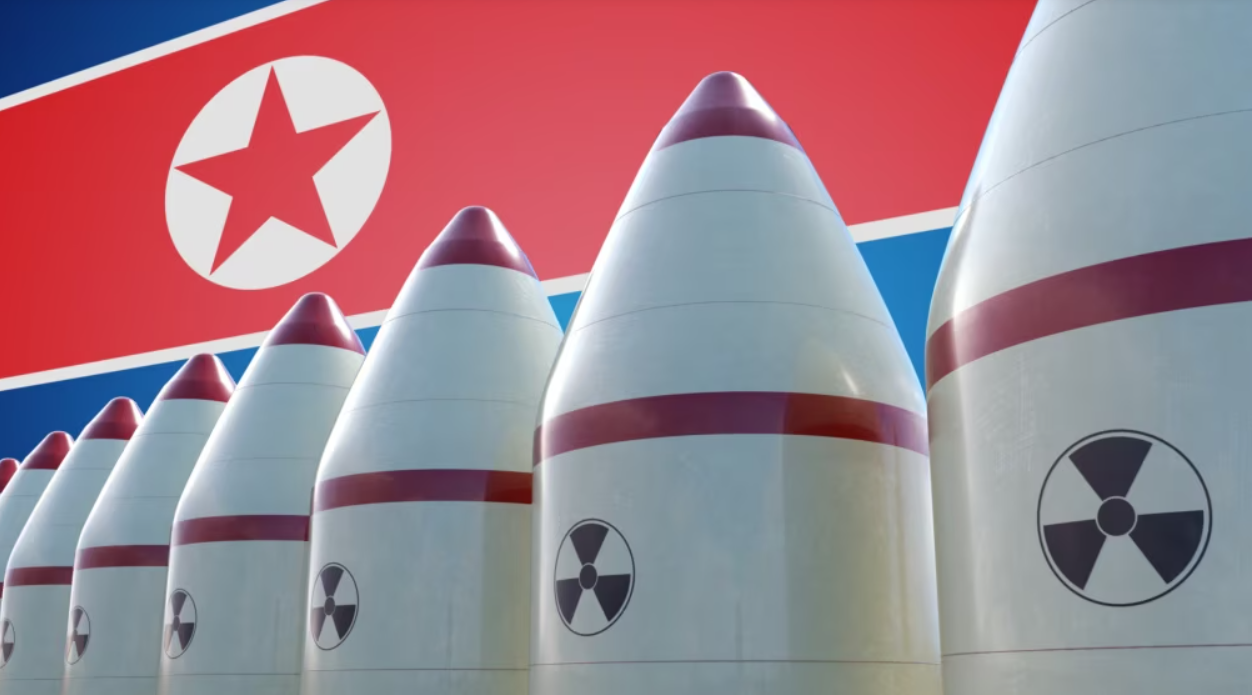
The Korean Peninsula at a Crossroads for Peace: Halting North Korea’s Nuclear Program as a Path to Peace

Seong-won Kim
Chairman of the board of the Tongil Korea Coop
The Korean Peninsula once again stands at a crossroads for peace. Whether it takes a new path toward peace or moves toward prolonged confrontation will depend in large part on whether a U.S.–North Korea summit takes place and, if so, what it yields. Some argue that a summit should not be held without meaningful progress toward North Korea’s denuclearization, while others welcome such a meeting, maintaining that direct engagement between the leaders could itself send an important signal in support of peace on the Korean Peninsula.
Until 2019, when the last U.S.–North Korea summit took place, the central agenda focused on the denuclearization of North Korea and, more broadly, the Korean Peninsula. Key issues included the lifting of sanctions against North Korea and the normalization of U.S.–North Korea relations, both of which were premised on progress toward denuclearization. However, the strategic landscape has changed considerably over the past seven years, during which there have been no summits between the United States and North Korea and no meaningful high-level engagement between the two Koreas. North Korea has strengthened its ties with China and Russia, while its relations with South Korea and the United States have deteriorated. Despite international sanctions, North Korea has continued to advance its nuclear capabilities while pursuing economic development. It has also institutionalized a “hostile two-state” doctrine—the notion that maintaining ties with South Korea is no longer necessary and may, in fact, be dangerous—and has increasingly embraced the view that it can pursue development without relying on the United States.
Furthermore, North Korea is closely observing—through the historical example of Libya and the current situation in Iran—how states without nuclear weapons can become vulnerable and face severe pressure during negotiations. Under these circumstances, denuclearization can no longer realistically serve as the immediate basis for U.S.–North Korea talks. North Korea is unlikely to accept dialogue that is explicitly premised on, or intended to achieve, denuclearization. Does this mean that North Korea will never again engage with South Korea or the United States? Not necessarily. From Kim Jong-un’s perspective, as he seeks to consolidate North Korea as a more normalized state, the most advantageous course may be to secure support from the United States while maintaining China and Russia as strategic backstops and preserving stable relations with South Korea. If so, what approach is required?
Understanding “Nuclear Moratorium” and “Peace Regime
In his speech commemorating the 81st anniversary of Liberation Day on August 15, President Lee Jae-myung outlined his approach to North Korea policy, stating, “I intend to present a blueprint for moving beyond principles to action,” and adding, “We will embark on a journey to end the war and transform the unstable armistice regime on the Korean Peninsula into a peace regime.” President Lee went on to say, “Let us set aside our mutual threats and begin discussions among the parties involved to end this long-standing war,” adding, “Through this, we can also discuss effective measures to halt the advancement of North Korea’s nuclear capabilities.”
The discussions among the parties aimed at transforming the armistice regime into a peace regime refer to four-party talks involving South Korea, North Korea, the United States, and China—the principal parties to the Korean War Armistice Agreement. If a peace treaty were eventually concluded, the framework could naturally be expanded into six-party talks involving Japan and Russia to address broader security and peace issues in Northeast Asia. This approach would entail moving from bilateral U.S.–North Korea talks to four-party talks and ultimately to six-party talks.
What is particularly noteworthy is that President Lee referred to halting the advancement of North Korea’s nuclear capabilities rather than using the term “denuclearization.” This formulation could provide a more practical basis for engaging North Korea, which has consistently rejected talks premised on denuclearization. Equally important, President Lee framed the North Korean nuclear issue as part of the broader peace-regime agenda on the Korean Peninsula, a point that should not be overlooked.
This reflects the view that North Korea’s nuclear development is, to a significant extent, a product of a longstanding security environment characterized by mutual distrust, hostility, and confrontation. In other words, if the Korean Peninsula were to move toward a durable reduction in confrontation, the strategic rationale that Pyongyang invokes to justify developing and maintaining nuclear weapons could gradually weaken. Ultimately, this is what genuine peace on the Korean Peninsula and in Northeast Asia should mean.
Of course, realizing such an outcome would require the current phase of confrontation to give way to sustained dialogue and reconciliation—not only on the Korean Peninsula and in Northeast Asia, but also within the broader international system. International organizations such as the United Nations must also be able to play a meaningful role as impartial mediators and facilitators of dialogue.
A few hours after Lee’s commemorative address, President Trump posted a photograph from his 2019 meeting with Kim Jong-un at Panmunjom on social media, writing, “Kim Jong-un and I get along well.” The following day, on August 16, Trump stated on social media that he had instructed Defense Secretary Pete Hegseth to significantly scale back the upcoming U.S.–South Korea joint military exercises. Trump stated, “Given the very good relationship between Kim Jong-un and me, I am not pleased that the U.S. agreed long ago to participate in joint military exercises with South Korea,” adding that he had ordered a significant reduction because it was too late to cancel them. In fact, the Ulchi Freedom Shield (UFS) exercise, which had been scheduled to take place from August 17 to 27, was terminated early on August 21—just five days after it began.
Trump went further on August 19, when he told reporters at the White House that “North Korea possesses 57 nuclear weapons,” drawing significant attention. Although Trump had previously referred to North Korea as a “nuclear power” and stated that “Kim Jong-un has many nuclear weapons,” this was the first time he had publicly cited a specific number. As a result, both concern and expectations emerged that U.S. policy toward North Korea could be undergoing a fundamental shift.
Trump’s repeated expressions of goodwill toward Kim and the scaling back of U.S.–South Korea joint military exercises closely align with North Korea’s longstanding demands that the United States end what Pyongyang describes as its hostile policy toward North Korea and halt joint military exercises. By publicly citing a specific estimate of North Korea’s nuclear arsenal, Trump may also have created the perception in Pyongyang that Washington could be moving toward acknowledging North Korea as a nuclear-armed state. For Kim, the prospect of another summit with Trump may therefore increasingly appear to be an opportunity in which the potential gains outweigh the risks.
Scenarios for a U.S.-North Korea Summit
Given the current circumstances, the following scenarios for a U.S.–North Korea summit can be anticipated.
The first scenario is that North Korea remains silent, sets various conditions, and ultimately declines to participate in the summit. The U.S.–North Korea summit held in Hanoi on February 28, 2019, ended without an agreement after the United States walked away from the negotiations, leaving Kim Jong-un, who had invested considerable political capital in the meeting, with deepened mistrust toward Washington and a significant setback to his leadership. Kim subsequently resolved to pursue a “new path” centered on greater self-reliance, reduced dependence on the United States, and closer relations with China and Russia. Now that North Korea has further advanced its nuclear weapons program and achieved a certain degree of economic development, Pyongyang may conclude that it no longer needs to rely on an “untrustworthy” United States. The leaders of North Korea and the United States could continue to cultivate a cordial atmosphere, suggesting that a meeting might take place at any time, only for the summit ultimately not to materialize. In such a case, not only would the nuclear issue remain off the negotiating table, but opportunities for broader discussions on peace and stability on the Korean Peninsula could also be lost.
The second scenario involves holding a summit in October—before the U.S. midterm elections—taking into account Trump’s political considerations. To make such a meeting possible, Trump would likely have to offer Kim a substantial package of concessions.
This could involve the easing or lifting of sanctions against North Korea and the establishment of a liaison office, conditioned not on the dismantlement of North Korea’s nuclear program but on a verifiable freeze of its nuclear activities. For Trump, such an arrangement could provide a diplomatic achievement ahead of the midterm elections, while Kim could effectively gain greater international recognition of North Korea’s nuclear status and secure the implementation of previously negotiated commitments, potentially creating a mutually beneficial outcome. Furthermore, if Trump were to visit Pyongyang or Wonsan-Kalma, North Korea would once again attract substantial international attention, while Trump could gain significant diplomatic and political capital from a highly visible diplomatic initiative.
The third scenario, as reported by various media outlets, is that the two leaders meet again around the time of the APEC summit in November, either in Shenzhen, China—the host city—or at Panmunjom in South Korea. In this case, the U.S.–North Korea summit would be highly likely to remain a one-time event. This is because the U.S. midterm elections would have concluded, leaving Washington with less immediate political incentive to prepare a substantial package of concessions. The same would apply if the leaders were to meet after November, following prolonged negotiations over the terms of engagement. Such a meeting could amount to little more than a symbolic encounter. While Kim would have relatively little to lose by attending, from Trump’s perspective, the strategic and political rationale for another meeting could be considerably weaker. The nuclear issue might either not be addressed at all or be confined to broad and largely theoretical discussions.
Of course, these three scenarios are merely analytical projections. There remains a possibility that Trump and Kim—both leaders known for their willingness to take unconventional risks—could make a surprise move that defies conventional expectations. This was demonstrated by their June 30, 2019, meeting at the Joint Security Area at Panmunjom, during which Trump made a historic crossing into North Korean territory at Kim’s invitation. The two leaders may once again seek to create a dramatic moment capable of capturing global attention. While all possibilities must remain open, I believe the time has come to make a concerted effort to make another meeting between the two leaders possible.
From a Nuclear Freeze to Normalization, a Peace Regime, and Ultimately Denuclearization
The key question is where the two leaders will begin their dialogue when they meet. While there are reports that preparations for informal working-level discussions have already begun, reaching agreement on the agenda will by no means be easy. This is because the “denuclearization of the Korean Peninsula” has been a consistent element of previous U.S.–North Korea summit agreements. Of course, at the core of the denuclearization of the Korean Peninsula lies the denuclearization of North Korea.
Typically, summit meetings culminate in a joint statement or communiqué that builds upon, reaffirms, and further develops previous agreements. The preamble to the June 12, 2018, U.S.–North Korea Singapore Summit Joint Statement states: “Chairman Kim Jong-un reaffirmed his firm and unwavering commitment to complete denuclearization of the Korean Peninsula.” Furthermore, Article 1 of the joint statement commits the two sides to establishing new U.S.–DPRK relations, while Article 2 calls for joint efforts to build a lasting and stable peace regime on the Korean Peninsula.
In the Agreed Framework between North Korea and the United States—the first major agreement between the two countries, signed in Geneva on October 21, 1994—the goal of achieving peace and security on a “nuclear-free Korean peninsula” also featured prominently. To this end, the agreement provided for the replacement of North Korea’s graphite-moderated reactors and related facilities with light-water reactor power plants, supported by international cooperation to facilitate the process.
The Six-Party Talks, which began on August 27, 2003, and were held in six rounds through September 2007, also centered on the North Korean nuclear issue. The February 13, 2007, agreement provided for energy, economic, and humanitarian assistance in exchange for North Korea’s implementation of measures to shut down and disable its nuclear facilities and the return of IAEA personnel to conduct monitoring and verification. North Korea subsequently took visible steps, including the demolition of the cooling tower at Yongbyon in June 2008. However, the Six-Party Talks did not resume after 2008, as the parties failed to reach agreement on key verification measures, including the scope of inspections and procedures for obtaining samples.
The more complex an issue is, the simpler it becomes once its underlying logic is understood. The fundamental question is this: Why does North Korea continue to devote substantial resources to developing its nuclear capabilities? North Korea has consistently justified its nuclear program by pointing to what it describes as the United States’ longstanding hostile policy toward Pyongyang. In other words, if the United States were to fundamentally move away from a hostile policy toward North Korea, the strategic rationale that Pyongyang invokes to justify its nuclear development could begin to erode.
The October 1994 Agreed Framework between the United States and North Korea included the goal of “full normalization of political and economic relations,” while the June 2018 U.S.–North Korea Singapore Summit Joint Statement identified “establishing new U.S.–DPRK relations” (normalization of relations) and “building a lasting and stable peace regime on the Korean Peninsula” as key objectives. The normalization of relations and the establishment of a peace regime on the Korean Peninsula have repeatedly featured in negotiations over the nuclear issue. This demonstrates how closely intertwined the nuclear issue and the question of a peace regime are. At the heart of the complex nuclear issue lies the hostile relationship between the two countries. Transforming that relationship—through normalization and the establishment of a peace regime—is therefore central to creating the conditions necessary for resolving the nuclear issue.
Normalizing relations is more complex and time-consuming than one might assume. It is likely to involve a cycle of agreements, implementation, setbacks, and renewed negotiations. Moreover, North Korea and the United States fought a war roughly seven decades ago and have remained locked in confrontation ever since. Consequently, the process of normalization is bound to be long and arduous. The starting point for this process can only be a temporary freeze of North Korea’s nuclear program. Over the course of this extended process, the lifting of sanctions against North Korea, the establishment of diplomatic relations, and the creation of a peace regime would need to proceed in parallel, while the ultimate endpoint would be the creation of a security environment in which nuclear weapons are no longer considered necessary—that is, denuclearization.
Now is the time for Trump and Kim Jong-un. From our perspective—as those who seek peace rather than continued confrontation on the Korean Peninsula—we sincerely hope that the two leaders will meet and that their meeting will take place under the full attention of the international community. We hope that the geopolitical fault lines of Northeast Asia, hardened by decades of confrontation, will begin to shift decisively toward peace. If that happens, the Korean Peninsula could become an epicenter of peace with global implications. May such a historic moment finally come to pass.