

The Evolution of Freedom Shield and the Future of the ROK–U.S. Alliance: Lessons from the Past Two Years and Future Challenges

Euilim Jin
Associate Research Fellow
Korea Institute for Defense Analyses (KIDA)
1. Introduction
On July 1, the U.S. Forces Korea (USFK) and the Republic of Korea (ROK) Joint Chiefs of Staff announced that preparations for the Ulchi Freedom Shield (UFS) exercise, scheduled for August, were proceeding as planned.⑴
Although the announcement was brief and issued in response to reports that a high-level meeting between ROK and U.S. military officials had been postponed, its message was clear: preparations for the annual combined exercise remain on schedule, and close coordination between the two allies continues.
ROK–U.S. combined military exercises are a cornerstone of the alliance’s deterrence posture, serving both to prevent conflict on the Korean Peninsula and to maintain the readiness required to conduct combined military operations in the event of a contingency.⑵
By integrating computer-simulated Command Post Exercises (CPX) with Field Training Exercises (FTX), these exercises enable the ROK–U.S. Combined Forces to validate their capability to conduct theater-level operations across multiple domains, including land, maritime, air, space, cyber, and the electromagnetic spectrum. Ibid. As recurring alliance activities, they demonstrate the credibility of the combined defense posture while strengthening alliance cohesion and enhancing interoperability.
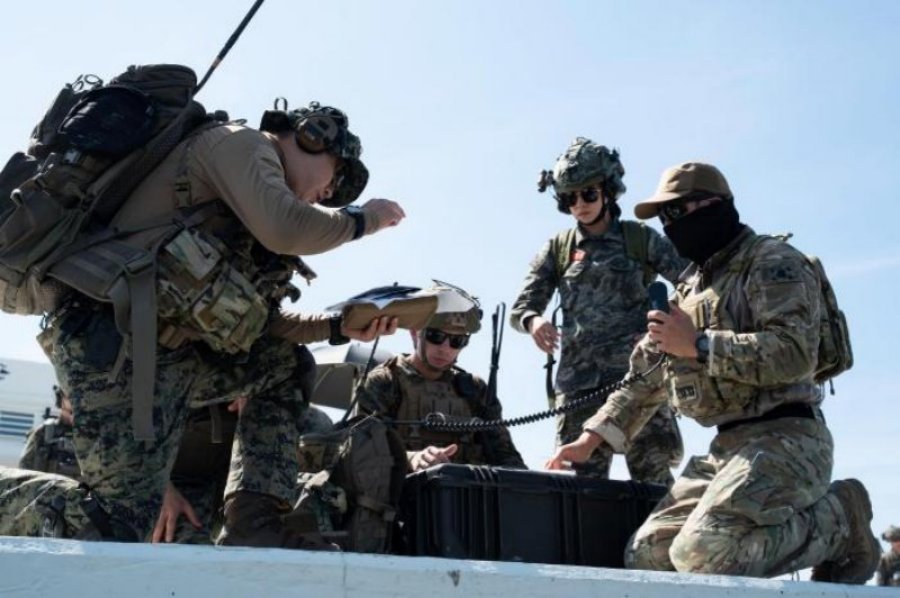
In particular, Ulchi Freedom Shield (UFS), conducted during the second half of each year, integrates the ROK government’s national emergency preparedness exercise, Ulchi, with the ROK–U.S. combined military exercise, Freedom Shield (FS). Over time, both the scale and operational complexity of UFS have steadily expanded. This year’s UFS is scheduled to begin with a Crisis Management Exercise (CMX) on August 11, followed by the main exercise phase.⑶
Against this backdrop, this paper examines the evolution of ROK–U.S. combined exercises—including UFS—over the past two years, evaluates their key achievements, and explores the role of UFS in shaping the future development of the ROK–U.S. alliance.
2. Assessment and Recent Changes in ROK–U.S. Joint Exercises
A review of ROK–U.S. combined exercises over the past two years indicates that these activities have evolved beyond routine annual training events, adapting systematically to a changing security environment. Rather than relying on fixed exercise structures, the allies have continuously refined exercise objectives, scenarios, and operational priorities to address emerging threats and strengthen combined readiness.
The 2024 UFS exercise focused on responding to North Korea’s advancing nuclear and missile capabilities by incorporating scenarios involving missile attacks, GPS jamming, cyber operations, and weapons of mass destruction (WMD). Field training exercises were significantly expanded, while the participation of additional United Nations Command (UNC) member states further strengthened the exercise’s multinational dimension. Overall, the 2024 UFS enhanced operational proficiency through expanded field maneuver training and improved the allies’ ability to respond comprehensively to complex, multidomain provocations. In addition, monitoring by the Neutral Nations Supervisory Commission (NNSC) reaffirmed that the exercise was conducted in accordance with the Armistice Agreement, underscoring its longstanding annual and defensive nature.⑷
The 2025 UFS further enhanced operational realism by incorporating lessons from recent conflicts into its exercise scenarios while conducting integrated combined and joint operations across the land, maritime, air, space, cyber, and electromagnetic spectrum domains. In addition, the United Nations Command facilitated the direct participation of personnel from several member states. The exercise strengthened the alliance’s combined deterrence and defense posture by validating its ability to conduct multidomain operations in response to evolving security challenges. Although the overall scale of the exercise remained comparable to previous years, 20 of the 40 planned field training exercises were postponed and conducted at a later date.⑸
Most recently, the 2026 Freedom Shield (FS) exercise emphasized enhancing operational realism by incorporating lessons learned from ongoing conflicts into exercise scenarios while validating combined operational readiness. ROK and U.S. military authorities assessed that the exercise marked an important milestone in advancing preparations for the conditions-based transfer of wartime operational control (OPCON) in accordance with bilateral agreements between the two governments.⑹
Taken together, recent combined exercises reveal several notable trends.
First, the scope of these exercises has expanded significantly. Emerging operational domains—including space, cyberspace, and the electromagnetic spectrum—have become integral components of exercise planning, while evolving battlefield challenges, such as unmanned aerial systems, have been incorporated into training scenarios. This reflects a sustained effort to align alliance training with the increasingly multidomain character of modern warfare.
Second, the participation of United Nations Command member states, together with oversight by the Neutral Nations Supervisory Commission, demonstrates that UFS has evolved beyond a purely bilateral ROK–U.S. exercise into one with a broader multinational dimension. At the same time, these mechanisms reinforce the exercise’s longstanding annual schedule and its fundamentally defensive character.
Third, recent combined exercises have increasingly incorporated procedures to assess and validate progress toward the conditions-based transfer of wartime operational control. This development reflects the evolution of alliance exercises from merely demonstrating combined defensive readiness to serving as a practical mechanism for preparing and validating the future ROK–U.S. combined defense architecture.
3. The Evolution of the ROK–U.S. Alliance and UFS
ROK–U.S. combined exercises constitute one of the alliance’s most enduring institutional mechanisms, supporting a security partnership that has been sustained for more than seven decades. Through decades of recurring combined training, the allies have developed and reinforced critical capabilities, including operational interoperability, institutional trust, and combined readiness. As discussed above, Ulchi Freedom Shield (UFS) has not remained a static exercise; rather, it has continuously evolved in response to changes in the regional security environment and the growing complexity of North Korea’s military threats, while strengthening deterrence and defense on the Korean Peninsula.
The evolution of UFS has been driven primarily by shifts in the strategic environment both on and beyond the Korean Peninsula. Recent changes in U.S. strategic guidance, together with lessons drawn from contemporary conflicts, have further highlighted the importance of ROK–U.S. combined exercises and the need for their continued adaptation. Historically, the primary mission of the ROK–U.S. Combined Forces has been to deter North Korean aggression and defend the Korean Peninsula. However, as recent U.S. strategic guidance places greater emphasis on broader regional missions—including strategic competition with China, potential contingencies in the Taiwan Strait, and the protection of critical maritime lines of communication—policy discussions have increasingly examined whether the operational role of U.S. Forces Korea (USFK) could expand accordingly.⑺
At the same time, preparations for the conditions-based transfer of wartime operational control (OPCON) have entered a more advanced phase. As this process progresses, the ROK and the United States are entering a new period of alliance adaptation, requiring both governments and their militaries to adjust their combined defense posture in response to an evolving strategic environment while preserving the alliance’s core mission.
These developments also present new challenges for UFS. As U.S. defense strategy continues to evolve and the transition toward conditions-based OPCON proceeds, future exercises will need to adapt their operational scenarios, force employment concepts, and training objectives accordingly. At the same time, UFS must remain firmly anchored in its fundamental purpose: maintaining a credible combined deterrence and defense posture on the Korean Peninsula.
Looking ahead, it is important to emphasize that the ultimate purpose of UFS is not to prepare for war for its own sake, but to prevent conflict through credible deterrence and sustained military readiness. Strong deterrence and effective tension management on the Korean Peninsula are complementary—not competing—objectives. As the strategic environment continues to evolve, policymakers and military planners must continue to assess how ROK–U.S. combined exercises can best adapt to emerging security challenges while remaining a cornerstone of peace and stability on the Korean Peninsula and a central pillar of the future ROK–U.S. alliance.
⑴ Su-ju Park, “South Korean and U.S. Military Authorities: ‘Preparations for August Joint Exercise UFS Proceeding as Planned,’” Yonhap News TV, July 2, 2026.
⑵ Su-on Choi, “The Strategic Value and Policy Considerations of ROK–U.S. Joint Exercises,” Security Strategy FOCUS, Korea Institute for Defense Analyses, January 15, 2026.
⑶ Gyu-jin Shin, “ROK–U.S. ‘Freedom Shield’ Exercise Set to Proceed with Reduced Field Maneuvers,” Dong-A Ilbo, July 22, 2026.
⑷ Jang-wook Lee, “Achievements and Future Tasks of the 2024 ROK–U.S. Joint Exercise ‘Freedom Shield (UFS),’” ROK Angle, Korea Institute for Defense Analyses, September 10, 2024.
⑸ Hyun-ho Lee, “ROK–U.S. Combined 2025 UFS Exercise Concludes… Some Field Maneuver Training Postponed to Next Month,” Seoul Economic Daily, August 28, 2025.
⑹ U.S. Forces Korea and Republic of Korea Joint Chiefs of Staff, “Joint ROK–U.S. Briefing on the 2026 FS Exercise,” February 25, 2026.
⑺ Yonhap News, “Trump’s New Indo-Pacific Strategy: Selective and Focused on Taiwan… Will Demands for South Korea’s Role Intensify?” December 6, 2025.
-
PREV [Feature Article]
-
NEXT [Feature Article]