

The Potential Role of K-Submarines in Revitalizing Canada’s Maritime Capabilities

Beom-jin Park
Professor, Graduate School of Business, Kyung Hee University/(Retire)ROK Navy Captain
Canada’s next-generation patrol submarine program, known as the Canadian Patrol Submarine Project (CPSP), is not merely a submarine procurement initiative. Rather, it represents a critical test of how Canada—a maritime nation bordering the Arctic, Pacific, and Atlantic Oceans—will redesign its national defense strategy amid a rapidly shifting international security environment following the inauguration of the second Donald Trump administration in the United States. This evolving environment is characterized by an “America First” foreign policy and an increasingly explicit “might makes right” approach aimed at consolidating U.S. dominance over the Western Hemisphere.
Against this backdrop, Canada has begun to recognize the need to restore greater autonomous defense capabilities and strengthen its domestic defense industrial base. Since the end of the Cold War, Canada’s security policy has remained relatively stable within a broad framework centered on reliance on U.S. security guarantees through integration into the North American missile defense system, the maintenance of the NATO alliance, and participation in United Nations peacekeeping operations.
However, today’s strategic environment differs fundamentally from that of the past. Russia is intensifying its military activities as Arctic sea ice recedes, while China is expanding its influence by increasing its presence in the Arctic through cooperation with Russia on Arctic shipping routes and by advancing its Maritime Silk Road strategy to strengthen maritime influence in the Indo-Pacific region.
As climate change improves access to Arctic shipping lanes, the Arctic Ocean is being transformed from a remote, ice-bound region into a new strategic domain where resources, logistics, and military considerations converge.
These changes raise uncomfortable questions for Canada. Does the country with the world’s longest coastline truly possess sufficient maritime surveillance and undersea operational capabilities? Does it have a naval force robust enough to respond to both military and non-military threats that could emerge simultaneously in the Arctic, Pacific, and Atlantic Oceans?
If Canada enters the 2030s without addressing the aging of its Victoria-class submarines, which have a displacement of 2,400 tons, it will inevitably face the strategic risk of an underwater capability gap. Although submarines are rarely visible in peacetime, they are national strategic assets that demonstrate a nation’s resolve most quietly yet most powerfully in times of crisis. A gap in underwater capabilities is tantamount to a gap in deterrence.

It is precisely for this reason that the capabilities of K-submarines are attracting growing attention. South Korea’s submarine force is not merely a showcase for defense exhibitions, but a core military capability developed under the harsh realities of a highly challenging security environment.
Faced with complex threats—including North Korea’s nuclear and missile programs, submarine-launched ballistic missile (SLBM) threats, and the naval expansion of neighboring states—South Korea has steadily accumulated the expertise required to design, build, and operate submarines ranging from the Jangbogo-class to the Jangbogo-III-class.
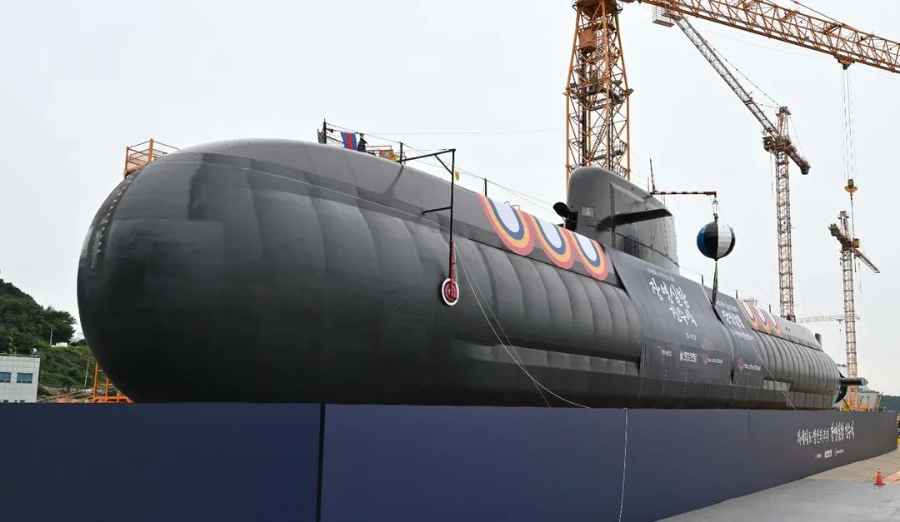
In particular, the KSS-III Batch-II submarine represents a flagship platform that integrates South Korea’s advanced shipbuilding industry, maritime defense technologies, combat system integration capabilities, and precision manufacturing expertise.
South Korean submarines have evolved to meet demands for stealth, survivability, and sustained operational capability in the narrow and complex underwater environment surrounding the Korean Peninsula. In this respect, they share important operational characteristics with the emerging maritime security challenges facing Canada.
The K-submarine proposed for Canada’s CPSP program is widely assessed as possessing several core competitive advantages, including superior performance and cost-effectiveness, adherence to delivery schedules, plans to establish a local MRO (maintenance, repair, and overhaul) center, and a comprehensive industrial cooperation package encompassing defense investment partnerships within Canada and joint entry into third-country markets.
What the Canadian Navy needs is not simply a few new submarines. What it truly requires is the capability to operate effectively in the Arctic Ocean, maintain a continuous presence in the Pacific and Atlantic Oceans, ensure interoperability with NATO and the United States, and establish a long-term partnership model that strengthens Canada’s domestic defense industrial base.
This is why the Canadian government places such importance on operational support, training, infrastructure development, and lifecycle cooperation with Canadian industry in pursuing the CPSP program. Ultimately, success in securing the contract will be determined not only by the submarines themselves, but also by the ability to provide maintenance, performance upgrades, crew training, supply-chain stability, and sustained technical cooperation over more than 30 years of operation.
In this regard, K-submarines can offer Canada a practical alternative.
First, South Korea possesses rapid construction capabilities and a stable shipbuilding industrial base. In the submarine sector, delivery timelines are critical. No matter how advanced a submarine may be, if it cannot be deployed when needed, it cannot fill a strategic capability gap.
Given Canada’s concerns over the aging of its existing Victoria-class submarines and the possibility of an underwater capability gap emerging in the 2030s, South Korea’s submarine construction capacity and project management expertise constitute major competitive advantages. In the defense industry, it is not enough to say that something “may be possible someday.” True capability lies in the ability to deliver systems on schedule and sustain reliable long-term support.
Second, K-submarines can contribute to strengthening Canada’s Arctic surveillance and deterrence capabilities. The Arctic is a region where climate change and strategic competition are unfolding simultaneously. As shipping routes become more accessible, it is not only commercial vessels that will enter the region. Naval surface ships and submarines will also expand their presence, accompanied inevitably by intensified intelligence-gathering activities.
There are clear limits to monitoring the vast Arctic Ocean using only surface ships and aircraft. Submarines, capable of operating covertly underwater for extended periods, provide a decisive deterrent by tracking hostile submarines and surface vessels while complicating an adversary’s strategic calculations during times of crisis.
For Canada, moving beyond merely declaring Arctic sovereignty to actually exercising sovereign rights in the Arctic Ocean requires credible undersea capabilities. In this sense, securing a modern submarine force is not simply an option, but a strategic necessity.
Third, K-submarines could serve as a new link in Indo-Pacific security cooperation. Canada has already declared its intention to expand its engagement in the region through its Indo-Pacific Strategy. South Korea, likewise, is establishing itself as a key partner in promoting a free and open Indo-Pacific order.
The two countries share a number of common strategic challenges, including responding to North Korea’s nuclear and missile threats, enforcing sanctions against North Korea, strengthening maritime security, expanding defense industrial cooperation, and ensuring supply-chain resilience. As a member of the United Nations Command, Canada has long contributed to security on the Korean Peninsula and has participated in efforts to monitor North Korea’s illicit ship-to-ship transfers at sea.
From South Korea’s perspective, Canada is not a distant country, but a responsible security partner that has consistently contributed to maintaining stability on the Korean Peninsula and throughout the Indo-Pacific region.
Recent developments in South Korea–Canada relations are bringing this potential for cooperation to a more tangible level. Through reciprocal visits by their respective heads of state, the bilateral relationship has been elevated to a Comprehensive Strategic Partnership, while the institutional framework for security cooperation is being strengthened through Foreign and Defense 2+2 Ministerial Meetings.
The Korea–Canada Security and Defense Cooperation Partnership, announced in 2025, is particularly significant in that it represents the first security and defense cooperation framework of its kind that Canada has established in the Indo-Pacific region.
The partnership encompasses military exchanges, joint exercises, maritime security, defense industrial cooperation, joint research and development, supply-chain resilience, cybersecurity, space cooperation, and responses to hybrid threats. In other words, the bilateral relationship is evolving beyond traditional friendship and economic cooperation into a future-oriented strategic partnership that integrates security, technology, and industry.
In particular, at the second Korea–Canada Foreign and Defense 2+2 Ministerial Meeting in 2026, the two countries discussed Indo-Pacific maritime security, the protection of marine resources, peaceful and sustainable cooperation in the Arctic, the launch of a space security dialogue, and cooperation in cybersecurity and artificial intelligence. In addition, the two sides agreed to sign a General Security of Military Information Agreement (GSOMIA) and to begin negotiations on a broader defense cooperation agreement.
This goes beyond mere diplomatic rhetoric. The establishment of an institutional framework enabling the sharing of sensitive technical and operational information in the defense sector represents a qualitative advancement in bilateral cooperation. Such a framework is particularly important for weapons systems—such as submarines—that require exceptionally high levels of security, interoperability, and technical reliability.
The entry of K-submarines into the Canadian market could therefore become not merely a defense export project, but a symbolic undertaking in bilateral security cooperation between South Korea and Canada. The South Korean defense industry has already expanded its presence in the global market in the fields of ground systems, aerospace, and surface naval vessels.
Submarines, however, are strategic platforms through which a nation’s shipbuilding capabilities, acoustic detection and stealth technologies, propulsion systems, combat systems, maintenance infrastructure, and crew training systems are comprehensively tested and verified.
For this reason, submarine exports go beyond the simple sale of defense products; they represent the export of long-term strategic trust between nations. If Canada ultimately selects the K-submarine, it would constitute not only recognition of the technological capabilities of South Korea’s defense industry, but also a political and strategic decision to embrace South Korea as a long-term partner in maritime security cooperation.
However, optimism alone is not enough. Canada’s submarine program is a competition not only in technology, but also in diplomacy and industrial policy. To compete effectively against established European submarine manufacturers—such as Germany’s TKMS with its Type 212CD submarine—South Korea cannot rely solely on price competitiveness and platform performance.
What Canada seeks extends beyond simply acquiring “a good submarine.” It seeks a sustainable submarine operational ecosystem that can be maintained over the long term. Accordingly, South Korea must present a comprehensive proposal that includes the establishment of local maintenance and repair facilities, cooperation with Canadian shipbuilding, machinery, and materials industries, the training of submarine crews and maintenance personnel, long-term modernization and performance upgrade programs, supply chain resilience, and the adaptation of technologies to Arctic operational conditions. In this sense, what is required is not merely package-style defense cooperation, but a broader form of “industrial alliance–based” defense cooperation.
From Canada’s perspective, K-submarines could represent an attractive option. While Canada must continue to maintain close security cooperation with the United States, it also faces the challenge of strengthening its own defense industrial base and independent operational capabilities. South Korea, as a U.S. ally with advanced indigenous shipbuilding and defense manufacturing capabilities, is well positioned to meet both requirements.
From Canada’s standpoint, this makes South Korea a partner capable of providing an effective balance between alliance interoperability and strategic autonomy. By working with South Korea, Canada could diversify its defense partnerships beyond its traditional reliance on Europe while still maintaining interoperability with the United States. At the same time, Canada would gain a reliable Indo-Pacific defense partner with proven industrial and technological capabilities.
This project is also of considerable significance for South Korea. Canada’s CPSP is not merely a large-scale defense procurement program. For the South Korean defense industry, it represents a strategic bridgehead for entry into the North American security market—beyond its existing presence in Europe and the Middle East—and, more importantly, into the broader defense industrial ecosystem associated with the Five Eyes and NATO.
Canada is both a member of the Five Eyes intelligence-sharing network and a core NATO ally, as well as a key stakeholder in Arctic security. If South Korean submarines were to be incorporated into the Royal Canadian Navy fleet, it would mark a major milestone that elevates the credibility and international standing of South Korea’s defense industry to a new level. In this sense, the Canadian market is not simply a single export destination, but a gateway to a broader network of security and defense cooperation.
Another important dimension is economic security. As the strategic importance of Arctic shipping routes increases, the protection of sea lines of communication (SLOCs), the assurance of stable energy transportation, the defense of undersea infrastructure against submarine threats, and the resilience of critical mineral supply chains are all becoming matters of national security.
Canada possesses abundant reserves of critical minerals—including nickel, lithium, and rare earth elements—as well as significant energy resources, while South Korea has established strengths in advanced manufacturing and supply chains related to shipbuilding, batteries, and the defense industry. As a result, cooperation between the two countries extends far beyond the submarine sector alone.
It has the potential to encompass defense industrial cooperation, critical minerals, shipbuilding, artificial intelligence, space, cybersecurity, and the protection of undersea infrastructure. Indeed, the Korea–Canada Security and Defense Cooperation Partnership identifies defense industrial supply chains, critical minerals and materials, and responses to cyber, space, and hybrid threats as key areas of bilateral cooperation.
Therefore, the South Korean government and defense industry must not approach this opportunity merely as competition among individual firms for contracts. The submarine project is unlikely to succeed if defense companies take the lead while the government remains on the sidelines.
Instead, the government, the Defense Acquisition Program Administration (DAPA), the Ministry of Foreign Affairs, the Ministry of Trade, Industry and Energy, and the Navy must operate as a unified team. The government-to-government (G2G) cooperation framework, local industrial participation, job creation, technological cooperation, supply-chain collaboration, and long-term maintenance models sought by Canada must all be designed and coordinated at the national level.
Defense exports are not a sprint. They are a long-term strategic undertaking—more akin to a sustained maritime operation that requires navigating changing tides and currents all the way to the destination.
The true strength of the K-submarine lies not merely in its ability to operate deep underwater. Its real value stems from South Korea’s capacity to integrate its security experience, advanced manufacturing capabilities, shipbuilding technology, defense industrial ecosystem, and alliance cooperation expertise into a single strategic package. This is precisely the kind of capability Canada requires at this moment.
While Arctic ice is melting, the international security environment is, paradoxically, becoming increasingly rigid and competitive. In this era of contradiction, Canada can no longer view the ocean merely as a vast geographical buffer. The ocean is both a conduit of opportunity and a pathway for emerging threats. And the strategic asset that safeguards the maritime domain is the submarine.
In conclusion, the K-submarine could serve as a strategic catalyst for Canada’s maritime and defense transformation. Canada urgently needs a realistic solution to close its emerging submarine capability gap, while South Korea is presented with a historic opportunity to enter the defense markets of the Arctic and North America.
Moving beyond their traditional relationship as allies and partners under the United Nations Command during the Korean War, the two countries now have an opportunity to build a future-oriented strategic partnership centered on maritime security and defense industrial cooperation.
If the day comes when K-submarines help safeguard Canadian waters, it will signify far more than a successful defense export. It will stand as a symbol of strategic solidarity among democratic maritime nations linking the Arctic and the Indo-Pacific.
The sea is vast, and the threats beneath it run deep. Yet a prepared nation does not fear those depths. K-submarines can provide Canada with the maritime security capabilities it requires. What remains now is the national-level commitment, diplomatic persuasiveness, and strategic imagination necessary to translate this potential into reality through comprehensive defense cooperation.
The K-submarine already possesses more than sufficient potential to help transform Canada’s maritime capabilities. What is needed now is the ability to translate that potential into tangible strategic outcomes in the Arctic.