

Gyeongju APEC: Assessing the Strategic Implications of the ROK-U.S. and U.S.-China Summits on the Korean Peninsula

Jin-Ha Kim
Senior Research Fellow
Korea Institute of National Unification (KINU)
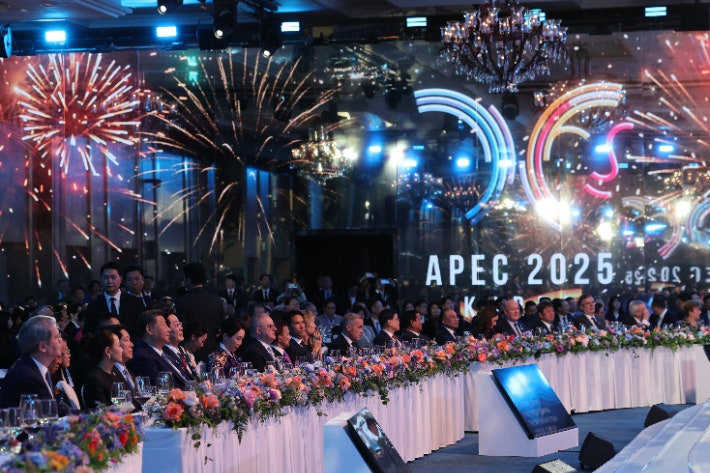
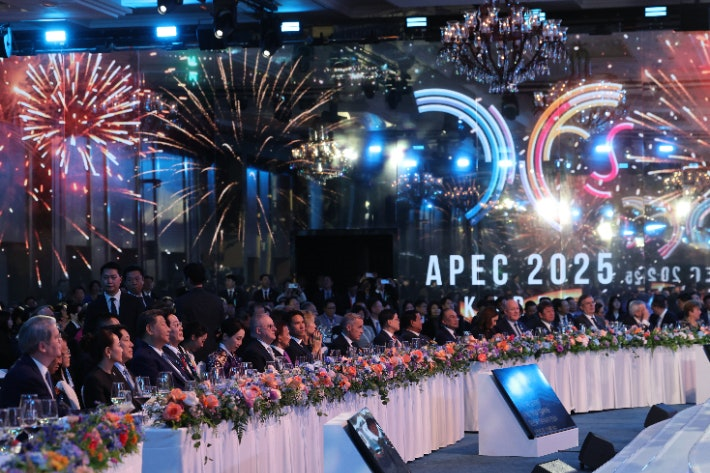
The 2025 APEC Summit, held on November 1 in Gyeongju, concluded with the formal adoption of the “Gyeongju Declaration.” The summit came at a time of intensifying geopolitical conflict and escalating tariff disputes, underscoring the urgent need to restore the spirit of solidarity and cooperation and to chart a sustainable path toward shared prosperity.
As the host nation, the Republic of Korea (ROK) guided the summit under three priority themes—Connect, Innovate, and Prosper—in pursuit of the Putrajaya Vision 2040, which seeks to build an open, dynamic, resilient, and peaceful Asia-Pacific community by 2040. The summit served as an opportunity for Korea to demonstrate both its determination and its capacity to lead in advancing international peace and future-oriented economic development grounded in cooperation, mutual benefit, and inclusivity.
Parallel to the APEC plenary, a series of high-stakes bilateral summits—notably among South Korea, the United States, Japan, and China—intensified diplomatic activity. In particular, the ROK-U.S. and U.S.-China summits drew global attention for their potential to reshape the trajectory of the U.S.-ROK alliance, the Korean Peninsula’s security environment, and the broader strategic balance in Northeast Asia. This analysis focuses on the key outcomes and strategic implications of these two meetings.
The ROK-U.S. Summit: Alliance Stability and Economic Burden-Sharing
Since the beginning of President Trump’s second administration, the stability of the U.S.-ROK alliance has faced challenges on both economic and security fronts. Seeking to address the United States’ fiscal and trade deficits, the Trump administration and the MAGA policy circle have pursued a tariff negotiation strategy characterized by steep tariffs and conditional tax cuts—essentially leveraging trade barriers to secure large-scale investments in the United States from key allies.
The European Union and Japan, for example, pledged investments of $600 billion and $550 billion, respectively, concluding agreements that capped tariff increases on major sectors such as automobiles at 15%. South Korea initially negotiated toward an investment commitment of $350 billion, but unlike the EU and Japan, it continued to face a 25% tariff on its automobiles and other goods—fueling anxiety in Seoul over potential economic repercussions.
While contributing to U.S. economic and industrial revitalization is vital, given Washington’s central role in maintaining the liberal international order, the proposed scale of South Korea’s investment appeared disproportionately large. According to the U.S. non-profit Reshoring Initiative, South Korea already ranked as the top direct investor in the United States in the first quarter of 2025, substantially contributing to American job creation.
In terms of GNP, Korea’s direct investment ratio (18.7%) far exceeds that of Europe (6.9%) or Japan (13.7%)—an unsustainable level for an economy half Japan’s size, with only about $400 billion in foreign reserves. Domestic observers have warned that lump-sum payments could rapidly deplete foreign currency reserves, potentially triggering a liquidity crisis.
At the second ROK-U.S. summit in Gyeongju on October 29, both sides reportedly reached a final agreement on tariff negotiations. The finalized $350 billion investment package comprises $200 billion in cash investments (capped annually at $20 billion) and $150 billion in cooperative projects in the shipbuilding and manufacturing sectors.
The deal reportedly includes safeguards ensuring commercial viability and guarantees on principal and interest. In exchange, Washington agreed to reduce tariffs on Korean automobiles from 25% to 15% and to apply semiconductor tariffs no less favorable than those under negotiation with Taiwan.
While still a heavy financial commitment, the agreement eases previous concerns, reducing Korea’s overall burden and reaffirming the alliance’s economic foundation. It also rekindles momentum for the U.S.-ROK Shipbuilding Cooperation Package (“Make American Shipbuilding Great Again (MASGA)”) and marks a milestone in technological collaboration through the U.S.-ROK Technology Prosperity Deal, which institutionalizes cooperation on artificial intelligence and advanced technologies.
Although the immediate economic gains skew in favor of the United States, Seoul stands to benefit strategically. Through substantial economic concessions, South Korea has restored confidence in the alliance at a time when Washington’s “offshore balancing” strategy and reduced forward commitments had raised doubts about the credibility of U.S. extended deterrence. The summit’s outcomes therefore not only reaffirmed alliance cohesion but also enhanced South Korea’s strategic position in Northeast Asia, linking economic cooperation to security stability.
Notably, immediately following the summit, President Trump declared via Truth Social that the U.S.-ROK military alliance was “stronger than ever” and endorsed Seoul’s pursuit of nuclear-powered submarines (SSNs)—a symbolic gesture placing the alliance on par with AUKUS.
This development envisions a future in which the ROK and the U.S. jointly develop next-generation defense technologies—“Korean-style” nuclear submarines under the Mars Project—solidifying the alliance’s commitment to regional order and deterrence. It also serves as a strategic warning to Beijing and Moscow, whose tacit acceptance of Pyongyang’s nuclear ambitions continues to unsettle regional security.
The U.S.-China Summit: A Fragile Truce and Korea’s Mediating Role
Meanwhile, the U.S.-China summit produced a provisional truce in the ongoing trade confrontation triggered by China’s rare-earth export restrictions and Washington’s retaliatory tariff threats. Although the agreement constitutes merely a temporary crisis-management framework subject to annual extensions, it contributed to reducing immediate geopolitical tensions in Northeast Asia.
South Korea’s diplomatic facilitation as APEC chair was critical in providing a strategic space for negotiation and compromise, reaffirming Seoul’s potential role as a “pivotal platform nation” capable of mediating U.S.-China competition while contributing to stability on the Korean Peninsula. Through such initiatives, South Korea can also expand its strategic bandwidth to advance the Engage, Normalize, and Denuclearize (END) vision toward North Korea, with support from both Washington and Beijing.
The Elusive U.S.-North Korea Summit and Pyongyang’s Escalation
Despite expectations, a U.S.-North Korea summit did not materialize during the APEC period. Pyongyang instead signaled defiance by conducting a ballistic missile launch on October 22—just over a week before the summit—effectively rejecting the prospect of renewed dialogue.
On November 1, as the South Korea-China summit convened, North Korean Vice Foreign Minister Pak Myong-ho denounced Seoul’s discussion of denuclearization as “a delusional act of ignorance denying the DPRK’s nuclear status.”
North Korea continues to condition any dialogue on de facto recognition of its nuclear arsenal and the lifting of “hostile policies.” Such preconditions render engagement nearly impossible. Nevertheless, Pyongyang should reconsider its stance in light of Seoul’s END initiative and the collective calls from Washington, Beijing, and Tokyo for a stable and prosperous Northeast Asia. It must heed the international community’s appeal for peace on the Korean Peninsula.