

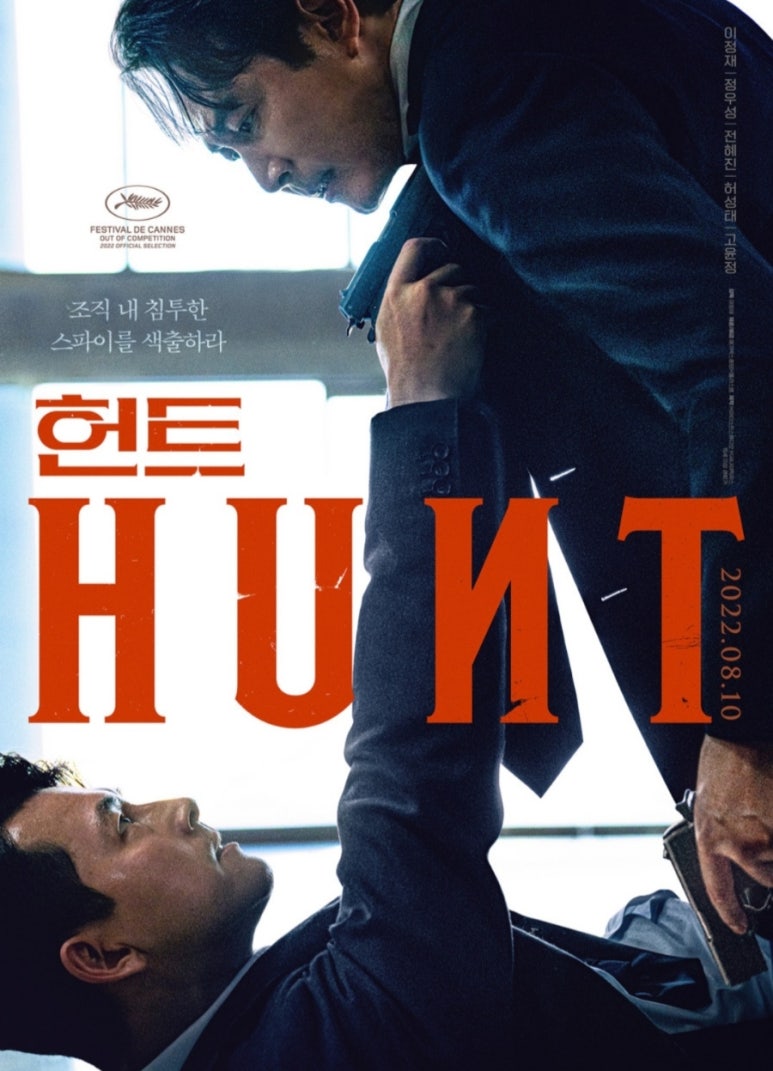
Catching the Spy Inside: Hunt

Jeon Byung-kil
Senior Consultant of YESInnovation
former of Secretary General of UniKorea Foundation
The Era of Fear and Division
In the early 1980s, life in South Korea felt tense and uncertain. The country was under the tight control of a military dictatorship led by Chun Doo-hwan. The government constantly emphasized “order” and “security,” but what this really meant was forcing people to stay quiet and follow the rules. Speaking out or acting differently could lead to punishment, so most people stayed silent. That silence was often twisted by the regime as if it were support.
At the same time, the government labeled students, intellectuals, and democracy activists as “outsiders” or even “foreign agents.” This created a strong “us vs. them” feeling in society—what social psychologists call ingroup vs. outgroup bias from social identity theory.
Globally, the Cold War was heating up, and nowhere was it felt more sharply than on the Korean Peninsula. North and South Korea treated each other as absolute enemies. The dictatorship in the South used this hostility as a tool to control its own people. Constant reminders of the “North Korean threat” kept the public anxious and fearful. That fear, in turn, strengthened loyalty to the system.
In short, the conflict between North and South Korea wasn’t just about military standoffs. It was also a psychological weapon. It shaped how people thought, how they behaved, and even how they saw each other in everyday life.
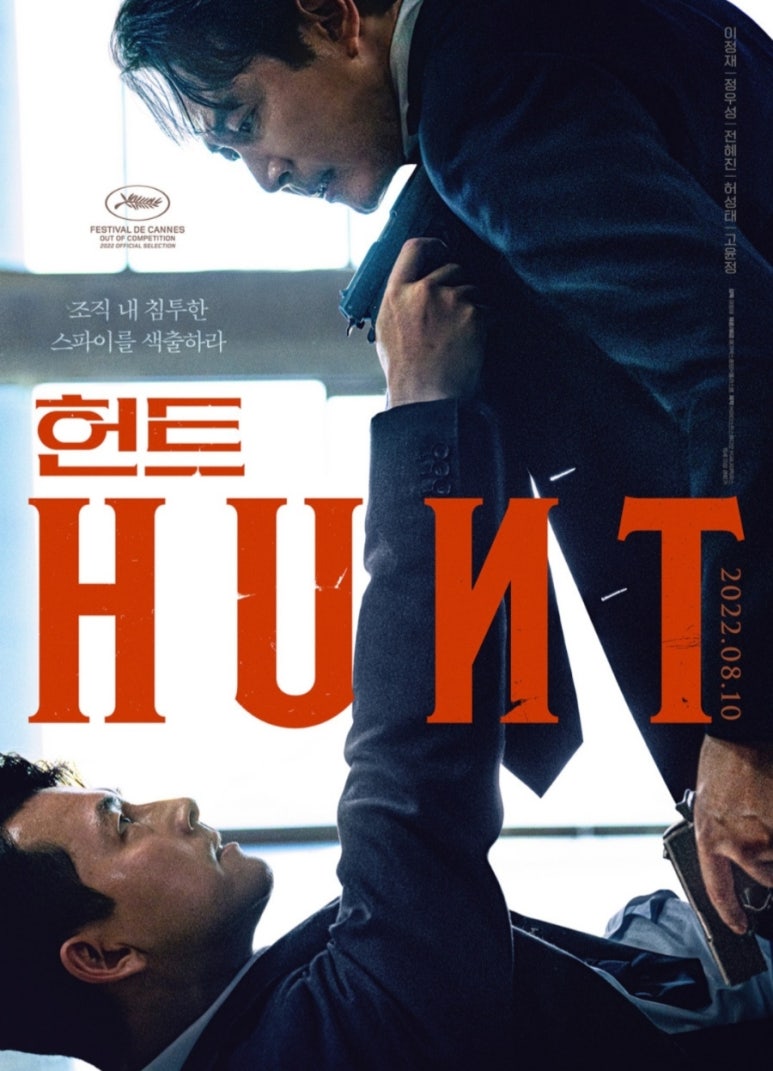
Hunt (2022): A Spy Thriller Set in a Divided Korea
The movie Hunt, released in 2022, takes us back to the early 1980s, a time when South Korea was under a strict military dictatorship. During this era, the National Security Planning Department (which later became today’s National Intelligence Service) was responsible for watching both enemies outside the country and spies within. The tension was real—people worried that a North Korean spy could be hiding in the very heart of the organization.
At the center of the story are two deputy chiefs of the agency: Park Pyeong-ho (played by Lee Jung-jae) and Kim Jung-do (played by Jung Woo-sung). Although they belong to the same department, they have very different ways of working. When intelligence reports suggest that a North Korean spy—codenamed “Donglim”—has infiltrated their agency, both men lead separate investigations. But soon, suspicion turns inward: they begin to doubt each other.
● Park Pyeong-ho is a cool-headed intelligence expert. Years of working in a system that rewards success but punishes mistakes have shaped him into a calculating strategist. His calm, almost emotionless style isn’t just his personality—it’s the result of constant conditioning, where avoiding punishment became second nature.
● Kim Jung-do, on the other hand, is driven by strong ideals and a sense of justice. In psychological terms, his mindset reflects classical conditioning: his past experiences reinforced the value of “sacrifice for the nation.” Because of this, he sticks to principles—even when reality suggests otherwise.
These two clashing personalities inevitably collide, not only in heated arguments but also in physical confrontations. Yet, their rivalry is more than personal: it reflects the bigger struggle of South Korea at the time—between survival in a harsh system and the pursuit of justice.
As the film unfolds, the plot expands beyond the hunt for a single spy. North Korea’s secret operations, the power struggles within the military government, and even diplomatic interests with the United States all come into play. In the end, it becomes clear that the “spy chase” is only one piece of a much larger political game involving ideology, power, and destiny.
The final message of Hunt is powerful: this isn’t a story of simple heroes and villains. Instead, it’s a story of an era scarred by division—where individuals, trapped in history, face tragic choices.
Hunt and the Legacy of the 1983 Aung San Bombing
The real-life background of the movie Hunt comes from a shocking event in 1983 known as the Aung San Cemetery Bombing in Myanmar (then called Burma). That year, North Korean agents tried to assassinate the South Korean president during a state visit. The attempt failed, but the explosion killed 17 people on the spot.
For South Koreans, this wasn’t just another news story—it was a national trauma. The attack deepened fear and hostility toward North Korea, and it gave the government another reason to push for tighter security and control.
The film Hunt takes this atmosphere of the 1980s and turns it into a thriller. But its real question isn’t just “Who is the spy?” Instead, it asks something deeper: How do people behave when they live in constant fear and distrust? How can a system use that fear to manipulate individuals?
Even though today’s Korea is a free democracy, the movie reminds us that the patterns of division, suspicion, and “us vs. them” thinking haven’t disappeared. They just show up in new forms—whether in politics, social media, or global conflicts.
The lesson from the 1980s is still clear: power can use fear and distrust to control society at any time. And when people are divided into groups of “insiders” and “outsiders,” the result is often conflict and tragedy.
Cultural Notes
Chun Doo-hwan (1931–2021): A former general who came to power after a military coup in 1979. His rule is remembered for censorship, surveillance, and the violent suppression of protests—most famously the Gwangju Uprising of 1980, when hundreds of pro-democracy protesters were killed.
Cold War Context: Just like Americans worried about the Soviet Union, South Koreans were constantly reminded of the danger from North Korea. This atmosphere of fear influenced media, school education, and even pop culture.
Student Activism: College students in South Korea were especially bold. They organized demonstrations, wrote underground newspapers, and became the driving force of the democracy movement, which eventually succeeded in 1987.
Aung San Cemetery Bombing (1983): A real terror attack in Yangon, Myanmar, Cemetery named after Aung San, a national hero of Burma. North Korea did this. The bombing targeted South Korean President Chun Doo-hwan, but he survived.