

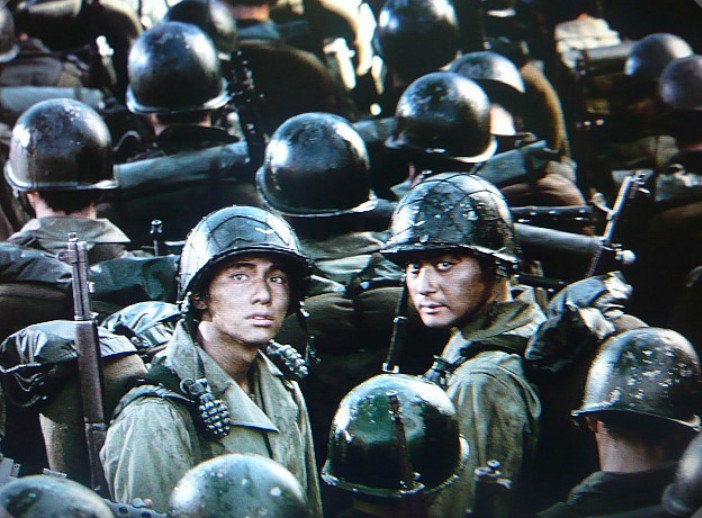
Taegukgi: The Movie That Still Echoes in Korea

Jeon Byung-kil
Senior Consultant of YESInnovation
former of Secretary General of UniKorea Foundation
Over twenty years ago, a Korean film called Taegukgi was released. You might think an old movie would be forgotten, but in South Korea, the soundtrack is still played in cafeterias, restaurants, and even at military ceremonies. Why? Because Taegukgi is more than just a war film—it is a story that touches on some of the most painful and important parts of Korea’s modern history.
The Meaning of “Taegukgi”
The word Taegukgi is the name of South Korea’s national flag. It symbolizes harmony, balance, and the Korean identity itself. By naming the movie after the flag, director Kang Je-gyu showed that the story wasn’t only about two brothers—it was about the fate of an entire nation.
Inspired by Real History
The Korean War (1950–1953) is sometimes called “the Forgotten War” in the West, but for Koreans, it is anything but forgotten. Families were torn apart, and many still remain divided across the border. In 2001, Kang watched a documentary about recovering the remains of soldiers from that war. One heartbreaking scene showed an elderly woman crying over the body of her husband, found fifty years after he had died. That single moment inspired Kang to create Taegukgi.
The Story of Two Brothers
The movie begins in Seoul, just before the war. Lee Jin-tae, a shoe-shiner, lives with his younger brother Jin-suk and his fiancée Young-shin. Life is tough, but they share a dream of a better future. Then, war breaks out. Jin-suk, only eighteen, is drafted into the army, and Jin-tae follows, determined to protect him.
Jin-tae believes that if he wins a medal of honor, he can free his younger brother from military service. He fights with extraordinary courage, but his obsession with war slowly changes him. Jin-suk grows horrified at how the brother he loved turns into someone consumed by violence.
The tragedy deepens: Young-shin, Jin-tae’s fiancée, is executed under false accusations of helping the enemy. Believing both his fiancée and brother are dead, Jin-tae loses his mind and joins the North Korean side. But Jin-suk survives, and when he learns that his brother now fights under the North Korean flag, he makes a desperate choice. Instead of leaving the army when he could, he returns to the battlefield, hoping to bring his brother home—just as they once promised each other.

Why Koreans Still Care
For many Koreans, Taegukgi is not just a movie. It reminds them of the Korean War’s lasting scars: national division, lost families, and the deep longing for reunification. Even today, South and North Korea remain separated, and millions of families never saw each other again after 1953. That’s why the music of Taegukgi is still played at military events and why the story continues to move people.
The Cold War, Korea, and the Road to War
Imagine it’s 1945. World War II has just ended, and for the first time in 35 years, Korea is free from Japanese colonial rule. For ordinary Koreans, this was a moment of huge excitement—they dreamed of finally building their own independent country. Few could have imagined that within just five years, their homeland would be torn apart by war.
Cultural Note: Why 1945 Was So Important
Korea had been under Japanese control since 1910. During that time, Koreans were forced to learn Japanese, change their names, and even fight for the Japanese army. So, when Japan lost in 1945, people believed a bright new future was coming. But history took a different turn.
The Shadow of the Cold War
After 1945, two powerful nations—the United States and the Soviet Union—stepped in. They had just fought together against Japan, but now they were rivals in the new Cold War. Each wanted to shape the world in its own image: the U.S. promoted democracy and capitalism, while the Soviet Union pushed socialism and communism.
At first, Koreans thought these superpowers were there to help them build an independent government. But soon it became clear that both had their own interests. Inside Korea, political groups also split: left-wing activists versus right-wing nationalists, pro-Japanese collaborators versus independence fighters. Ordinary people found themselves caught in the middle, pressured to choose between ideologies they barely understood.
Chaos and Division
As tensions grew, Korea became unstable. There were terrorist attacks, soldier uprisings, and worker strikes. In the North, land owned by the wealthy was seized, and a new “people’s republic” was set up under Kim Il-sung, backed by the Soviet Union. Many Christians fled south, where they could freely practice their religion.
By 1948, the division was official: two separate governments were established—North Korea and South Korea. The hostility only deepened. With Soviet support, Kim Il-sung built up the Korean People’s Army, complete with tanks and modern weapons. On June 25, 1950, North Korea launched a surprise invasion of the South. The Korean War had begun.
Why This Still Matters
For Koreans today, this isn’t just distant history. Families were literally split in two—some ending up in the North, others in the South—and most never saw each other again. Even now, the Korean peninsula remains divided, and the war technically never ended (only a ceasefire was signed in 1953). That’s why films like Taegukgi are so powerful in Korea—they don’t just tell a story, they remind people of the pain of separation and the hope for peace.
The Scars of War and the Story of Taegukgi
When the Korean War began in June 1950, many thought it would be a small border fight along the 38th parallel. But things escalated quickly. Within just three days, North Korean forces captured Seoul, the capital of South Korea. In only three months, they had taken nearly the entire peninsula—except for a small southeastern corner near Busan.
Cultural Note: The 38th Parallel
The 38th parallel was a line chosen by the United States and the Soviet Union after World War II to divide Korea “temporarily.” But temporary turned permanent, and the line eventually hardened into today’s border between North and South Korea.
A War That Changed Course
Just when it looked like South Korea might be lost, the tide turned. In September 1950, UN and South Korean forces launched the Battle of Incheon, a surprise amphibious landing near Seoul. This bold move, called Operation Chromite, was so successful that the allies recaptured Seoul and pushed all the way to the Yalu River on the border with China. For a brief moment, it seemed like Korea might reunite.
But then China entered the war. Hundreds of thousands of Chinese troops poured across the border, pushing the UN and South Korean forces back to the 38th parallel. The fighting continued in stalemate until 1953, when both sides signed an armistice—but not a peace treaty. Technically, the Korean War never ended.
Cultural Note: The DMZ
The ceasefire created the Demilitarized Zone (DMZ), a 155-mile-long buffer between North and South Korea. Ironically, it is one of the most heavily armed borders in the world. Today, the DMZ has become both a symbol of division and, strangely, a nature reserve where wildlife thrives.
Lasting Scars
The war left behind deep wounds. Families were split apart, often without even a chance to say goodbye. South Korea became isolated, cut off not just by water on three sides but also by barbed wire and guns to the north. Distrust and resentment grew between the two Koreas, creating an “invisible war” of ideology and propaganda that continues to this day.
The Brothers at Dumilyeong
In the movie Taegukgi, the final meeting between the brothers Jin-tae and Jin-suk takes place at Dumilyeong, a mountain ridge on the frontlines. Historically, Dumilyeong—nicknamed the “Punchbowl” or “Bloody Ridge”—was one of the bloodiest battle zones of the Korean War. Though the characters are fictional, setting their reunion here allowed younger Koreans, who never lived through the war, to emotionally experience what division meant.
After the movie was released, more than six million Koreans saw it, and an online petition even called for a monument at Dumilyeong. This showed how strongly the film reawakened feelings about war, peace, and family.
Why Brotherhood Matters in Korea
In Korean culture, family and brotherhood are central values. The film highlights how war can tear apart not just nations but families—the most sacred unit in Korean society. When Jin-tae dreams of sending his younger brother to university, it reflects a traditional Korean belief that older siblings sacrifice for the younger ones. His fiancée Young-shin’s line—“I wish everything would be just like today”—is bittersweet. It captures the fragility of happiness on the eve of war.
Why Taegukgi Still Matters
The film ends with a message of hope: even in the coldest, darkest times, Koreans must not forget the values of love, family, and unity. For many Koreans, watching Taegukgi is not only about history—it’s about imagining a future where families separated by war might one day be reunited.
-
PREV [Analysis and suggestion]
-
NEXT [Feature Article]