

North Korea’s Politics of Troop Deployment and Hyper-strategy

BAN Kil Joo
Assistant Professor, Dept. of International Security and Unification Studies
Introduction
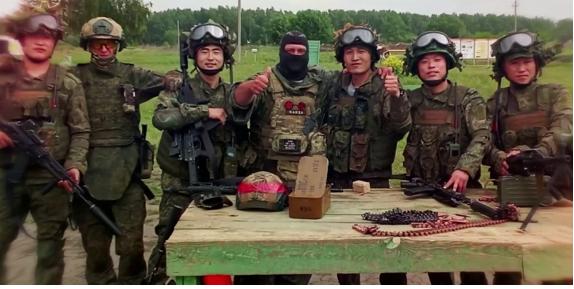
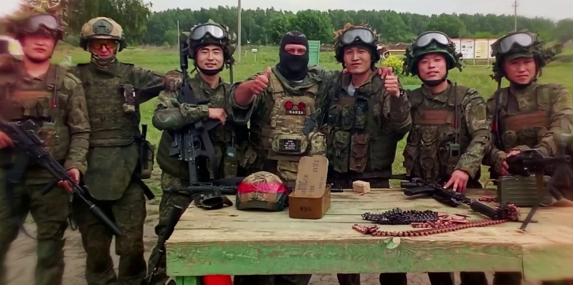
North Korea’s ongoing direct military involvement in the Russo-Ukrainian War — through its first and second troop deployments, alongside plans for a third — is drawing attention to its politics of troop deployment and hyper-strategy.
Underpinned by Pyongyang’s confidence in having completed its nuclear armament, North Korea’s hyper-strategy is characterized by ambitions to maximize strategic interests through external expansion, representing a distinct departure from the passive foreign policies of the Cold War era.
A series of deployments — rather than a single, one-off dispatch — is understood as a method for implementing hyper-strategy and institutionalizing it as an operational tool. Conceptualizing this hyper-strategy, built on principles of strategic equivalence, expansion, and offensive posture, offers insights for new countermeasures and strategies that achieve both pragmatic interests and security objectives. In this context, a multilayered diplomatic-security framework may serve as an effective means of offsetting North Korea’s hyper-strategy.
Diagnosing North Korea’s Politics of Troop Deployment
North Korea has recently signaled the possibility of additional troop deployments to support Russia. Following its bold decision in October 2024 to intervene in the Russo-Ukrainian War, Pyongyang has sustained military involvement in the Eurasian battlefield.
As of July 2, 2025, reports suggested that North Korea was preparing to deploy over 30,000 troops. With forces operating over 10,000 kilometers from its territory, the deployment issue has evolved into a serious concern for both regional and international security.
These deployments are accelerating the convergence of geopolitical spaces across regions, extending the impact of military engagement beyond traditional territorial boundaries. North Korea’s sustained involvement should therefore be analyzed as part of a broader politics of troop deployment, driven by calculated strategic imperatives.
The politics of troop deployment took shape in October 2024, just months after North Korea and Russia signed the “Comprehensive Strategic Partnership Treaty” (June 2024). The first deployment of approximately 11,000 personnel — including elite 11th Corps (Storm Corps) units — was executed at exceptional speed, suggesting Pyongyang had contemplated this move during treaty negotiations. This signaled not symbolic alignment but a substantive contribution to military objectives.
Within three months, a second deployment involving roughly 4,000 personnel followed. The rapid shift from a one-off operation to successive deployments highlighted Pyongyang’s evolving grand strategy. In return for its support, North Korea is believed to have secured satellite technology, air defense systems, overseas deployment pay, and warship materials from Russia.
The prospect of a third deployment emerged around the first anniversary of the North Korea–Russia treaty. Unlike previous ones, this deployment would largely involve reconstruction personnel. This reflects Pyongyang’s intent to secure a foothold in post-war reconstruction, thereby enhancing strategic leverage in anticipation of a Russian victory.
Together, the first and second deployments consolidated North Korea’s alliance with Russia, while also setting the stage for post-war dividends. Moscow’s praise — including Foreign Minister Sergey Lavrov’s public thanks to North Korea’s “heroic soldiers” — underscores Pyongyang’s elevated leverage.
Recent reports also suggest the possibility of a fourth, much larger deployment. If realized, this would position Pyongyang for the final phase of the war and further elevate its post-war strategic standing.
North Korea’s Troop Deployment and Hyper-strategy
The deployment of forces to the Eurasian front marks a strategic realignment in North Korea’s foreign policy, signaling a decisive shift toward a more assertive posture. At its core lies a hyper-strategy — a proactive, expansionist approach that emulates great-power behavior to maximize national interests.
This shift is catalyzed by Pyongyang’s internalized perception of having achieved operational nuclear capability. With nuclear weapons as strategic leverage, North Korea now seeks to elevate its global influence.
A comparison of Cold War-era foreign policy and today’s New Cold War strategy reveals five key differences:
Strategic Framing: Cold War equidistant diplomacy (survival-oriented) vs. hyper-strategy (assertive, expansionist).
Strategic Nature: Passive pursuit of limited gains vs. proactive pursuit of expanded interests.
Target Countries: Reliance on the USSR/China vs. diversified ties with Russia, China, and beyond.
Geopolitical Scope: Confined to the Korean Peninsula vs. extraregional projection (Eurasia, Pacific).
Strategic Mechanism: Defensive posture vs. offensive posture aligned with offensive realism.
North Korea’s ambition to build a “blue-water operational fleet” (April 2025) illustrates this broader shift.
Diplomatic and Security Implications
Understanding the politics of troop deployment and hyper-strategy offers critical insights into security implications and counterstrategies.
Taiwan Contingency: Pyongyang may view a Taiwan crisis as a strategic opportunity similar to Ukraine, aligning with China for transactional gains. This requires Seoul to devise proactive contingency plans.
Sanctions Regime: North Korea’s cooperation with Russia risks undermining international sanctions. It is crucial to reaffirm their legality and strengthen international coordination.
Policy Recommendations:
Seoul should combine sanctions enforcement with direct communication channels to reduce tensions.
A multi-dimensional foreign policy — linking self-reliance, alliances, and minilateral dialogues (Korea–US–Japan, Korea–China–Japan) — is essential.
Inclusive diplomacy with non-like-minded states could enhance resilience against North Korea’s hyper-strategy.
*Source: Institute of Foreign Affairs and National Security, Korea National Diplomatic Academy