

“Suspending ROK-U.S. Joint Exercises: The Need for Careful Deliberation”

Bee Yun JO
Research Fellow, Sejong Institute
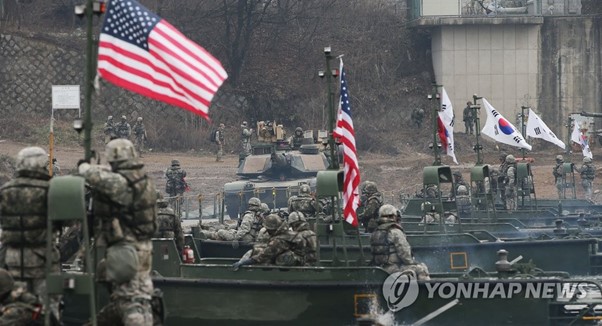
ROK-US joint military exercises have been the backbone of deterrence on the Korean Peninsula. They were never intended as symbolic shows; rather, they served as operational rehearsals for crisis and war, building interoperability, ensuring rapid reinforcement from the US, and sending clear signals to the Democratic People’s Republic of Korea (DPRK) that any aggression would trigger a coordinated allied response.
This explains why Pyongyang and its leaders have consistently lashed out against them, labeling them as war rehearsals. While their denunciations have at times pushed Seoul to consider suspension of the exercises in the hopes of improving inter-Korean relations, DPRK’s sensitivity on the exercises highlight their distinctive deterrence value.
Exercises are indeed among the few tools capable of directly affecting Pyongyang’s cost-benefit calculus. The first ROK-US summit—held on August 25, 2025—between President Lee Jae-myung and President Donald Trump, however, seemed to show signs of complicating this dynamic once again.
As the meeting ended with President Trump touting his “good relations” with Kim Jong-un, both Seoul and Washington might once again pursue dialogue with Pyongyang—possibly at the expense of another suspension or downscaling of joint exercises.
While the Lee and Trump administrations are reconsidering possible downscaling or suspension of joint exercises, this article argues that doing so would come at the worst—if not the most perilous—time.
By briefly revisiting the past ups and downs of ROK–US military exercises, the article highlights historical lessons showing that Seoul and Washington’s gestures of goodwill are unlikely to be received kindly by Pyongyang. Especially when ROK-US alliance considers structural transformation under the rubric of “alliance modernization” —revisiting the transfer of wartime operational control (OPCON), defense-cost sharing, and recalibration of US force posture in the Indo-Pacific—I argue that suspending or downscaling exercises would be a perilous mistake.
DPRK Will Not Receive Suspension as Goodwill
While advocates of scaling back or suspending exercises often argue that doing so could build trust with Pyongyang, historical experience strongly suggests otherwise. North Korea has never interpreted allied restraint as a genuine gesture of goodwill. Rather, it has consistently dismissed such measures as tactical or insincere, and has continued its provocations regardless.
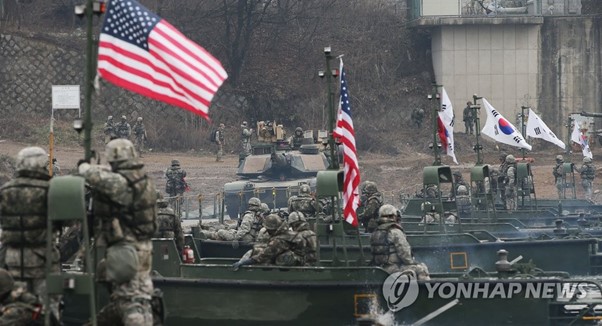
As brief overview, ROK-US’s large-scale exercises date back to the 1960s (Appendix 1),¹ when Seoul and Washington began their regular field training exercises (FTX) such as Foal Eagle (1961) and Focus Retina (1968). By the 1970s, these exercises expanded into Freedom Bolt (1971) and later Team Spirit (1976), which became the alliance’s signature large-scale FTX.
Team Spirit was notable for its emphasis on force flow—demonstrating the arrival and integration of US reinforcements—and grew into one of the largest annual allied drills, involving up to 200,000 troops by the mid-1980s. Parallel to this, the Ulchi Focus Lens (UFL) emerged in 1976 as the largest computer-assisted command post exercise (CPX), integrating South Korea’s Ulchi civil-defense drills with US warfighting simulations. From 1976 to 1992, these exercises were carried out nearly every year, underscoring their central role in deterrence.
They have rarely been suspended, and when they were, the consequences were sobering. The clearest example is the suspension surrounding the 1994 Agreed Framework. Team Spirit was canceled in 1992 as a goodwilk, only to resume in 1993 as North Korea pressed with its nuclear ambitions (the first nuclear crisis). Team Sprit was then replaced by the Reception, Staging, Onward Movement, and Integration (RSOI) exercise in 1994.
With this lesson of the 1990s, exercises seemed to strengthen and last. From the late 1990s and onwards, exercises were institutionalized as dual annual events: RSOI (later Key Resolve since 2007)—a CPX— paired with Foal Eagle (an FTX) every year. And when Seoul and Washington debated over strategic flexibility of USFK in the 2000s, followed by reduction of USFK’s troop levels to 28,500 under President Roh Moo-hyun and President George W. Bush administration, alliance leaned heavily on three cornerstones of annual drills: Key Resolve, Foal Eagle, and Ulchi Freedom Guardian (UFG).
These exercises together became the bedrock of allied readiness. Key Resolve provided two weeks of computer-simulated theater-level planning (CPX); Foal Eagle stretched over eight weeks and incorporated more than twenty field training events (FTX); and UFG, evolving from UFL, integrated theater command operations with South Korea’s national crisis management system. For more than a decade, these annual FTX-CTX pairs represented the “muscle memory”² of the alliance.
However, another wave of suspensions came during the Moon–Trump years. In 2018, Key Resolve and Foal Eagle were delayed and shortened, with the FTX portion cut from eight weeks to just two, while the CPX was extended to four weeks. UFG was postponed entirely. In 2019, Key Resolve was renamed the Alliance Exercise and compressed into nine days, while Foal Eagle was dispersed into smaller drills throughout the year.
The term Combined Command Post Training (CCPT) replaced UFG in a bid to reduce the allegedly “provocative” connotation of the earlier exercises. The onset of the COVID-19 pandemic in 2020 compounded these disruptions. CPX and FTX schedules were postponed or canceled altogether. While the Moon and Trump administrations sought to renew a diplomatic space with Pyongyang, the outcome was again limited. Rather than halting missile launches or pausing nuclear development, North Korea pressed ahead with testing and escalated its rhetoric.
The lessons are clear: Exercises have rarely been suspended, and when they were, effects were limited in restraining the DPRK. In fact, moments of alliance transition have required more—not fewer—drills to sustain readiness and deterrence. Pyongyang’s rhetoric underscores this reality. Kim Yo-jong has repeatedly condemned joint exercises as “rehearsals for invasion” and accused Seoul of duplicity. Even reduced or delayed drills have been dismissed as meaningless, with North Korea insisting that allied hostility is structural. In practice, suspension or downscaling does not alter Pyongyang’s behavior; it signals weakness and emboldens further provocations. Gestures of restraint therefore fail to deliver security benefits.
Alliance Modernization Demands Expansion, Not Suspension
As Seoul and Washington enter a new phase of alliance modernization, the imperative is not to suspend or downscale exercises but to expand and adapt them. Modernization today reflects multiple drivers: the anticipated transformation of USFK toward lighter ground units and greater reliance on airpower and missile defense; and the ongoing process of wartime OPCON transfer. These are tied to President Trump’s outward prioritization of deterring China, which pressures allies like Seoul to shoulder greater responsibilities while accommodating greater strategic flexibility for US forward-deployed forces, including USFK.³
Such transformations are not theoretical. The USFK’s withdrawal of legacy platforms such as the A-10, the proposed introduction of F-35 squadrons, consolidation of F-16s into “super squadrons,” and renewed missile defense cooperation all illustrate how modernization entails structural and technological change. Yet without robust combined training, these reforms will be tested and remain incomplete.
Large-scale exercises are the only means to validate new structural arrangements, ensure interoperability, and synchronize new capabilities. This is especially critical for OPCON transition, which demands regular testing of decision-making and combined command procedures. Without exercises, transfer risks becoming a symbolic gesture rather than a functional enhancement of combined defense.
Skills that are not practiced regularly cannot be assumed in crisis. Moreover, modernization expands the alliance’s deterrence mission beyond the Peninsula. Increasing cyber and hybrid threats in the region similarly call for exercises that integrate non-kinetic domains. Scaling down drills would leave the alliance ill-prepared for this wider spectrum.
Finally, exercises play an indispensable signaling role. They reassure the South Korean public that extended deterrence remains intact, demonstrate alliance cohesion to regional partners, and send a clear warning to adversaries. Indeed, both Seoul and Washington should note that weakening of exercises sends signals not only to Pyongyang but also to Beijing.
China has steadily expanded its nuclear arsenal and has increased naval and air encroachment in the West Sea. Chinese warships, for instance, entered South Korean waters more than 330 times in 2024, compared to about 110 such entries in 2017. These incursions occurred not only in the Provisional Measure Zone (PMZ) of the Yellow Sea but also in the areas of South Korea’s exclusive economic zone (EEZ).⁴ If ROK-US joint exercises are reduced, China may perceive the alliance as distracted or weakened, emboldening further adventurism around the Peninsula. In this sense, the risks of suspension extend beyond the DPRK threat to the larger strategic balance in Northeast Asia.
Taken together, alliance modernization is not compatible with contraction. Rather, it requires larger, more adaptive, and more integrated exercises that can match both the evolving threat environment and the structural transformation of the alliance.
Conclusion
The historical record, Pyongyang’s entrenched hostility, and the imperatives of alliance modernization all point to the same conclusion: it is perilous to suspend ROK-US military exercises today. Past suspensions only emboldened North Korea. The DPRK will not interpret new suspensions as goodwill, but as weakness. And the alliance’s modernization agenda requires more robust training, not less. ROK-US exercises remain the sharpest and most visible signal of deterrence. They are the foundation of readiness, credibility, and resilience. To suspend them now would be to invite doubt, embolden adversaries, and undercut modernization. To expand them is to demonstrate commitment, shape adversary behavior, and secure the alliance’s future.
Appendix 1 ROK-US Joint Military Exercises: Overview

1 For historical overview of ROK-US military exercises, see, Jo, Bee Yun. (2023). “Deterrence, Assurance, and Resilience as Three Reciprocal Values in Strengthening ROK-US Combined Defense Posture and Exercises.” In KIDA, ed. The Next 70 Years: Future Paths for the ROK-US Alliance and Defense Cooperation. Seoul: KIDA, p. 153.
2 Work, Clint. (2023). “Confrontation Challenges, Clarifying Roles, and Closing Gaps: Strengthening the ROK-US Combined Defense Posture.” In KIDA, ed. The Next 70 Years: Future Paths for the ROK-US Alliance and Defense Cooperation. Seoul: KIDA, p. 162.
3 Jo, Bee Yun. (2025). “Navigating the new normal: Strategic simultaneity, US Forces Korea flexibility, and alliance imperatives.” Atlantic Council Issue Brief.
4 As reported, the incursions continued to increase: 110 (2017), 230 (2018), 290 (2019), about 200 (2020-2022), 360 (2023). See, Roh, Suk-jo & Jung-soo Lee. (2025. 4. 30.). “Exclusive: Chinese Warships Cross into S. Korea’s EEZ over 330 Times in 2024.” The Chosun Ilbo.