

Marketing In North Korea (13)
- Digital Revolution in Isolation: The Rise of Electronic Payments in North Korea

Jeon Byung-kil
Senior Consultant of YESInnovation
former of Secretary General of UniKorea Foundation
Do You Know M-Pesa of Kenya?
M-Pesa is a mobile money transfer service launched in 2007 by Vodafone Group plc and Safaricom, Kenya's largest mobile network operator. Initially designed to improve convenience for micro-finance borrowers, M-Pesa took advantage of the fact that Africa had limited access to traditional banking infrastructure like bank branches and ATMs. This gap created enormous potential for mobile-based financial transactions, which could save both time and costs for users.
Since its launch, M-Pesa has transformed the way people in Kenya manage their money. The platform allows users to deposit, withdraw, and transfer funds, functioning similarly to a credit card. With M-Pesa, users can buy goods, pay tuition fees, enjoy a drink at a café, and even pay for bus fares. By providing this service, Safaricom not only created a new market for low-income families but also supported their livelihoods by facilitating access to vital consumer information.
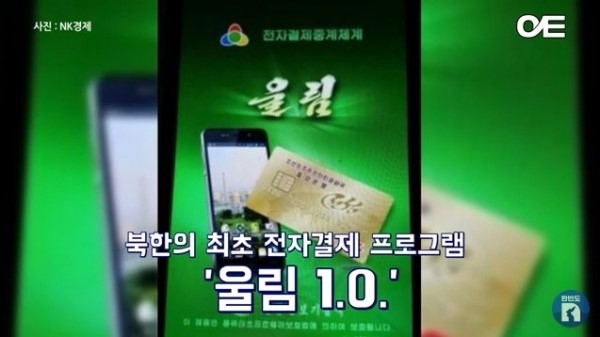
North Korea's first electronic payment program 'Woolim 1.0'/Capture of Korean Peninsula N YouTube
Despite Kenya’s GDP per capita being only about $2,000, M-Pesa is widely used by over 23 million Kenyans—more than 90% of the adult population—who make approximately 30 million transactions daily. M-Pesa has played a key role in helping Kenya become a leader in e-commerce services in the developing world. The service's popularity surged even further during the COVID-19 pandemic, as it provided a safe, contactless payment option.
The success of M-Pesa can be attributed to Kenya’s high mobile phone penetration rate. By leveraging mobile technology, M-Pesa disrupted traditional communication infrastructure that relied on telephone poles and wires. Instead, wireless communication and Wi-Fi created new opportunities for countries like Kenya, where access to physical infrastructure was limited.
Could a similar model be applied to North Korea? As one of the most isolated countries in the world, North Korea faces significant challenges in infrastructure and communication. Mobile-based solutions like M-Pesa could offer a potential avenue for financial and social innovation in such a context.
Payment Services in connection with Donju
In its 1999 New Year’s speech, North Korea declared, “We have to set up a mosquito net to prevent the penetration of imperialists and be more cautious of attempts by our enemies to cause internal conflicts.” This statement reflected North Korea’s strategy to cautiously open up to foreign capital while erecting strict barriers to block unwanted capitalist ideology. In essence, North Korea sought to attract resources to sustain its regime while resisting external influences it deemed threatening. This dual approach remains central to its political stance today.
However, change has gradually made its way into the isolated country. One of the most significant shifts has been the increasing flow of information from the outside world. While in the past only diplomats, traders, and party officials had access to external information, today many North Koreans can access foreign media such as films, TV dramas, and music.
Even the development of information technology has reached North Korea. Since the 2000s, the government has promoted computer use and IT education in major cities. The use of mobile phones—referred to as “handphones” by North Koreans—has also grown rapidly. North Korea launched its first mobile phone service in 2002, and in 2009, the Koryolink network, a joint venture between the state-owned Korea Post and Telecommunications Corporation and Egyptian telecommunications company Orascom, introduced 3G services.
Over time, mobile devices in North Korea evolved from basic flip phones, designed only for calls and text messages, to smartphone-like devices. While the phones are assembled within North Korea, many parts are imported from China or made under OEM agreements with Chinese manufacturers. By 2018, South Korea’s then-unification minister Cho Myoung-gyon estimated that there were around 6 million mobile phone users in North Korea—about one in every 4.2 people, based on a population of 25.6 million.
These mobile phones have transformed the way financial transactions are conducted. In North Korea, payments and money transfers made via mobile phones are added directly to phone bills. At the center of this system are the Donju, or “money masters,” a class of wealthy individuals who act as informal financial institutions. Donju engage in activities like moneylending, currency exchange, and facilitating money transfers.
Donju play a crucial intermediary role in cash transactions. For instance, when someone needs to transfer money to another region, the Donju verify the transaction by contacting their counterparts in the recipient's area. Before mobile phones became widespread, this process could take 5 to 10 days. Now, with mobile technology, real-time transfers and payments are possible, streamlining financial transactions across the country.
As mobile phone use continues to grow, it has not only modernized communication in North Korea but also revolutionized its informal financial systems. This development hints at the potential for further technological and economic transformation, even in one of the world’s most reclusive nations.
The Use of Electronic Payment Cards in North Korea
The use of electronic payment cards in North Korea began in 2005. At first, most people used basic cash cards, which allowed only deposits and withdrawals, without offering direct payment capabilities. In 2010, the Joseon Trade Bank introduced the Narae debit card, marking a shift toward more widespread adoption of electronic payment cards in the country. The Narae card allowed users to deposit and withdraw foreign currency and make direct payments at foreign-operated stores equipped with electronic card readers.
To encourage the use of the Narae card, North Korea implemented policies targeting foreign visitors. For example, travelers arriving at Sunan Airport were encouraged to deposit funds onto the card instead of exchanging their money for local currency. Additionally, the government installed 24-hour cash machines in major cities to facilitate easier access to funds.
Following the success of the Narae card, North Korea expanded its electronic payment system to include cards designed for domestic use. Today, there are approximately 20 different types of payment cards in North Korea, such as the Jeonsung card (issued by Chosun Central Bank), Narae card (Chosun Trade Bank), Koryo card (Koryo Bank), Geumgil card (Daesung Bank), and Sunbong card (Golden Triangle Bank). These cards function mainly as prepaid or debit cards, allowing users to load cash onto the card or link it to a bank account.
Cardholders can also access North Korea's state-controlled intranet, Kwangmyong, to shop on its e-commerce platforms, such as Manmulsang, Okryu, and Silli, using electronic payments. However, this level of access is limited to a small group of people, primarily in Pyongyang. For most North Koreans, the underdeveloped financial system and unreliable power supply make electronic payment systems largely inaccessible.
Interestingly, North Korea’s efforts to develop electronic payment systems mirror trends in other countries. For example, China bypassed traditional credit card systems, moving directly from cash to digital payment platforms like WeChat Pay and AliPay. Similarly, Kenya's M-Pesa system revolutionized financial transactions in a country with limited banking infrastructure. North Korea appears to be studying and benchmarking these innovations in an effort to modernize its own financial systems.
Mobile Payment Application: “Ullim”
With the increasing use of mobile phones in North Korea, financial payment methods are evolving. In 2017, the Pyongyang Information Technology Bureau (formerly the Pyongyang Information Center) launched Ullim, an electronic payment application modeled after Chinese mobile payment systems like WeChat Pay and AliPay.
To use Ullim, users must register a Jeonsung card, a prepaid cash card issued by the Central Bank of the Democratic People's Republic of Korea. The app allows users to make payments and transfer money to other cardholders. Transactions require inputting the card number, transfer amount, card password, and the app login password. Once the user presses the “remittance” button, the money is sent, with a 2% transaction fee applied.
Ullim also provides basic mobile banking services, such as card recharging, transaction history management, e-commerce payments, and card payments. A one-time registration fee of 3,000 Korean won is required to access the service. However, compared to similar apps from countries with advanced IT industries, such as South Korea, Ullim has a less user-friendly interface. For example, the large text size on the app’s screen prevents users from accessing all features on a single page, making navigation cumbersome.
Interestingly, Ullim can be used for cross-border money transfers, despite North Korea’s strict controls on foreign financial transactions. International sanctions have largely blocked North Korean banks from conducting financial transactions with other countries, and individual foreign remittances are practically prohibited. However, Chinese nationals living in North Korea (known as Jogyos) can use WeChat Pay or AliPay to facilitate these transactions.
Here’s how the process works:
1. A sender in a foreign country transfers Chinese yuan to a Jogyo in North Korea using WeChat Pay or AliPay.
2. The Jogyo exchanges the Chinese yuan into North Korean won, using the unofficial Jangmadang (black market) exchange rate.
3. The Jogyo then uses Ullim to remit the equivalent amount in North Korean won to the intended recipient.
4. The recipient can convert the digital funds into cash at a local post office or communications office.
This method allows users to send up to 500,000 Korean won to any region in North Korea within about 30 minutes. Since the process involves Donju (wealthy individuals) in both China and North Korea, it operates outside the formal banking system, avoiding government crackdowns.
Despite its limitations, Ullim represents a significant step in modernizing North Korea’s financial landscape. It also highlights the growing influence of mobile technology in facilitating financial transactions, even in one of the world’s most isolated countries.
The Future of Electronic Payments in North Korea
In May 2020, North Korea’s English-language newspaper, The Pyongyang Times, introduced Jagangryok, a North Korean web portal designed for technological trade. Notably, the platform adopted an escrow payment system for the first time in the country. An escrow system is a payment protection mechanism where a third party holds the buyer’s payment and only releases it to the seller once the product is delivered successfully. This system, also known as a settlement fund deposit system, connects the user’s credit history and securities with payment services.
The introduction of escrows marks a significant step forward for North Korea’s e-commerce industry. However, the success of this system depends heavily on the trust and participation of current and potential users. This is a challenge, given North Korea’s track record with financial reforms.
For instance, in 2009, the North Korean government introduced sweeping currency reforms that imposed strict and, many would argue, unreasonable regulations. Under the reforms, the amount of money a household could exchange was limited to 100,000 Korean won, with any remaining money required to be deposited in banks. Since depositing funds in a North Korean bank effectively placed those funds under government control, the policy sparked widespread resentment and backlash. As a result, the 2009 currency reforms were deemed a failure, leaving many North Koreans distrustful of state-controlled financial systems.
For North Korea’s electronic payment system to thrive, it is crucial for key stakeholders, such as the Donju (wealthy traders and informal financiers), to trust and freely use the system. However, the memory of the 2009 reforms continues to haunt these individuals. Many fear that large-scale electronic payments might expose their financial conditions to government scrutiny, making them hesitant to adopt the system fully.
The North Korean government faces a critical decision: either foster trust by allowing citizens to conduct financial transactions freely or risk repeating the mistakes of the 2009 currency reforms. Building a functional electronic payment system will require balancing state control with economic incentives for users, ultimately determining the future of digital finance in North Korea.
-
PREV [Analysis of issues]
-
NEXT [Feature Article Series]