

Analysis of the US-Japan Summit and Its Impact on the Korean Peninsula

Cho Eun-il
Senior Research Fellow at the Korea Institute for Defense Analyses (KIDA)
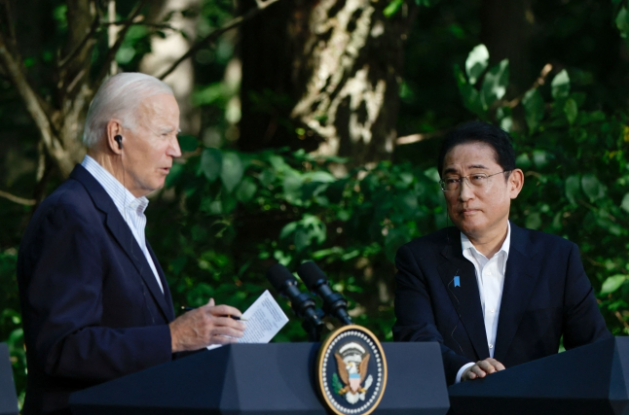
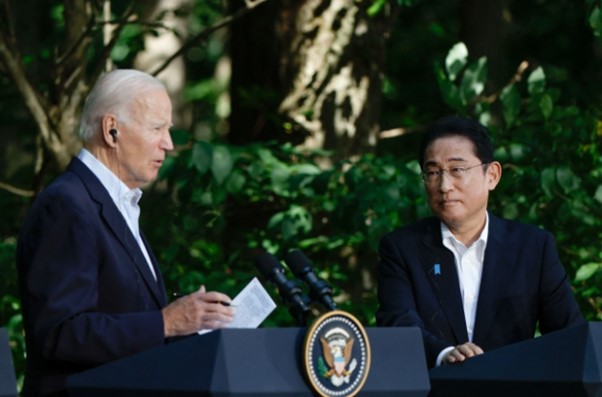
On April 10, 2024, a pivotal US-Japan summit took place during Japanese Prime Minister Fumio Kishida's visit to the United States. The Kishida administration has pursued a qualitative enhancement of the alliance across various domains including military security, economics, new technologies, and supply chains with the US under President Joe Biden. This summit aimed to outline future tasks based on previous achievements to further develop this alliance. This article analyzes the outcomes of the summit and briefly discusses its military and diplomatic impacts on the Korean Peninsula.
Yonhap News
Analysis of Key Points from the US-Japan Summit
The summit, realized through Prime Minister Kishida's state visit, concluded with a joint press conference where the leaders issued a statement titled "Global Partners for the Future." This emphasizes the Indo-Pacific strategy's evolution into a global framework, aiming to uphold and strengthen a free and open international order based on the rule of law.
Since President Biden’s inauguration, the US and Japan have worked on modernizing their alliance. This includes enhanced military cooperation between the US military and the Japanese Self-Defense Forces and the restructuring of the alliance for regional security. Japan has moved from being a passive recipient of security guarantees to an active security partner with the US, planning to enhance its counterstrike capabilities and increase its defense budget to 2% of GDP. This joint statement hinted at a broadened scope for future military and other cooperative efforts under the alliance.
Firstly, a focus on enhancing military security cooperation: Both the US and Japan have underscored that military collaboration under the US-Japan Security Treaty is a cornerstone of their global partnership. They are actively bolstering military deterrence capabilities to address China's expanding military influence in the Indo-Pacific, which poses a threat to the regional status quo. The unresolved disputes over the Senkaku Islands have led the US to reaffirm their inclusion under Article 5 of the Treaty, highlighting a strong commitment to Japan's defense and a resolute stance against Chinese aggression in the East China Sea.
Japan is enhancing the US-Japan alliance and boosting its own defense capabilities. Historically, while the US acted as the "sword" providing military might, Japan served as the "shield" offering bases. Now, the alliance is shifting towards shared military responsibilities. Adhering to its constitution’s Article 9, Japan kept minimal military forces, but changing security demands have led it to boost its military. The Japanese government plans to increase defense spending to 2% of GDP to upgrade its arsenal and integrate its Self-Defense Forces.
The US and Japan are at the forefront, working to establish and effectively manage a multilayered network of security alliances with various partner countries, including the Philippines, Australia, the UK, India, and South Korea. These partnerships manifest in several forms: US-Japan-Philippines, US-Japan-Australia, US-Japan-UK, US-Japan-India, and US-Korea-Japan cooperations. In the Indo-Pacific region, security efforts have typically unfolded through such minilateral arrangements. Notably, a joint statement by the US and Japan affirmed their leadership role in steering these minilateral security networks.
Secondly, the US and Japan are expanding cooperation into new areas like space. They are advancing a satellite constellation project that interlinks small satellites, covered under the US-Japan Security Treaty's Article 5. This enhances surveillance across air and sea. At the recent summit, both nations agreed to further develop the Artemis program, building on their existing space cooperation.
Thirdly, the US and Japan are deepening cooperation in technological innovation and economic security. Their partnership extends beyond military aspects to include vital sectors like technology, economics, and supply chains, aiming to counter China’s lead in advanced technologies like AI, electric batteries, and quantum computing. They have established a Competitiveness and Resilience (CoRe) Partnership to enhance innovation and secure economic interests in critical technology fields, reinforcing their strategic economic stance.
Fourthly, the Indo-Pacific strategy facilitates networking alliances. Following the US-Japan summit, a collaborative summit with the Philippines was also convened. This meeting formalized the minilateral security cooperation among the US, Japan, and the Philippines aimed at countering China. Additionally, the US participates in various collaborative frameworks including trilateral agreements with Japan and South Korea, Australia, and India, as well as the Quad involving Japan, Australia and India. Notably, Japan's new role in AUKUS technology cooperation was highlighted, underscoring the strategic goal to create a comprehensive, lattice-like alliance network across the Indo-Pacific to deter Chinese expansion.
Impact on the Korean Peninsula
Amid the Russia-Ukraine and Iran-Israel conflicts, the US has emphasized its military alliance with Japan to counter potential regional disruptions by powers like China in the Indo-Pacific. This enhanced US-Japan cooperation is set to impact the Korean Peninsula in both military and diplomatic dimensions.
Firstly, on the military front, Japan is establishing a Joint Staff Office to centralize its Ground, Maritime, and Air Self-Defense Forces. This move aims to enhance military cooperation with the U.S., ensuring better coordination with the US Indo-Pacific Command and greater interoperability with US Forces in Japan, which may significantly influence crisis response strategies on the Korean Peninsula.
Secondly, there are significant diplomatic implications. High-level contacts between North Korea and Japan have been continuing. President Joe Biden stressed the importance of dialogue with North Korea and expressed his support for North Korea-Japan talks. The unresolved issue of the abduction of Japanese nationals by North Korea remains a complex challenge. However, given the evolving international dynamics, the potential for in-depth discussions between North Korea and Japan after the summit remains a distinct possibilit