


[Kim Il-sung Series]
Captain Kim Il-sung, Selected by Stalin in the Soviet Armed Forces
Lee Seung-hyun
Ph.D in Public Administration (Research Fellow at the SAND Institute)
Among the five communist factions (Soviet faction, Yan'an faction, domestic faction, Kapsan faction, Manchurian faction) after the liberation, Kim Il-sung's faction, the Manchurian faction, initially emerged as the weakest. However, it was Stalin's robust backing that propelled Kim Il-sung to a leadership position. Despite the presence of other influential figures with notable backgrounds, influence, recognition, and anti-Japanese credentials surpassing Kim Il-sung, Stalin specifically selected him as the leader of the puppet state.
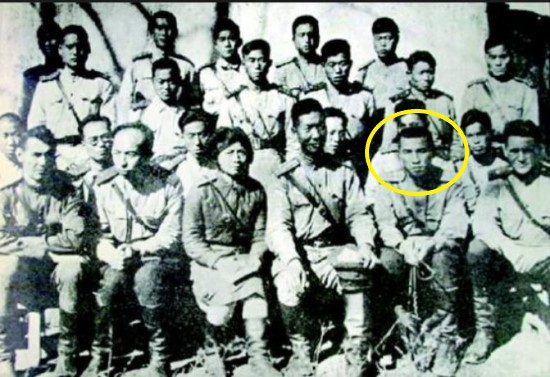
A captured moment of Captain Kim Il-sung during his service in the Soviet Armed Forces' 88th Separate Rifle Brigade before the liberation. / Yonhap News
The connection between Kim Il-sung and Stalin dates back to the pre-liberation period. During this time, Kim Il-sung served in the 88th Separate Rifle Brigade of the Soviet Armed Forces, a unit that provided refuge to the partisans of the Northeast Anti-Japanese United Army (NAJUA) who had fled from Japanese forces in Manchuria. While officially designated as a border guard unit under NKVD, Kim Il-sung, who held the rank of battalion commander, discreetly reported the activities of his NAJUA comrades to the Commander of the Far Eastern Front and the Chief of Intelligence, catching Stalin's attention.
Following the liberation, Kim Il-sung secretly arrived at Wonsan Port aboard a Soviet warship in mid-September 1945. For a while, he remained out of the public eye until finally making a public appearance on a raised platform in October. The reason for his secretive arrival and initial absence from public view can be attributed to the fact that Kim Il-sung, who had borrowed the name of the renowned anti-Japanese hero 'Kim Il-sung,' held a relatively minor position as a leader within a small unit. Additionally, he had spent several years living a humble life within Soviet barracks. The complex factors influencing his decision to adopt the persona of an 'anti-Japanese war hero' without proper preparations, as well as concerns about the potential consequences of his sudden public appearance, likely contributed to the delay.
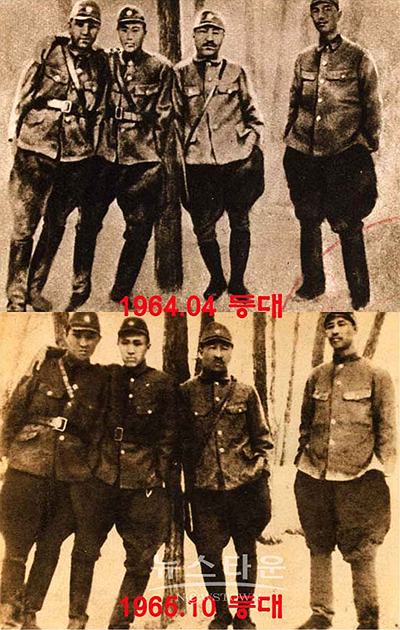
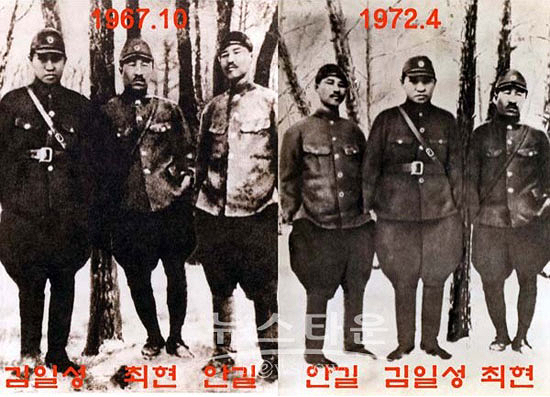
North Korean magazine "Dengdae" shows Kim Il-sung with comrades, with a shift in his position and the absence of a Chinese member. / NewsTown
Kim Il-sung seized power in North Korea under the control of the Soviet military administration during the liberation period. Political commissar Grigory Konovich Mekler and KGB officer Leonid Vasin, who entered Pyongyang, testify as follows: "To make Kim Il-sung the leader in Pyongyang, which was under Cho Man-sik's influence at the time, political maneuvers were carried out, and pressure was exerted through the political activities and the military power of the Soviet Union, while portraying Kim Il-sung as a legendary anti-Japanese hero." After liberation, Kim Il-sung lured and co-opted various communist factions in the northern region to establish a communist regime. He formed an alliance with Park Heon-yeong, a former member of the South Korean People's Party, and obtained the approval of the Soviet Union and China to launch the June 25 invasion.
Kim Il-sung, after his failure in the Korean War, held others accountable and purged Pak Hon-yong and their faction. Since then, starting from the August Faction Incident in 1956, he gradually marginalized the Yan’an and Soviet factions and eventually suppressed the Kapsan faction. This consolidation of power laid the groundwork for a dictatorial regime.
In the establishment of a dictatorial regime, Kim Il-sung named his son, Kim Jong-il, as his successor in 1972. North Korea manipulated Kim Jong-il's birthplace and birthdate, emphasizing the Paektu bloodline for propaganda purposes. Kim Jong-il was born on February 16, 1941, in Wondong, after his mother, Kim Jong-suk, escaped with Kim Il-sung's small unit to the Soviet Union ㅡ Kim Jong-il went by the Soviet name 'Yura'. However, North Korea claims that Kim Jong-il was born on February 16, 1942, on Mount Paektu. Chinese records from Baekdu refute this, stating that "Kim Jong-suk gave birth to Kim Jong-il in a camp of the Soviet Far Eastern Front's 88th Infantry Division in Khabarovsk," denying the birth on Mount Paektu. Lee Jae-deok, an anti-Japanese martyr from the Northeast Anti-Japanese United Army, refuted the claim of Kim Jong-il's birth on Mount Paektu. North Korea persistently tried to convince Lee to acknowledge the birth on Mount Paektu instead of the Soviet Union, but he refused. Eventually, they suggested changing his birth record to 1942.
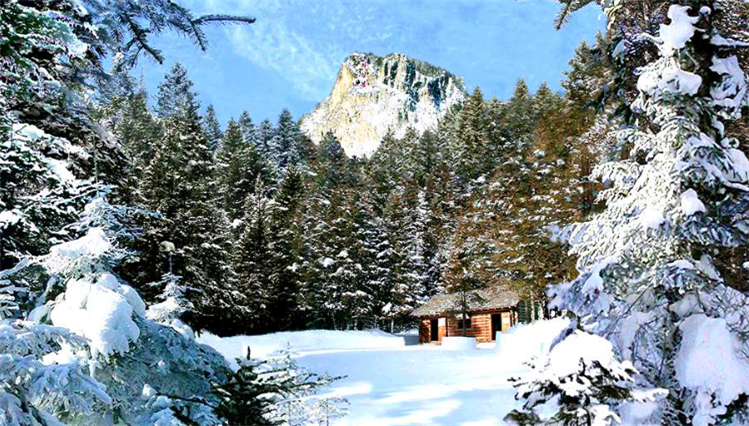
Mount Paektu, widely promoted as the revered birthplace of Kim Jong-il. The highest peak is marked with the name "Jong-il Peak." / Rodong Sinmun
In an effort to solidify the idea of the Paektu bloodline, Kim Il-sung personally identified the location of Kim Jong-il's birth on Mount Paektu in February 1987. A cottage was built at the designated spot, which was proclaimed as the revolutionary headquarters and Kim Jong-il's birthplace. During Kim Jong-il's visit to Russia in July 2001, he shared his childhood name, "Yuri," and mentioned that he was born in a small village near the Borosilov train station called Hamatan, as recorded in Konstantin Tsiolkovsky's memoir. The disclosure that Kim Jong-il's birth did not occur on Mount Paektu has the potential to challenge the fabricated narrative of the Kim family's "revolutionary history" and could significantly impact the belief system of the North Korean population as a whole.
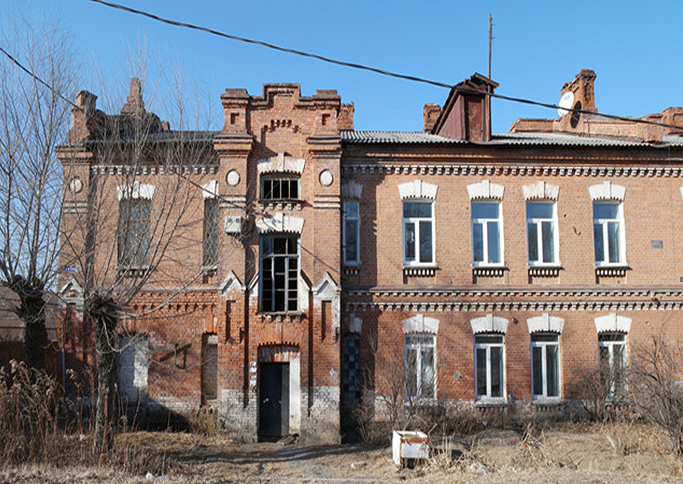
A residential complex in Razdolnoye, Svobodny, Vladivostok, Russia, which is recognized as the verified birthplace of Kim Jong-il. Based on testimonies from local maternity homes and caregivers at the time of his birth, it has been confirmed that Kim Jong-il was born in a second-floor unit of the row house located at 88 Village Road, Razdolnoye (the leftmost unit on the second floor). / NewDaily
Furthermore, the Juche ideology, the guiding philosophy of the Workers' Party of Korea (WPK), was officially formulated during Hwang Jang-yop's tenure at Kim Il Sung University. However, under the influence of Kim Jong-il's coercion and persuasion, it was declared that Kim Il-sung had founded the ideology.