

Unveiling the Operations of North Korea's Diplomatic Missions:
A Closer Look into Reality

Ph.D. Kim Dong-soo in North Korean studies
Former North Korean diplomat
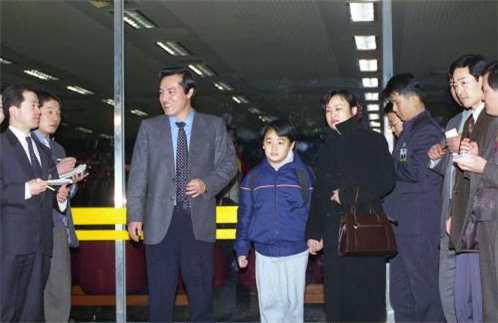
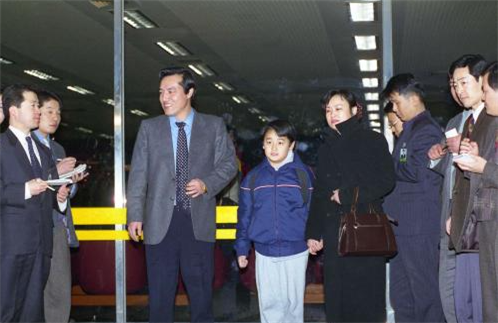
Kim Dong-Soo, the 3rd secretary of the Food and Agriculture Organization of the United Nations (FAO) North Korea representative office, fled to South Korea with his family on February 6, 1998 / by ehistory
During the 1960s and 1970s, North Korea's diplomatic missions actively engaged in external activities, exerting influence over South Korea in the Third World, including the United Nations (UN). Their success was attributed to the country's robust national economic power, which supported their external endeavors. North Korea followed the principles of political and economic independence and unity in defense, as advocated by Kim Il-sung, and focused on developing a socialist economy. They actively pursued economic exchanges and cooperation with socialist countries, particularly the Soviet Union, resulting in significant achievements in establishing friendly relations and providing economic and military assistance to Third World nations. The selection and deployment of North Korean diplomats during this period proceeded smoothly, considering factors such as individual ranks, party affiliation, and diplomatic competence. The operation of diplomatic missions in over 120 countries was generally successful, with few major issues.
However, North Korea's diplomatic standing began to decline in the 1980s under the sole dictatorship of Kim Jong-il. The collapse of the Soviet Union and the Eastern Bloc socialist countries in the 1990s, along with China's comprehensive reform and opening-up, had a significant impact on North Korea. In response, North Korea adopted a "cliff-edge nuclear diplomacy" approach, focusing heavily on nuclear weapons development. This approach led to strained relations with the international community and a decline in diplomatic effectiveness. Additionally, the country faced a severe famine in the late 1990s, which further weakened its diplomatic position, pushing it towards a state of relying on foreign aid and support.
During the 6th Congress of the Workers' Party of Korea on October 10, 1980, Kim Jong-il was officially designated as the sole successor to Kim Il-sung, solidifying his position of power and reinforcing a hereditary monarchist rule and military dictatorship. This was achieved through the implementation of the "10 Principles for Establishing the Party's Monolithic Ideological System and Its Sole Leadership System." In line with this, North Korea directed substantial resources towards the idolization of Kim Jong-il, allocating significant funds and prioritizing the pursuit of a "cliff-edge nuclear diplomacy" strategy centered around nuclear development.
The situation had a significant impact on North Korea's external affairs, directly affecting the functioning of its diplomatic missions abroad and the selection and deployment of diplomats. In the late 1980s, Kim Jong-il instructed Kang Sok-ju, the Minister of Foreign Affairs, to withdraw over half of the diplomatic missions. Up until that point, the special activity funds of the Ministry of Foreign Affairs and the maintenance expenses of the diplomatic missions were supported by Office 39 of the Central Committee of the Workers' Party of Korea. However, due to severe shortages of foreign currency, the financial management department reported to Kim Jong-il that they could no longer ensure the availability of special funds for foreign affairs activities and the maintenance expenses of diplomatic missions. In response, Kim Jong-il issued the directive to "withdraw all unnecessary diplomatic missions that are depleting the country's precious foreign currency reserves without providing significant benefits to the nation." Consequently, the Ministry of Foreign Affairs withdrew more than 50 diplomatic missions, reducing their presence from 120 embassies and representative offices worldwide.
Diplomatic missions operate in a manner that reflects the revolutionary and militant practices of their home country. Their daily schedule from Monday to Friday includes reading Rodong Sinmun from 8 am to 9 am, study sessions from 9 am to 10 am, engaging in external activities from 10 am to 6 pm, and participating in summarizing and reporting activities from 8 pm to 10 pm. On Saturdays, they have organizational meetings from 9 am to 10 am, lectures from 10 am to 11 am, general cleaning from 11 am to 12 pm, policy learning sessions from 2 pm to 4 pm, sports activities from 4 pm to 7 pm, and collective activities such as watching documentaries or art films from 8 pm to 10 pm.
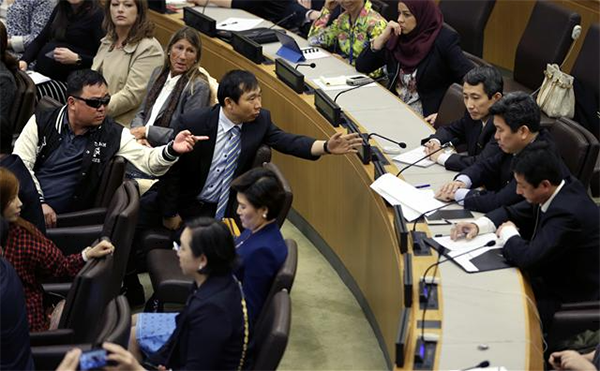
In an event related to North Korean human rights held at the United Nations Headquarters in New York on April 30, 2015, North Korean defectors (left) protest against the sudden actions of North Korean diplomats (right) / by Yonhap News Agency
Due to the foreign exchange constraints in their home country, diplomats often face delays and non-payment of living expenses for extended periods, ranging from six months to a year. As a result, some diplomats resort to engaging in illicit activities such as drug trafficking, counterfeiting currency, and involvement in the illegal trade of alcohol and tobacco. These activities are undertaken at great personal risk. In cases where a diplomatic mission experiences a delay of six months to a year in receiving funds, and the ambassador sends a special telegram requesting the funds, the response from Pyongyang is a clear directive to "withdraw the embassy!" Consequently, most diplomatic missions are unable to visit department stores regularly, and diplomat spouses collectively visit local grocery stores once a week to purchase canned food for pets or animal feed. They rely on discarded rice or corn with product defects for their sustenance.
Currently, the Ministry of Foreign Affairs has a total of approximately 1,500 personnel, out of which around 1,000 are diplomats. However, only a small fraction, approximately 100 diplomats, are repeatedly sent on diplomatic missions. This means that more than 80% of diplomats have not had the opportunity to go on overseas trips, including to countries like China and Russia. Among the preferred destinations for North Korean diplomats are the Middle East, despite the ongoing conflicts and unrest, and various African countries, where they can engage in lucrative illicit trade and accumulate foreign currency. Southeast Asia, China, Russia, and Europe are also ranked as preferred destinations. On the other hand, the United Nations in New York is the least preferred diplomatic mission for North Korean diplomats to be dispatched to.
In order to secure a position in major diplomatic missions in the Middle East or Africa, where illicit foreign currency earning is prevalent, individuals are expected to offer bribes of approximately $20,000. Even for regular diplomatic missions, a minimum of $10,000 in bribes is required to be considered for deployment. For instance, to be assigned to diplomatic missions known for successful foreign currency earning, such as Pakistan, Iran, Syria, and Iraq, individuals need to provide bribes of $1,000 to the department head, $1,000 to the deputy department head, $2,000 to the personnel department director, $2,000 to the personnel department head, $3,000 to the first deputy director, $1,000 to the Party Central Committee member, $2,000 to the organizational secretary, and $1,000 to the responsible director in the Organizational Department of the Central Committee of the Workers' Party of Korea. Furthermore, bribes of $2,000 to the section chief, $3,000 to the deputy director, and approximately $1,000 each to officials from the Ministry of State Security and the Ministry of Social Security, stationed abroad, are required.
North Korea currently finds itself at a critical juncture. On one hand, accepting support from various international financial and economic organizations, including the United States and the United Nations, would entail subjecting the country to extensive scrutiny of its internal affairs, which is unacceptable. On the other hand, without international assistance, the already bankrupt economy will struggle to recover, leading to severe internal class conflicts and a potential regime collapse. The evolving foreign policy of North Korea presents us with both challenges and opportunities. It holds the potential for peace, coexistence, and prosperity on the Korean Peninsula. However, if the ongoing phase of dialogue fails, it may result in renewed periods of tension and confrontation. Resolving the North Korean nuclear issue and achieving peace on the Korean Peninsula are tasks of utmost importance in our time, requiring collective wisdom and concerted efforts.