

Will the Nuclear-armed North Korea Attack South Korea?

Park, Hwee-rhak
Professor in Kookmin University
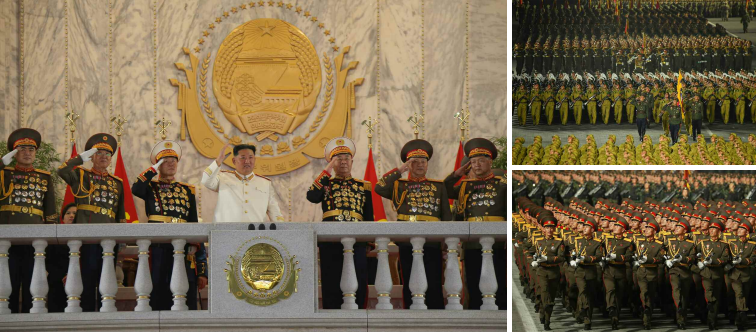
북한 김정은은 2022년 4월 25일 조선인민혁명군 창건 90주년 맞는 열병식 연설에서 대남통일전쟁이라는 ‘제2의 임무’를 강조했다. 출처: 노동신문
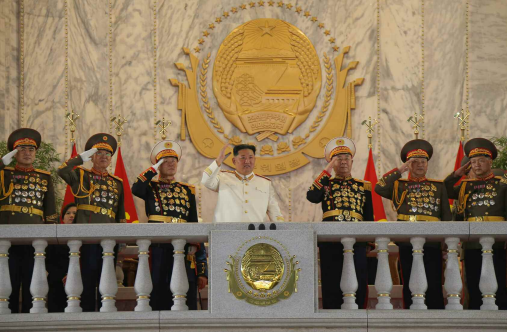
North Korea emphasized its "second mission," which is a re-unification war against South Korea, on its Armed Forces’ Day in April 2022. It seemed to believe that its first mission, which is blocking the U.S. nuclear extended deterrence or the nuclear umbrella for South Korea, has been almost achieved by possessing hydrogen bombs, intercontinental ballistic missiles (ICBMs), and submarine-launched ballistic missiles (SLBMs) to attack the U.S. mainland. It conducted intensive missile and aircraft attacking drills in October and November and announced plans to mass-produce tactical nuclear weapons to attack South Korea in December 2022. In March 2023, North Korea even detonated its mock nuclear warhead in the air and released the information to intimidate South Korea. North Korea seems to be willing to attack and annex South Korea, if the opportunity comes.
Recognizing the seriousness of current situation, the South Korean President Yoon Seok-yul visited the United States and had summit meeting with his US counterpart President Joe Biden in April 2023. The two Presidents announced their "Washinton Declaration" and agreed to establish a new "Nuclear Consultative Group," benchmarking the Nuclear Planning Group (NPG) in the North Atlantic Treaty Organization (NATO), to closely consult the employment of U.S. nuclear weapons in case of North Korea’s nuclear attack. They even declared that the United States would increase the presence of the U.S. strategic assets including the U.S. nuclear armed submarine (SSBN) around the Korean Peninsula to deter North Korea’s nuclear threat. President Biden even threatened to end North Korean regime if it conducts a nuclear attack.
On the surface, there seems to be no urgent military confrontation between the US-South Korea alliance versus North Korea. However, below the surface, there are serious competition between North Korea’s threat to attack South Korea with nuclear forces and serious deterrence efforts of the two allies to compel North Korea not to provoke.
North Korea’s Current Nuclear Capabilities
Due to North Korea’s extreme isolation from the outside world, there is no credible way to ascertain the precise strength of its nuclear forces. Although popular estimations refer to 20–60 nuclear weapons of North Korea, these numbers could be smaller than the actual ones, considering North Korea’s ten years’ continuous production of its nuclear weapons since its success in 2013.
Actually, a joint report released in April 2021 by two prominent research institutes in the United States and South Korea, Rand and Asan, estimated that North Korea could possess "67–116" nuclear warheads as of 2020 with its capacity to produce "12–18" warheads per year. Using this estimation, North Korea could possess 91–152 nuclear weapons as of 2022. Two South Korean scholars calculated that North Korea could have produced nuclear materials to make 178–447 nuclear weapons using its 18,000–26,000 centrifuges as of the end of 2022.
North Korea has also focused on the development of ICBMs and SLBMs to deliver these nuclear weapons to the United States. It managed to make Hwasong-15, 16, 17, and 18 as its ICBMs, which could fly to the United States and conduct at least an EMP (electro-magnetic pulse) attack in the high airspace over the United States. North Korea also has a few SLBMs, such as Puguksong-3, -4, and -5, and was reported to have completed a 3,000-ton submarine to transport and launch them. It even announced to make its nuclear submarine to approach and attack the U.S. mainland with these SLBMs. It has also developed more sophisticated short-range ballistic missiles (SRBMs), such as KN-23, KN-24, and KN-25, to attack the US forces in South Korea (USFK) and South Korea. These missiles can be launched immediately upon arrival at their launch sites and avoid interception of missile defense systems of the USFK and South Korea. North Korea can attack the U.S. mainland and South Korea with nuclear weapons, if it decides to do so.
It is true that North Korean nuclear forces cannot be compared to those of the United States. According to the U.S. government, the United States has 1,419 nuclear warheads on 662 deployed ICBMs, SLBMs and heavy bombers as of March 1, 2023. In addition to the deploy nuclear weapons, it holds approximately 2,000 warheads in reserve and 1,500 retired but not dismantled warheads. If the United States employs these weapons, North Korea will be completely annihilated.
However, it also is true that most of U.S. nuclear weapons are for the use against Russia and/or China and the number of U.S. tactical or non-strategic nuclear weapons are limited with approximately 100 gravity bombs other than the 100 deployed in Europe. North Korean leaders could think that the United States do not have relevant readiness for controlled escalation of tactical nuclear weapons’ exchange.
North Korea’s Nuclear Deterrence Strategy against the United States
North Korea's nuclear strategy against the United States has been the "minimal deterrence," which is to block the U.S.’ implementation of its nuclear umbrella commitment for South Korea by threatening to attack a few U.S. cities while risking its total annihilation by U.S.’ massive retaliations. Actually, North Korea leader, Kim Jong-un, threatened the United States by saying, "The entire U.S. mainland is within our nuclear strike range, and the nuclear button is always on my office desk. This is not a threat but a reality" in his new year’s address in January 1, 2018.
The United States, which has a great deal to lose, cannot easily address the suicidal nuclear attack threat of North Korea, which has almost nothing to lose due to its dire economic situation and the regime's desperation. North Korea seems to believe that the United States will not sacrifice New York to protect Seoul. As a result, North Korea evaluates that this mission, in other words, its first mission, is almost completed and shifts its focus to its second mission.
North Korea's success in its minimal deterrence strategy against the United States will become more certain if North Korea develops at least a SSBN, which could sail into the Pacific Ocean, approach the U.S. coast, and launch nuclear SLBMs onto U.S. cities before being detected. North Korea is in the process of making its SSBN now. Time seems to be on the side of North Korea.
North Korea’s Nuclear Warfighting Strategy against South Korea
If North Korean leaders are sure that the United States will not implement its nuclear umbrella promise to South Korea, they will launch an attack on South Korea to annex it for reunification of whole Korea through communism. Even North Korean leaders cannot easily decide to use nuclear weapons out of fear of their total demise, but they have been indoctrinated to reunify the whole Korea if opportunity comes. Their current political and economic situations are too desperate to be satisfied with the current status quo.
Indeed, North Korean leaders discussed their plan to attack and annex South Korea in a week, called their "Seven-Day War Plan," just after their success in developing its first nuclear weapon in 2013. They revised the plan once again in June 2022, just after Kim Jong-un demanded the preparation for their second mission. They must have learned the nuclear warfighting doctrine from the Soviet Union. The joint report of Rand and Asan that was mentioned before predicted that North Korea would use 40 to 60 nuclear weapons against South Korea from the outset of its attack.
North Korean leaders revised their law on their nuclear forces on September 8, 2022, in a way to ease the use of their nuclear weapons. In the law, they introduced five conditions on which their national leader could decide to use nuclear weapons: 1) a launched or imminent hostile forces’ attack by nuclear weapons or other weapons of mass destruction (WMD); 2) a launched or imminent nuclear or non-nuclear attack against the state leadership and the command organization of the state’s nuclear forces; 3) a launched or imminent military attack against important strategic objects of the state; 4) the need for an operation to prevent an expansion and protraction of war and taking an upper hand in a war; 5) a catastrophic crisis that threatens the existence of the state and the safety of the people. These conditions imply that North Korea leaders will use nuclear weapons whenever they think it necessary.
For example, North Korean ground forces will initiate a surprise attack supported by special forces and cyberspace warfare. They could use tactical nuclear weapons and/or non-persistent chemical weapons South Korean forces on the front line. In particular, they would use several nuclear weapons against various targets to destroy South Korea’s overall warfighting capabilities and resolve, paralyze South Koreans, and demand the surrender of the South Korean government before, during, or just after the advancement of its ground forces into South Korea. They will probably bypass U.S. military forces and bases in South Korea while threatening to use nuclear weapons against them if the United States takes provocative actions. They will advance quickly to Busan, which is the southernmost strategic city in South Korea and whose occupation could mean their victory in the war.
North Korea can begin with a limited attack on Seoul to reduce its risk of an all-out nuclear war and avoid the U.S.’ intervention. Seoul, the capital of South Korea, is an ideal objective for the limited attack. It is just 40 kilometers away from the border and has several well-developed automobile-only roads to be approached from the north. If North Korea is able to neutralize the front-line South Korean forces with tactical nuclear weapons and/or chemical weapons, North Korean ground forces could approach Seoul in a day. After occupying Seoul, they will indoctrinate South Koreans in Seoul, conduct a referendum, and announce the annexation of Seoul, as Russia did in Ukraine. They will threaten to use nuclear weapons if the United States and South Korea try to conduct any offensive military operations. If they succeed regarding Seoul, they will repeat the same process in other South Korean cities.
Conclusion
North Korea’s goal is clear and has never changed: the reunification of the whole Korean Peninsula through communism. To achieve that goal, North Korea had to block the US nuclear umbrella for South Korea. North Korea called it “the first mission.” Seriously enough, North Korea started to emphasize its second mission, the reunification of the whole Korean, since the early 2022, which means that it is sure about the success in its first mission. If North Korean leaders believe that the perfect opportunity comes, they will initiate a combined attack with conventional and nuclear weapons on South Korea in order to achieve their second mission.
These conclusions have been common sense to most conservative South Koreans and U.S. citizens who have a balanced view on North Korea. Actually, more than 80% of South Koreans have consistently thought that North Korea would not give up its nuclear weapons no matter what. However, several South Korean progressives have been reluctant to confront the reality and wasted lots of time. North Korea managed to strengthen its strategic nuclear forces during the South Korean progressive administration, the Moon Jae-in Administration.
It is time for most progressive South Koreans to rethink their views on North Korea and North Korean nuclear armament. They happened to have a strong misperception of North Korea in the course of their resistance and protests for democracy in the 1970s and 1980s and deceived by North Korea’s deception operations. They should accept South Korean conservative’s view that North Korea developed its nuclear weapons to attack and annex South Korea by force and join the efforts for strong deterrence and defense against North Korean nuclear threat.
The USFK and South Korean forces should be fully prepared to defend South Korea from North Korea’s surprise attack using conventional and nuclear forces together. They should develop several probable scenarios of the attack, including an all-out nuclear attack and a limited attack on Seoul, and take necessary precautionary measures to defeat the North Korean force effectively and quickly. They should revise all their operational plans to incorporate the requirements of nuclear warfighting and conduct their combined exercises under the North Korea’s nuclear attack situation. “If you wish for peace, prepare for a war.”
주제어: 북한(North Korea), 핵전쟁(Nuclear War), 핵공격(Nuclear Attack)
-
PREV [From the Editor-in-chief]
-
NEXT [Policy Proposal]