

We Look Forward to the Vatican’s Continued Engagement in Promoting Peace on the Korean Peninsula

Kim, Hong-seop
Ph.D. Chairman,Incheon YMCA
Prof. Emeritus INU
Joint Representative, Network for Peace & Unification
The Pope (Summus Pontifex) serves as the spiritual leader of the Catholic Church, the Bishop of Rome, and the sovereign of Vatican City State. Today, the global Catholic community is estimated to comprise approximately 1.5 billion faithful, including roughly 1.3 billion members of the Latin (Western) Church and around 200 million adherents of the Eastern Catholic Churches. When combined with the world's approximately 900 million Protestants, Christians collectively number an estimated 2.3 billion people, accounting for about 31 percent of the global population.
The current Pope, Leo XIV, is the 267th pontiff of the Catholic Church and assumed the papacy on May 8, 2025. Although the Pope's formal ecclesiastical office is that of the Bishop of Rome, the modern papacy has evolved into a global institution with substantial moral, diplomatic, and international influence. The Pope today functions not only as a religious authority but also as a prominent global figure whose statements and actions often carry significant political, humanitarian, and diplomatic implications.
For many centuries, the papacy was dominated by Italians and, on occasion, by French pontiffs. However, the election of Pope John Paul II of Poland in October 1978 marked the beginning of a new era in which non-Italian leaders assumed an increasingly prominent role. He was succeeded by Pope Benedict XVI of Germany, Pope Francis of Argentina—the first pontiff from the Americas—and, most recently, Pope Leo XIV, an American-born pope with deep ties to Peru.
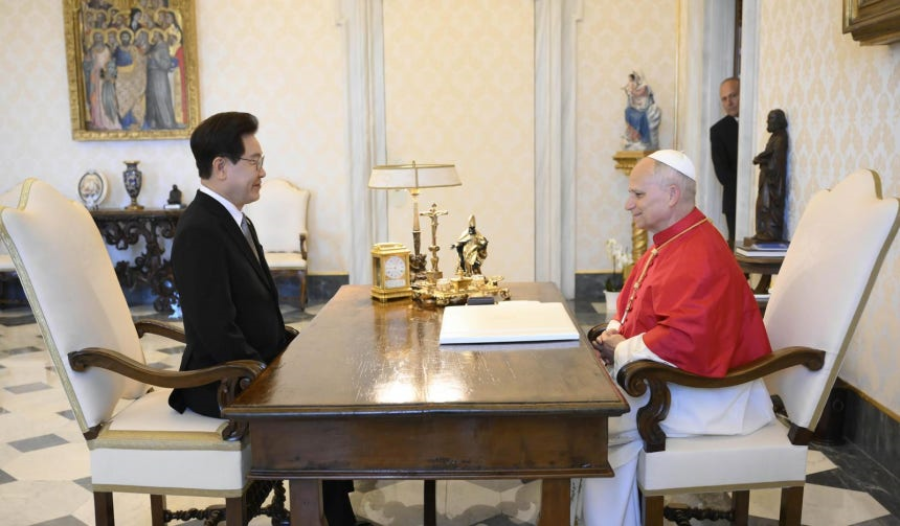
Although the Pope remains, in formal ecclesiastical terms, the Bishop of Rome, the international role of the papacy has expanded considerably over time. As Bishop of Rome, the Pope maintains a pastoral relationship with Catholic communities throughout the world. At the same time, through institutions such as the College of Cardinals and the Roman Curia, he serves as both the symbolic head and the effective leader of the global Catholic Church.
Catholicism was introduced to the Korean Peninsula during the late Joseon Dynasty through the intellectual movement known as Seohak ("Western Learning"). It gradually spread through the efforts of both foreign missionaries and indigenous believers, despite repeated government persecutions that produced a large number of martyrs and left a lasting legacy in the history of Korean Catholicism.
I still vividly recall the historic arrival of Pope John Paul II at Gimpo International Airport in May 1984, when he became the first pope to visit the Korean Peninsula. After performing the traditional gesture of kissing the ground upon his arrival, he greeted the Korean people in their own language, quoting a well-known Confucian saying: “Is it not a joy to welcome a friend who has come from afar?”
During his visit to South Korea for the 44th World Eucharistic Congress in October 1989, Pope John Paul II expressed his hope that “God would grant Korea and all its people the grace of spiritual happiness and fraternal harmony.”
Following the first Inter-Korean Summit in 2000, President Kim Dae-jung conveyed to the Vatican a proposal for the Pope to visit North Korea. John Paul II responded with considerable interest and expressed his willingness to make the journey, emphasizing the importance of reconciliation, dialogue, and peace on the Korean Peninsula. Although the visit ultimately did not materialize, the Pope’s positive response reflected the Vatican’s longstanding support for peace and inter-Korean reconciliation.
In his prayers for peace on the Korean Peninsula, Pope John Paul II repeatedly expressed deep concern for the people of North Korea and consistently emphasized the values of reconciliation, solidarity, and human fraternity. Reflecting his longstanding commitment to peace and dialogue, he supported efforts to promote greater understanding between the two Koreas.
During discussions in 2000 regarding a possible papal visit to North Korea, he reportedly remarked that “it would be a miracle for me to go to North Korea.” The statement reflected both his humility and his recognition of the extraordinary political and diplomatic challenges involved. At the same time, it underscored his enduring hope that such a visit might contribute to reconciliation and peace on the Korean Peninsula.
The Pope’s Engagement with the Korean Peninsula and Our Response
Pope Leo XIV, who succeeded Pope Francis, had developed a longstanding connection with Korea even before his election to the papacy. During his tenure as Prior General of the Order of Saint Augustine, he visited South Korea on five occasions. As a result of these experiences, he is widely regarded as a pope with a deep understanding of Korean affairs.
During his visits, he traveled to areas near the Demilitarized Zone (DMZ), where he witnessed firsthand the realities of the Korean Peninsula’s division. He reportedly expressed profound sorrow over the continued separation of the Korean people and demonstrated a keen interest in the prospects for reconciliation and lasting peace. These experiences have contributed to expectations that Pope Leo XIV will continue the Vatican’s longstanding commitment to peace and dialogue on the Korean Peninsula.
Through his engagement with issues concerning the Korean Peninsula, Pope Leo XIV has consistently demonstrated his dedication to peace, reconciliation, and human dignity.
First, Pope Leo XIV has demonstrated a deep concern for the Korean Peninsula and the suffering caused by its prolonged division. He has repeatedly encouraged Catholics worldwide to stand in solidarity with the Korean people and to pray for reconciliation and lasting peace. Consistent with the Vatican's longstanding commitment to nonviolence and dialogue, he has emphasized that conflicts in troubled regions “must be resolved through dialogue and fraternity, not through force.”
Second, Pope Leo XIV has promoted a message of peace through the universal language of sports. During an audience at the Vatican, he was presented with an honorary 10th-degree black belt and a dobok by the World Taekwondo (WT).
On that occasion, he praised taekwondo's contribution to advancing peace and humanitarian values worldwide, particularly through programs that support refugee youth. He emphasized that sports can serve as a powerful instrument for peace by transcending national borders, political divisions, and ideological differences, thereby fostering mutual understanding, respect, and solidarity among peoples.
Third, Pope Leo XIV's planned visit to South Korea for the 2027 World Youth Day (WYD) in Seoul represents a historic opportunity. The visit is likely to become the most significant manifestation of his engagement with the Korean Peninsula to date and could serve as a catalyst for meaningful progress toward reconciliation and peace.
His forthcoming sixth visit to South Korea would make him the pope with the most visits to the Korean Peninsula in history, underscoring the depth of his longstanding connection with the Korean people. The Catholic Church in Korea, together with the broader international community, holds high expectations that Pope Leo XIV will use the occasion of the 2027 World Youth Day to deliver a powerful message of reconciliation, peace, and hope—not only to South Korean youth but also to the people of North Korea.
Fourth, Pope Leo XIV has drawn attention to the ethical and social challenges posed by emerging technologies. In Magnifica Humanitas (“Great Humanity”), he warned that misinformation generated and amplified through digital platforms, data systems, and algorithms could deepen polarization and exacerbate hostility in situations of conflict and war.
He also cautioned that the rapid expansion of an AI-driven digital economy could contribute to the erosion of human dignity and the exploitation of labor. Accordingly, Pope Leo XIV has emphasized that artificial intelligence should serve the common good and remain accessible to all. He has further argued that political authorities bear a responsibility to prevent excessive concentrations of technological and informational power while safeguarding human dignity, peace, and justice.
Fifth, President Lee Jae-myung’s visit to the Holy See represents more than a symbolic diplomatic engagement; it offers an important opportunity to broaden international support for renewed efforts to promote peace on the Korean Peninsula. In a recent briefing, National Security Advisor Wi Seong-rak outlined President Lee’s official schedule for his visit to the Holy See and reaffirmed the government’s commitment to working closely with the Vatican to advance peace, reconciliation, and dialogue on the Korean Peninsula.
President Lee attended the “Special Mass for Peace and Solidarity” at the Vatican the previous day, where he delivered a commemorative address. Marking the 26th anniversary of the June 15 Inter-Korean Joint Declaration, he underscored the importance of dialogue and cooperation between the two Koreas, stating that “the spark of hope for peace on the Korean Peninsula ignited by the June 15 Declaration remains alive.”
On June 15, President Lee held a private audience with Pope Leo XIV, followed by discussions with Cardinal Pietro Parolin, the Holy See’s Secretary of State. During these meetings, President Lee conveyed the Korean people’s aspirations for lasting peace on the Korean Peninsula and outlined his government’s vision for advancing dialogue, reconciliation, and cooperation between the two Koreas. In response, the Holy See reaffirmed its longstanding commitment to and continued interest in promoting peace and reconciliation on the Korean Peninsula.
Both sides agreed to cooperate closely to ensure the successful hosting of the 2027 World Youth Day in Seoul, and President Lee took the opportunity to formally invite Pope Leo XIV to visit South Korea.
Pope Leo XIV’s anticipated visit to South Korea, together with his message of peace and reconciliation for the Korean Peninsula and the broader international community, has the potential to provide renewed momentum for efforts to promote dialogue, mutual understanding, and peaceful coexistence. Many hope that his visit will encourage both South and North Korea to pursue a more constructive path toward reconciliation and lasting peace.
Implications for South Korea
First, the Pope’s engagement has the potential to contribute to efforts aimed at reducing tensions on the Korean Peninsula and fostering a more favorable environment for peace. At a time when inter-Korean relations are undergoing significant change—including North Korea’s redefinition of inter-Korean relations through constitutional revisions and its increasing emphasis on the concept of two separate states—the Pope’s statements and actions may carry important political and symbolic significance. His advocacy of dialogue, reconciliation, and peaceful coexistence could help encourage a more constructive atmosphere on the Korean Peninsula.
Second, his involvement may help strengthen the prospects for renewed inter-Korean dialogue and foster a more favorable environment for reconciliation between the two Koreas.
Third, his engagement may contribute to moderating domestic political and social polarization surrounding issues related to inter-Korean relations, peace, and reunification. By emphasizing dialogue, mutual understanding, and human fraternity, the Pope's message may encourage more constructive public discussion of the Korean Peninsula's future.
Fourth, his engagement may enhance South Korea's diplomatic profile in East Asia and contribute to efforts aimed at promoting greater regional stability and peace. Given the Vatican's moral authority and international influence, continued cooperation between South Korea and the Holy See may also strengthen international support for peacebuilding initiatives on the Korean Peninsula.
Ultimately, the Pope's engagement with Korean Peninsula issues may generate effects that extend beyond the region itself. By fostering a culture of peace and reconciliation in Northeast Asia, it could contribute to broader international efforts to advance conflict resolution and sustainable peace.
Implications for North Korea
From North Korea's perspective, Pope Leo XIV's engagement could provide an opportunity to enhance its international image and present itself as a more responsible member of the international community.
The Pope's visit to South Korea, his statements concerning the Korean Peninsula, and the possibility of future engagement with North Korea could serve as a catalyst for new diplomatic opportunities in East Asia. Such developments may encourage broader international dialogue and create additional avenues for North Korea to engage with emerging international frameworks, including the United Nations, BRICS, and countries of the Global South. In this respect, papal engagement could help expand the diplomatic space available to all parties beyond the existing patterns of strategic competition and geopolitical confrontation in the region.
Domestically, such engagement could provide an opportunity for North Korea to reinforce official messaging while projecting an image of stability, confidence, and greater openness to the outside world.
Over time, sustained engagement with the Holy See and the broader international community could contribute to a gradual improvement in North Korea's international image and help soften perceptions of the country as isolated and confrontational.
Ultimately, if accompanied by meaningful policy reforms and sustained international engagement, North Korea could play a more constructive role in advancing universal values and addressing shared global challenges, including peace and security, environmental cooperation, international exchange, and human rights.
As we reflect on the challenges and opportunities before us, the wisdom of earlier generations remains highly relevant: “Peace requires more effort than war” (Napoleon Bonaparte); “There is no path to peace; peace is the path” (Mahatma Gandhi); and “The best way to preserve peace is to prepare for it” (George Washington).
Just as God prepared the way for the return of the Israelites and the rebuilding of the Temple through Cyrus during the Babylonian Exile, we cannot know through which nation, individual, or institution He may choose to begin His work on the Korean Peninsula at the appointed time (kairos), after more than eight decades of division.
Our responsibility is therefore to faithfully carry out our mission as stewards of peace and reconciliation on the Korean Peninsula—steadily, patiently, and with perseverance. Like Noah, who relied solely on God's word, endured criticism, and devoted years to building the ark, we must continue our efforts in faith, even when the path forward remains uncertain.
-
PREV [Thematic Analysis]
-
NEXT [Issue Analysis]