

Korea–Europe Cooperation in an Evolving Strategic Environment

Sungwon Lee
Research Fellow Sejong Institute
How Should We View Korea-Europe Cooperation?
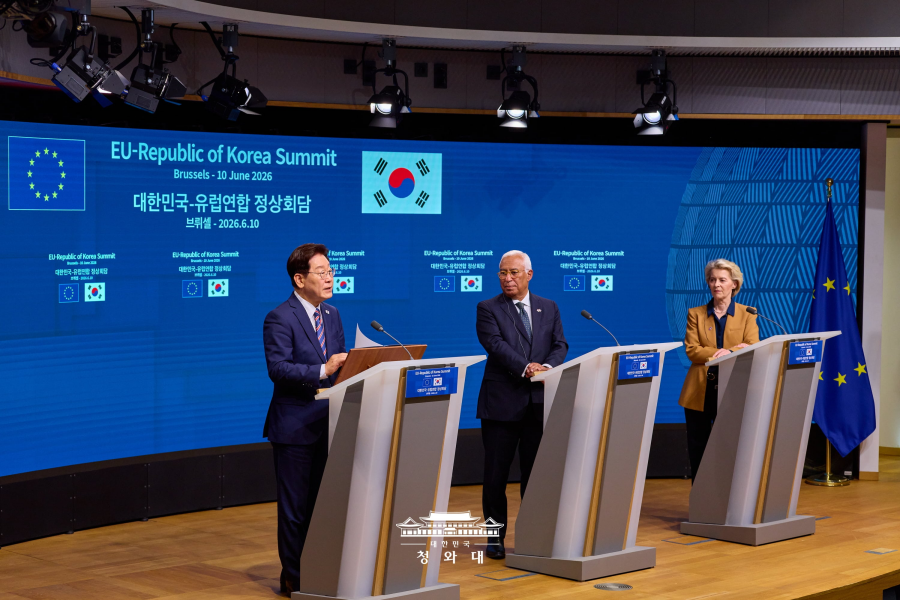
In recent years, interest in and discussions surrounding security cooperation between South Korea and Europe have expanded significantly. A number of analytical frameworks have been employed to explain the growing momentum behind cooperation between the two regions. First, there has been increasing recognition of South Korea and Europe as partners that share common values and norms in the Indo-Pacific.
Both sides released their respective Indo-Pacific strategies at roughly the same time, underscoring their importance as like-minded partners that share regional visions, values, and normative principles within the broader framework of U.S. leadership. In addition, the concept of “shared threats” has emerged as an important narrative underpinning the rationale for Korea–Europe cooperation.
Following the outbreak of the Russia–Ukraine war in 2022, Europe’s growing demand for military equipment and the urgent need for rearmament have created substantial opportunities for the expansion of South Korea’s defense industry into European markets. Most notably, North Korea’s deployment of troops to Russia has reinforced the so-called “one theater” narrative—the notion that security challenges in Europe and Asia are increasingly interconnected—and has further broadened discussions regarding security cooperation between the two regions.
At the same time, the international order is undergoing profound transformation. While frameworks such as the Russian threat, China’s rise, and the Indo-Pacific strategy are useful in explaining specific drivers and characteristics of Korea–Europe cooperation, they nonetheless provide only a partial explanation and offer limited analytical leverage for assessing its long-term sustainability.
Against this backdrop, this paper raises several key questions: Why has the strategic value of South Korea and Europe increased to an unprecedented level? What forms of cooperation can both sides realistically pursue? What constraints and limitations remain? And what issues must be addressed to ensure sustainable cooperation in the years ahead?
Shared Strategic Realities between South Korea and Europe
South Korea–Europe cooperation should be understood not merely as a response to shared threat perceptions, but as a product of broader structural transformations. Since the end of the Cold War, both South Korea and Europe have pursued reconstruction, economic development, and prosperity within a common structural environment defined by U.S. security guarantees and an open international economic order.
Today, however, both are witnessing the gradual erosion of the foundations that have sustained this order. Supply chains are increasingly shaped by geopolitical considerations, while industrial competitiveness has become inseparable from national security concerns.
In particular, the shift in U.S. foreign policy following President Trump’s return to office, combined with the proliferation of simultaneous conflicts such as the Russia–Ukraine war and the conflict involving Iran, has placed unprecedented strain on the assumptions and institutional mechanisms underpinning the existing international order. One notable example is the evolving concept of alliances.
Traditionally, alliances were understood as security communities grounded in shared values. Increasingly, however, they are being redefined in more transactional terms, with their value assessed according to the extent to which they advance the interests of security-providing states and the level of contributions made by alliance partners.
In other words, Europe is confronting not merely an intensification of geopolitical competition, but a fundamental transformation in the way the international order is sustained. South Korea faces a similar reality. From this perspective, South Korea–Europe cooperation should not be viewed primarily as a response to common adversaries such as China and Russia. Rather, it should be understood as a convergence between two actors confronting the same underlying strategic transition.
More specifically, South Korea and Europe face three common strategic dilemmas. The first is the tension between alliance dependence and strategic autonomy. Europe recognizes that its security remains heavily dependent on the United States while simultaneously acknowledging that such dependence may be difficult to sustain over the long term. South Korea faces a comparable challenge. Although U.S. extended deterrence remains indispensable, Seoul must also balance this dependence with efforts to strengthen self-reliance and expand its own defense capabilities.
The second dilemma concerns maintaining industrial competitiveness amid intensifying great-power competition. The Russia–Ukraine war and the strategic rivalry between the United States and China have demonstrated that defense industrial capacity, supply chains, technological competitiveness, critical minerals, and energy security are all integral components of national security.
Security is no longer confined to the military domain; rather, it increasingly encompasses industry, technology, finance, and economic policy. As strategic competition between Washington and Beijing intensifies, the importance of middle-power partnerships capable of reducing technological dependencies and narrowing capability gaps in advanced technology sectors is correspondingly increasing.
A third dilemma involves balancing openness with resilience. Both South Korea and Europe have benefited enormously from open economic systems. At the same time, both increasingly emphasize supply chain security and the protection of strategically important industries. They share concerns that excessive protectionism could undermine competitiveness, while excessive openness could expose critical sectors to heightened vulnerabilities.
In this respect, South Korea and Europe share similar structural vulnerabilities and strategic dilemmas. These common challenges increase both the necessity for cooperation and the strategic value that each side brings to the other.
South Korea’s Strategic Value in Europe’s Rearmament
Since the outbreak of the Russia–Ukraine war, Europe has embarked upon a comprehensive and multidimensional rearmament effort. This process should not be understood simply as an arms buildup or an increase in defense expenditures.
The deficiencies exposed by the war extended far beyond shortages of military equipment. They included shortcomings in defense industrial production capacity, military logistics, maintenance and sustainment systems, supply chains, and technological capabilities, all of which exposed fundamental limitations in Europe’s ability to sustain modern warfare.
As a result, Europe’s objective extends beyond simply addressing immediate capability gaps. It seeks instead to rebuild the broader strategic foundations necessary to support long-term security and deterrence. Many of the policy initiatives currently being pursued across Europe are aimed at restoring this weakened strategic base.
At the same time, Europe faces multiple constraints. It must reduce its dependence on the United States, yet no viable substitute for American capabilities exists in the near term. It must substantially increase defense spending while maintaining fiscal sustainability. It must prioritize regional deterrence while remaining engaged in the Indo-Pacific. Europe is therefore engaged in a complex balancing act among competing strategic imperatives.
From this perspective, South Korea’s strategic significance stems from the fact that it is one of the few reliable partners capable of alleviating several of Europe’s structural constraints. The Russia–Ukraine war has demonstrated that success in modern warfare depends not only on military inventories but also on the ability to sustain production and replenish critical capabilities. South Korea has emerged as a country capable of addressing a significant portion of Europe’s capability shortfalls.
Indeed, since the onset of the Russia–Ukraine war, major contracts for tanks, self-propelled artillery systems, multiple-launch rocket systems, and FA-50 light combat aircraft have been concluded, particularly with Poland. Interest in South Korean defense systems has also expanded in Romania, the Czech Republic, and the Baltic states. This trend reflects not merely price competitiveness but also South Korea’s ability to provide what Europe urgently requires: rapid production, reliable delivery schedules, operationally proven systems, and resilient supply chains.
From a broader strategic perspective, Europe’s objective is not simply the reconstruction of military power; it is the restoration of industrial capacity, technological competitiveness, and supply chain resilience. In this context, South Korea’s strengths in semiconductors, batteries, shipbuilding, digital technologies, artificial intelligence, and unmanned systems align closely with Europe’s evolving strategic priorities.
Likewise, South Korea increasingly views Europe not merely as an export destination but as a critical partner in advanced technology, research and development, regulatory frameworks, standards-setting, and industrial ecosystems. Ultimately, the foundation of Korea–Europe cooperation lies not primarily in shared values, but in strategic complementarity.
South Korea can provide the production capacity and speed that Europe currently lacks, while Europe can provide advanced technology, market access, and institutional networks that South Korea seeks. This creates an opportunity for both sides to mitigate shared vulnerabilities by leveraging their respective strengths.
Constraints on Defense Cooperation Between South Korea and Europe
Recent discussions on South Korea–Europe cooperation have focused largely on defense export achievements. Indeed, South Korea’s defense exports have exceeded $50 billion over the past five years, while its footprint in the European defense market has expanded considerably since the outbreak of the Russia–Ukraine war. However, from a long-term perspective, the current framework of cooperation faces several structural limitations.
A defense export model centered on Eastern Europe—which remains geographically proximate to the Russian threat—entails inherent political and strategic uncertainties. While these countries are actively pursuing defense cooperation with South Korea based on acute threat perceptions and pressing defense requirements, future developments such as war fatigue, fiscal constraints, political transitions, and shifts in policy toward Russia could alter their strategic priorities. Consequently, it would be imprudent to assume that current large-scale procurement contracts will necessarily translate into a sustained long-term trajectory.
Moreover, prevailing assessments suggest that a cooperation model centered primarily on the export of finished defense systems faces inherent sustainability challenges unless it evolves into broader forms of collaboration, including technology transfer, joint research and development, and the establishment of maintenance, repair, and sustainment capabilities. It is important to recognize that the ultimate objective of Europe’s rearmament effort is not long-term dependence on external suppliers but rather the revitalization and strengthening of its own regional defense industrial ecosystem.
From a regulatory standpoint, Europe’s rearmament initiatives are creating new constraints even as they generate opportunities for expanded cooperation. The European Union is pursuing greater defense-industrial self-reliance by strengthening domestic production capabilities and regional supply chains, while increasingly mandating that a substantial proportion of defense components be sourced within Europe. These regulatory developments are likely to constrain the direct participation of non-European defense firms, including those from South Korea.
Furthermore, Europe itself is far from strategically homogeneous. Significant differences persist among European countries with respect to threat perceptions, fiscal conditions, domestic political consensus, strategic culture, institutional arrangements, and approaches to alliance management. This diversity complicates the development of a coherent European demand signal and unified policy direction regarding defense cooperation. As such, it constitutes a critical variable that South Korea must carefully consider when formulating its strategic priorities and engagement strategy toward Europe.
From this perspective, South Korea–Europe defense cooperation faces several important challenges. Above all, defense cooperation requires a more deliberate and strategic approach, as it extends beyond the sale of military equipment to encompass the development of shared threat assessments and strategic objectives. The central question is not simply which weapons should be sold, but rather which challenges should be addressed jointly and which common interests should be defended through sustained cooperation.
In other words, policymakers must identify the broader strategic direction and institutional framework of cooperation while carefully balancing the opportunities and risks associated with deeper defense engagement. While this proposition may appear self-evident, relatively few substantive and sustained discussions have taken place between South Korea and European partners concerning these fundamental issues.
From an operational perspective, cooperation at the level of the broader defense-industrial ecosystem—including technology transfer, joint research and development, local production, supply chain integration, and maintenance and sustainment infrastructure—will become increasingly important. In addition, as both South Korea and Europe accelerate investments in unmanned systems and artificial intelligence-enabled defense technologies, opportunities for technological collaboration and joint innovation are likely to expand further.
The key issue is that the future trajectory of Korea–Europe cooperation will be determined not by the volume of weapons sold, but by the degree to which the two sides can integrate their industrial ecosystems in areas of mutual strategic benefit.
South Korea should view Europe not merely as a defense export destination, but as a strategic partner for cooperation in industry, technology, supply chains, and the development of norms and standards. Likewise, cooperation is more likely to evolve into a sustainable long-term partnership when Europe views South Korea not simply as a supplier of defense equipment, but as a partner capable of addressing shared strategic challenges.
Key Issues for Sustainable Korea–Europe Cooperation
South Korea and Europe are experiencing the same broad strategic transition. Having long benefited from the existing international order, both are increasingly becoming stakeholders responsible for helping sustain and defend that order. As the conditions that enabled security and prosperity continue to erode, both sides must identify a new equilibrium between alliance commitments and strategic autonomy, between security imperatives and economic priorities, and between openness and resilience.
In this context, Korea–Europe cooperation carries significance that extends well beyond conventional defense or economic cooperation. Its value lies not merely in coordinating responses to shared threats amid intensifying geopolitical competition, but in the development of a strategic partnership capable of managing common vulnerabilities and adapting to systemic change.
Moreover, the success of this partnership will be measured not by the number of defense systems exported, but by the extent to which both sides are able to cultivate sustainable resilience and meaningful strategic complementarity. Accordingly, expanding the scope of dialogue on these issues is essential.
Ultimately, the future of South Korea and Europe—despite their geographic distance—will depend less on the existence of common threats than on their ability to manage shared strategic dilemmas. Their success in doing so will serve as the principal benchmark for determining the future direction and durability of Korea–Europe cooperation.
-
PREV [Current Affairs Analysis]
-
NEXT [Feature Article]