

Not Nuclear Armament, but Transparent Deterrence:
Korean Nuclear-Powered Submarines, International Trust, and the Future of Alliance Modernization

Taejoon Kim
Professor Emeritus
Korea National Defense University
Prologue: Why South Korea Needs Nuclear-Powered Submarines Now
The security environment surrounding the Korean Peninsula is undergoing rapid transformation. North Korea continues to advance its nuclear and missile capabilities and has publicly declared its intention to develop nuclear-powered submarines. At the same time, strategic competition between the United States and China is intensifying throughout the Indo-Pacific region, underscoring the growing importance of maritime security and undersea operational capabilities.
Against this backdrop, ongoing discussions concerning the modernization of the U.S.–ROK alliance and the transfer of wartime operational control (OPCON) are placing greater strategic responsibilities on South Korea. The central question is whether South Korea possesses the capabilities required to meet these expanding obligations.
It is in this context that a Korean nuclear-powered submarine has emerged as an increasingly important policy consideration. With the capacity to remain submerged for prolonged periods and conduct persistent undersea surveillance and operations, such a platform could serve as a critical strategic asset for deterring North Korean submarine activities and enhancing maritime security.
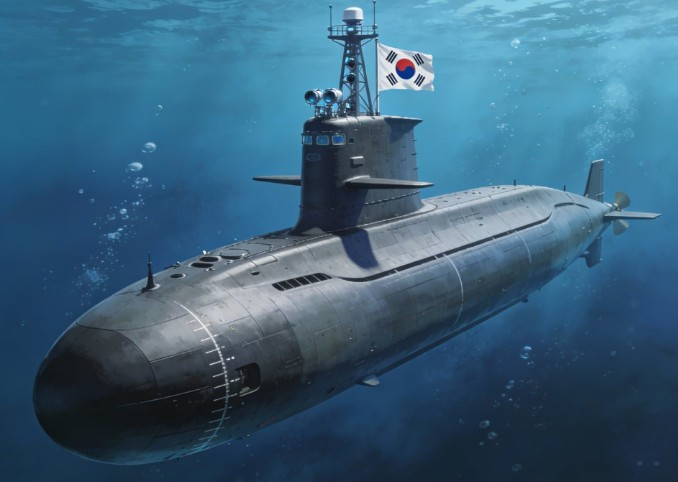
Nevertheless, concerns remain within the international community. Critics have raised questions about whether the development of nuclear-powered submarines could, over time, create conditions conducive to nuclear armament. South Korea must therefore advance a clear and credible principle: a Korean nuclear-powered submarine should be understood not as a precursor to nuclear weapons development, but as a non-nuclear strategic asset operating in full compliance with international norms, rules, and nonproliferation obligations.
Despite the growing severity of North Korea’s nuclear threat, South Korea has consistently upheld its commitments under the Nuclear Non-Proliferation Treaty (NPT). Moving forward, it should continue to reinforce international confidence by maintaining close cooperation with the International Atomic Energy Agency (IAEA) and ensuring the transparent and accountable management of nuclear fuel and related technologies.
Ultimately, the issue at stake is not merely the acquisition of greater military capability. Rather, it is the development of a responsible deterrent posture that enjoys the confidence of the international community. This is the central question underlying the debate over a Korean nuclear-powered submarine.
I. Alliance Modernization and South Korea’s Expanding Strategic Responsibilities
For decades, the U.S.–ROK alliance has been principally oriented toward the defense of the Korean Peninsula. Today, however, the strategic environment is undergoing profound transformation. North Korea continues to advance its nuclear and missile capabilities, while intensifying strategic competition between the United States and China is reshaping the geopolitical and security dynamics of the Indo-Pacific region.
At the same time, maritime security, supply-chain resilience, and emerging technologies have become increasingly important components of national security. As a result, the alliance is being called upon to assume broader roles and responsibilities that extend beyond its traditional focus on deterrence and defense on the Korean Peninsula.
This evolving strategic environment has given rise to the concept of alliance modernization. Alliance modernization is not merely a matter of enhancing military capabilities; rather, it involves redefining the roles, missions, and responsibilities of alliance partners in response to changing strategic realities.
Discussions regarding the transfer of wartime operational control (OPCON) should therefore be understood within this broader framework. The ultimate objective is to enable South Korea to assume greater strategic responsibilities while preserving the strength and effectiveness of the U.S.–ROK alliance.
It is in this context that the strategic significance of a Korean nuclear-powered submarine becomes apparent. By enabling prolonged submerged operations and persistent undersea surveillance, a nuclear-powered submarine would significantly enhance South Korea’s capacity to monitor, track, and deter North Korean submarine activities while contributing to regional maritime stability. Such a platform should be viewed not simply as an additional military asset, but as a strategic capability that enables South Korea to fulfill its expanding responsibilities within a changing regional security environment.
Ultimately, alliance modernization is not about diminishing the role of the United States; rather, it is about achieving a more effective distribution of responsibilities between allies. In this context, a Korean nuclear-powered submarine would demonstrate South Korea’s willingness and ability to make a greater contribution to collective security, thereby enhancing both the resilience and long-term sustainability of the U.S.–ROK alliance.
II. Hyunmoo-V and Nuclear-Powered Submarines: The Two Pillars of Non-Nuclear Deterrence
Some critics question whether South Korea truly needs a nuclear-powered submarine when it already possesses powerful conventional strategic assets such as the Hyunmoo-V missile system. However, these capabilities should not be viewed as competitors; rather, they are complementary components of a broader non-nuclear deterrence architecture that operate across different domains.
Hyunmoo-V represents a land-based strategic deterrent capable of delivering precise conventional strikes against critical targets. A nuclear-powered submarine, by contrast, provides a maritime deterrent capability through prolonged underwater operations, persistent surveillance, and the ability to detect, track, and deter hostile submarine activities.
If Hyunmoo-V provides the capability to strike, a nuclear-powered submarine provides the capability to monitor, pursue, and deter beneath the sea. Together, they form two mutually reinforcing pillars of South Korea’s non-nuclear deterrence posture.
What is particularly noteworthy is that South Korea has refrained from pursuing nuclear weapons despite confronting an increasingly sophisticated nuclear threat from North Korea. Rather than seeking a nuclear deterrent of its own, it has enhanced its security through advanced conventional strategic capabilities.
A nuclear-powered submarine should be viewed in the same light. It is not a precursor to nuclear armament, but a non-nuclear strategic capability intended to strengthen national defense while remaining fully compatible with international norms, legal frameworks, and nonproliferation commitments.
In this sense, Hyunmoo-V and a Korean nuclear-powered submarine constitute the two pillars of South Korea’s non-nuclear deterrence posture—one providing a land-based strategic deterrent and the other a maritime deterrent capability.
Together, they form a complementary framework designed to strengthen national security without departing from South Korea’s longstanding nonproliferation commitments. The strategic path South Korea should pursue is therefore not nuclear armament, but the development of a credible, reliable, and internationally accepted non-nuclear deterrence architecture.
III. The NPT, IAEA Cooperation, and Four Principles for Building Trust
As discussions on a Korean nuclear-powered submarine gain momentum, concerns about nuclear proliferation and nuclear fuel management inevitably arise within the international community. Therefore, the key issue is not simply capability, but whether South Korea can establish principles and verification mechanisms that inspire international confidence.
Despite facing North Korea’s growing nuclear threat, South Korea has consistently refrained from pursuing nuclear weapons and remains firmly committed to its obligations under the Nuclear Non-Proliferation Treaty (NPT). At the same time, Seoul must reinforce international confidence through close cooperation with the International Atomic Energy Agency (IAEA), ensuring that the use and management of nuclear fuel are conducted in a transparent manner and remain fully consistent with international safeguards, standards, and nonproliferation commitments.
To build and sustain international confidence, South Korea should clearly articulate four fundamental principles: first, that it will neither develop nor possess nuclear weapons; second, that it will remain firmly committed to the NPT and the global nonproliferation regime; third, that it will actively cooperate with IAEA safeguards and verification mechanisms; and fourth, that it will ensure transparency in the management of nuclear fuel, operational practices, and nuclear safety procedures.
Ultimately, the central concern of the international community is not the submarine itself, but the principles, safeguards, and strategic intentions that underpin it. For a Korean nuclear-powered submarine to secure international acceptance and support, trust must be established before military capability can be recognized. Transparency and verifiability are therefore not merely complementary measures; they constitute the foundation upon which international confidence and legitimacy must be built.
IV. Korea–Europe Defense Cooperation: Expanding International Consensus and Strategic Trust
For a Korean nuclear-powered submarine program to gain international acceptance, domestic arguments alone will not suffice. South Korea must also foster greater international understanding of the principles and objectives guiding its defense and security policies.
In this regard, Europe has emerged as an increasingly important partner for South Korea. Since Russia’s invasion of Ukraine, European countries have renewed their emphasis on defense preparedness, industrial resilience, and military modernization. Consequently, cooperation in defense technology, defense-industrial supply chains, and advanced military capabilities has become a strategic priority across much of the continent.
South Korea has emerged as a key defense partner for many European countries. Through defense exports, technology cooperation, and industrial partnerships, Seoul has demonstrated that it is not merely a supplier of military equipment, but a trusted contributor to the security of democratic nations. These growing ties provide a valuable foundation for strengthening strategic trust and expanding long-term security cooperation.
This cooperation extends beyond arms sales. It reflects a broader effort among democratic states to strengthen collective security while upholding international norms and rules. A Korean nuclear-powered submarine should therefore be understood within this framework—not as a challenge to the existing non-proliferation regime, but as a defensive capability developed by a responsible state seeking to enhance transparency and international cooperation.
Ultimately, the international community will assess South Korea not by the scale of its military power, but by the principles guiding the development and use of that power. As defense cooperation between South Korea and Europe continues to deepen, international confidence in South Korea’s security policies—including a future nuclear-powered submarine program—will rest on an increasingly solid foundation.
Epilogue: Building a Form of Power the International Community Can Trust
The security environment surrounding the Korean Peninsula is evolving rapidly, and South Korea is being called upon to assume greater responsibilities in response to these changes. Alliance modernization, the transfer of wartime operational control, and the development of a Korean nuclear-powered submarine program are all components of this broader strategic transformation.
The critical issue, however, is not the submarine itself, but the principles under which it is developed and operated. Despite North Korea’s growing nuclear threat, South Korea has deliberately chosen not to pursue nuclear weapons. Instead, it has strengthened its security through non-nuclear deterrence capabilities while maintaining its commitment to international norms, the Non-Proliferation Treaty (NPT), and the International Atomic Energy Agency (IAEA).
Ultimately, what the international community seeks to evaluate is not the scale of military power, but the intentions and responsibilities that accompany it. Accordingly, the future of a Korean nuclear-powered submarine should be defined not by nuclear armament, but by a form of transparent and credible deterrence that commands international trust.
South Korea’s strategic path forward is clear: to strengthen its ability to defend itself while remaining firmly anchored in international rules, transparency, and cooperation. In an era of alliance modernization, trust may prove to be South Korea’s most important strategic asset, with transparent deterrence serving as the foundation upon which that trust is built.
-
PREV [Feature Article]
-
NEXT [Thematic Analysis]