

The ROK–U.S. Alliance 2.0: Forged Through Investment and Security
How South Korean Investment Strengthens the U.S. Economy and Reinforces the Strategic Value of the ROK–U.S. Alliance

Chi Bum Shin
Professor of Military Science
Konyang University/
Director of External Cooperation
Future Society
Strategy is fundamentally the alignment of ends, ways, and means. During the Cold War, the strategic purpose of the ROK–U.S. Alliance was clear: to deter North Korean aggression against the Republic of Korea. The means consisted of U.S. Forces Korea and the U.S. nuclear umbrella, while the ways centered on forward deployment and extended deterrence.
Since the inauguration of the second Trump administration in 2025, however, this strategic equation has undergone significant change. The alliance now confronts a new reality in which its purpose, instruments, and operating framework must be redefined in response to intensifying U.S.–China strategic competition, the restructuring of global supply chains, and the accelerating race for technological leadership.
This article argues that South Korean corporate investment in the United States should be understood not merely as an economic activity, but as an emerging pillar of strategic deterrence. Deterrence is not derived exclusively from military capabilities. Rather, it is strengthened when potential adversaries calculate that disrupting a relationship would impose substantial costs on their own interests as well.
The semiconductor fabrication facilities, battery manufacturing plants, and electric vehicle production lines that South Korean firms are establishing across the United States constitute strategic assets that embed this logic of mutual vulnerability within the economic sphere. In doing so, they reinforce the resilience of the bilateral relationship and expand the foundations of deterrence beyond the traditional military domain.
The Front Lines Have Shifted: The Rise of Economic Security
The war in Ukraine has fundamentally reshaped prevailing assumptions about modern warfare. It has demonstrated that semiconductors, drones, communications networks, and energy infrastructure can influence battlefield outcomes as decisively as—and in some cases more decisively than—tanks and missiles. Russia, for example, has faced constraints in the production of advanced weapons systems as a result of Western semiconductor export controls, while Ukraine has sustained its asymmetric defense through access to Starlink connectivity and resilient drone supply chains.
These developments compel strategists to reconsider the traditional concept of the “center of gravity” in a new strategic context. In the twenty-first century, the strategic center of gravity has increasingly shifted beyond conventional battlefields to semiconductor fabrication facilities, battery production complexes, and artificial intelligence computing infrastructure.
This reality helps explain why the United States has sought to attract investment from allied firms through initiatives such as the CHIPS and Science Act and the Inflation Reduction Act (IRA). These measures are not merely instruments of industrial policy; they are also instruments of national security policy.
The proposition that “without semiconductor fabrication facilities, there can be no advanced military capability” is not merely rhetorical. Modern military power is increasingly dependent on access to advanced semiconductor technologies and manufacturing capacity. A single F-35 fighter aircraft contains millions of semiconductors that enable its operational effectiveness. As a result, advanced manufacturing capabilities have become an indispensable component of national defense.
South Korean Investment in the United States: Strategic Contributions in Quantifiable Terms
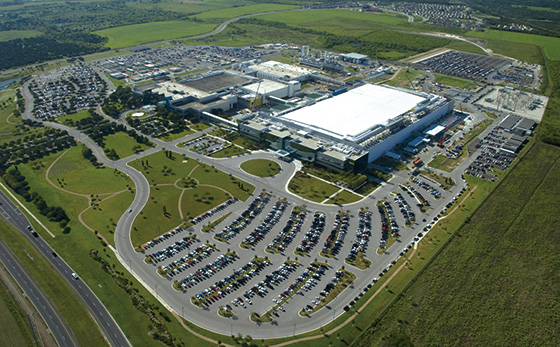
South Korean firms have emerged as some of the most important foreign investors in strategically significant sectors of the U.S. economy. Samsung Electronics is constructing a $17 billion advanced semiconductor foundry in Taylor, Texas, while SK hynix is investing $3.8 billion to establish an advanced AI memory packaging facility in Indiana.
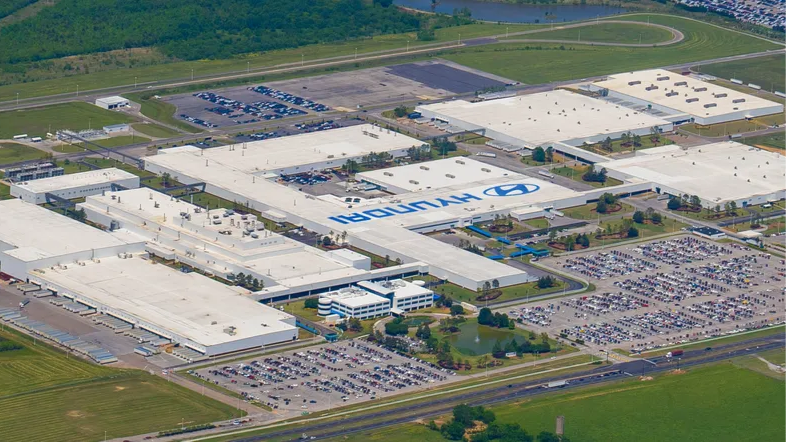
Hyundai Motor Group has committed approximately $8.6 billion to its Hyundai Motor Group Metaplant America (HMGMA) project in Georgia, a development expected to generate more than 8,500 direct jobs. LG Energy Solution and SK On have likewise established large-scale battery manufacturing operations across the United States.
The significance of these investments extends well beyond their immediate economic impact.
First, they demonstrate that South Korea has become an indispensable production partner in semiconductors, batteries, and electric vehicles—industries that Washington has explicitly identified as strategically critical.
Second, these investments create high-quality manufacturing jobs in regions such as the Rust Belt and the Sun Belt, thereby strengthening domestic political support for economic engagement with South Korea and, by extension, reinforcing public support for the ROK–U.S. Alliance. Deterrence depends not only on the calculations of potential adversaries, but also on the political sustainability of alliances themselves.
Third, and perhaps most importantly, local production by South Korean companies reduces vulnerabilities in critical U.S. supply chains while simultaneously deepening South Korea’s long-term stake in the United States. Economists may describe such investments as sunk costs; strategists may view them differently. They create a form of mutual commitment in which both sides recognize that the costs of disengagement would be substantial. At its core, this constitutes a form of strategic deterrence.
Is Investment in the United States Causing Industrial Hollowing-Out or Deepening Strategic Integration?
Within South Korea, concerns are frequently raised that overseas investment may contribute to industrial hollowing-out. While this debate is important from a policy perspective, it is equally important to assess the underlying realities with analytical precision.
The fact that Hyundai Motor manufactures electric vehicles in the United States does not imply that its production facilities in Ulsan will become obsolete. On the contrary, sustained access to the U.S. market helps preserve demand for research and development, advanced engineering, and the production of high-value components within South Korea. Likewise, while Samsung Electronics is constructing a semiconductor foundry in Texas, its cutting-edge fabrication facilities in Hwaseong and Pyeongtaek continue to push the technological frontier forward.
South Korea retains competitive advantages in critical areas of semiconductor design, materials, process technologies, and advanced manufacturing expertise. Within an increasingly integrated global supply chain, overseas localization and domestic industrial upgrading are not mutually exclusive; in many cases, they are mutually reinforcing.
A military analogy is instructive. The establishment of forward operating bases does not weaken homeland defense; rather, it enhances strategic depth and operational flexibility. In much the same way, the manufacturing facilities that South Korean companies operate in the United States can be understood as forward positions within the global economic landscape.
The ROK–U.S. Alliance 2.0: Redefining a Community of Shared Strategic Interests
During the Cold War, the foundational document of the ROK–U.S. Alliance was the 1953 Mutual Defense Treaty. Its language, purpose, and institutional logic were explicitly military in nature. Today, however, the alliance is increasingly supported by a broader set of institutions and policy frameworks.
Alongside the 2023 Washington Declaration, the implementation mechanisms associated with the CHIPS and Science Act, the Inflation Reduction Act (IRA), and the bilateral Economic Security Dialogue should also be understood as key pillars of the contemporary alliance architecture. The institutional foundation of the alliance has expanded beyond traditional defense cooperation to encompass economic security, technological resilience, and supply chain integration.
This evolution may be understood as the emergence of the “ROK–U.S. Alliance 2.0.” If Alliance 1.0 was defined by a shared commitment to fight together in times of conflict, Alliance 2.0 is increasingly defined by a shared commitment to build together, innovate together, and prosper together. If U.S. Forces Korea represented the most visible symbol of Alliance 1.0, then Samsung’s semiconductor fabrication facility in Texas and Hyundai’s manufacturing complex in Georgia may be regarded as among the most visible symbols of Alliance 2.0.
Importantly, these two dimensions of the alliance reinforce one another. As economic interdependence deepens, the credibility and sustainability of military commitments are strengthened. When debates emerge in Washington regarding the future posture of U.S. Forces Korea, the reality that South Korean firms have created tens of thousands of American jobs provides a powerful source of political support for the alliance. This is not merely diplomatic rhetoric. Rather, it constitutes a practical mechanism that enhances deterrence and strengthens alliance resilience.
The Pitfall of Evaluating Alliances Through a Cost-Benefit Lens
The Trump administration has frequently approached alliances through the language of cost-sharing, trade balances, and burden-sharing calculations. Questions regarding defense contributions and trade surpluses are legitimate subjects of policy debate. However, evaluating alliances primarily through a narrow cost-benefit framework risks overlooking their broader strategic value.
In strategic affairs, value cannot be measured solely in terms of short-term financial returns. Rather, it is reflected in long-term positioning, influence, resilience, and risk reduction. The value of the ROK–U.S. Alliance extends well beyond deterrence against North Korean aggression. It encompasses the capacity to respond to coercive pressure from regional competitors, sustain a favorable balance of power in the Indo-Pacific, and secure trusted partnerships in critical technologies and supply chains.
The same logic applies from South Korea’s perspective. The value of U.S. Forces Korea is not simply reflected in troop numbers or budgetary expenditures. Rather, its significance lies in the credibility of the United States’ extended deterrence commitment. That credibility enables South Korea to confront North Korea’s nuclear threat without pursuing an independent nuclear weapons capability. Such strategic assurance cannot be adequately measured by the figures that appear in defense cost-sharing negotiations.
In many respects, an alliance is analogous to an insurance policy. Insurance premiums may appear costly in the absence of a crisis, yet their true value becomes apparent when a crisis emerges. Strategic alliances operate according to the same principle. Their worth lies not only in the contingencies they help prevent, but also in the confidence and stability they provide before those contingencies ever materialize.
Conclusion: A New Front, A New Strategy
South Korean corporate investment in the United States is no longer merely a vehicle for overseas business expansion. It represents a strategic undertaking that extends the ROK–U.S. Alliance beyond the traditional military domain into the economic and technological spheres. In an era defined by intensifying U.S.–China strategic competition, such investments constitute one of South Korea’s most significant sources of non-military strategic leverage.
Semiconductor fabrication facilities, battery manufacturing plants, and electric vehicle production lines have become the front lines of a new strategic environment. From the perspective of national security strategy, South Korea’s emergence as a critical economic and technological partner of the United States is not simply an economic development; it reflects a broader transformation in the nature of the alliance itself.
The ROK–U.S. Alliance remains rooted in shared security commitments, but its foundations are becoming increasingly multidimensional. The alliance of the future will be sustained not only by soldiers, warships, and deterrence commitments, but also by factories, supply chains, technological innovation, and economic resilience. In this sense, South Korean investment in the United States is helping to forge the next chapter of the alliance—one built not only on security, but also on shared prosperity, technological cooperation, and strategic interdependence.
An alliance should not be viewed merely as a cost. It should be understood as a long-term investment in security, prosperity, and resilience. The factories, production facilities, and industrial infrastructure that South Korean companies are building across the United States today stand as tangible manifestations of that investment and as enduring symbols of the next chapter in the ROK–U.S. Alliance.
About the Author:
Chi-beom Shin
Professor of Military Science at Konyang University, he holds a Ph.D. in Military Science. He currently serves as a member of the Republic of Korea Army Policy Advisory Committee, Director of External Affairs at the Future Society, and Standing Director for Cyber and Network Affairs at the Future Military Society.
His publications include Korean-Style Military Innovation Based on Asymmetry and The Origins of the Multi-Layered Structure of the ROK–U.S.–Japan Security Cooperation Mechanism. He is also a co-author of The Future Defense Environment and Military Innovation and Signal Korea 2026.
His research and policy advisory work focus on ROK–U.S.–Japan security cooperation, the Revolution in Military Affairs (RMA), future warfare, emerging technologies and national strategy, strategic autonomy, reserve force development, and the evolving security architecture of the Indo-Pacific region.