

The Need to Include South Korea’s Proposal on the North Korean Nuclear Issue in the Agenda of the U.S.–China Summit

Yui Haeng Cho
Professor
Seoul Theological University
The recent international landscape has been undergoing rapid change amid a complex crisis marked by intensifying strategic competition between the United States and China, the protracted war in Ukraine, instability in the Middle East, and the restructuring of global supply chains.
Amid a flood of news surrounding new international conflicts and economic developments, the issue of North Korea and its nuclear program appears to have receded somewhat from the global spotlight. Nevertheless, North Korea continues to advance its nuclear and missile capabilities, and the North Korean nuclear issue remains a key variable threatening the security order in Northeast Asia.
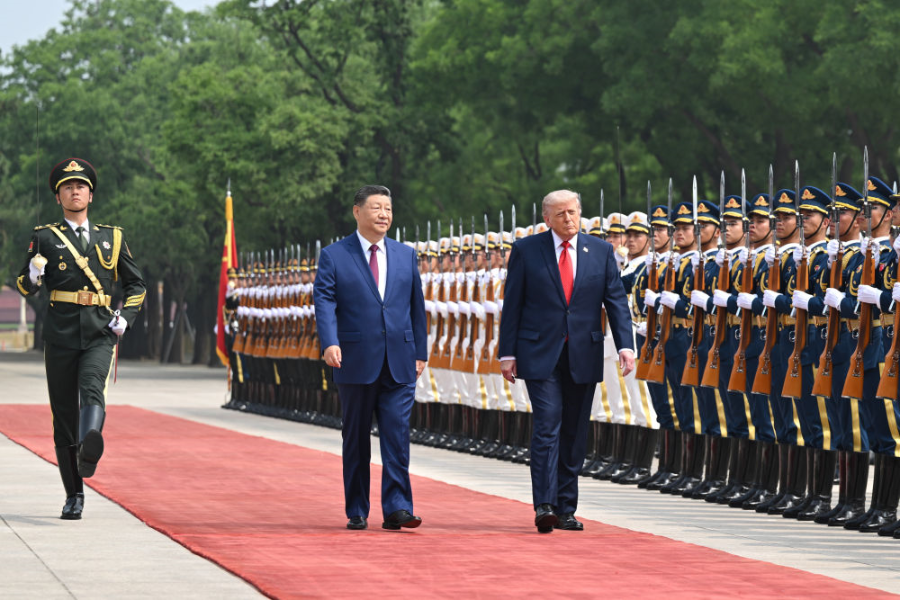
Amid these circumstances, the U.S.–China summit (May 14–15), which had been postponed due to the Iran issue, will be held in Beijing. The two countries are expected to place a wide range of international issues on the agenda, including the Taiwan issue, tariff disputes, and the Iranian nuclear issue. Although not an official agenda item, issues related to the Korean Peninsula, including North Korea’s nuclear issue, are also expected to be discussed at the summit.
U.S.–North Korea dialogue has been suspended for an extended period, and the existing approach has effectively reached an impasse. Therefore, while maintaining “complete denuclearization” as the ultimate objective, it is necessary to propose a “freeze-first” approach as a realistic starting point.
Of course, as demonstrated by the case of the U.S.–Iran nuclear negotiations, even freezing nuclear activities is far from an easy task. Nevertheless, it is important to note that China shares, to some extent, the U.S. assessment that North Korea’s nuclear program poses a threat to stability in Northeast Asia.
The greatest obstacle to resolving the North Korean nuclear issue is Pyongyang’s intransigent stance. North Korea is already attempting to establish its status as a nuclear-armed state as a fait accompli and is institutionalizing this position through its constitution and foreign policy discourse.
Recently, at the NPT Review Conference, North Korea’s ambassador to the United Nations asserted that “the Democratic People’s Republic of Korea is not bound by the NPT under any circumstances.” This demonstrates that North Korea defines itself as an independent nuclear-armed state operating outside the existing non-proliferation regime.
The reason North Korea refuses to abandon its nuclear program is that it views nuclear weapons as a key instrument for regime survival. North Korea has consistently maintained that it cannot relinquish its nuclear program as long as U.S. hostile policies and military pressure persist.
By citing the cases of Libya and Iraq, it has also reinforced the perception that abandoning nuclear weapons could directly lead to regime collapse. For North Korea, nuclear weapons are not merely military assets, but strategic instruments that guarantee regime security and provide bargaining leverage in negotiations with the United States.
In contrast, South Korea and the international community have made clear that they cannot recognize North Korea as a nuclear-weapon state. The international nuclear non-proliferation regime recognizes only the United States, Russia, China, the United Kingdom, and France as official nuclear-weapon states, and recognition of North Korea could undermine the international non-proliferation order itself.
The United States also officially maintains its commitment to “the complete denuclearization of North Korea.” Although former President Donald Trump once referred to North Korea as a “nuclear-weapon state,” this was largely political rhetoric employed in the context of negotiations.
It is particularly significant that the United States has recently maintained a hardline stance on the Iranian nuclear issue. The United States has identified Iran’s production of enriched uranium and expansion of nuclear capabilities as threats to international security, demanding stringent verification measures and the dismantlement of its nuclear capabilities. In this context, if the United States were to effectively recognize North Korea’s nuclear arsenal, the consistency of international nuclear policy would inevitably be undermined. Therefore, the likelihood of the United States officially recognizing North Korea as a nuclear-weapon state remains low.
Ultimately, North Korea seeks “disarmament negotiations,” whereas the United States seeks “denuclearization negotiations.” The two sides therefore begin from fundamentally different premises. This is precisely why U.S.–North Korea negotiations have remained in a prolonged stalemate since the collapse of the Hanoi Summit. Given China’s limited influence over North Korea, it is unlikely that a breakthrough on the North Korean nuclear issue will emerge from the upcoming U.S.–China summit.
This makes South Korea’s role all the more crucial. South Korea must go beyond merely conveying its position and present realistic alternatives for negotiation. One such alternative is the “three-step solution to the North Korean nuclear issue,” based on a phased approach of “freezing nuclear activities, reducing nuclear capabilities, and achieving final dismantlement.” The key is to maintain the goal of complete denuclearization while beginning with steps that are realistically achievable.
The first step is the “immediate suspension of North Korea’s nuclear program,” namely, a freeze on nuclear activities. This would initially involve halting additional North Korean nuclear tests, the production of highly enriched uranium, and the advancement of its ICBM capabilities, while in return considering limited sanctions relief or measures aimed at improving bilateral relations. Although this would not constitute a complete solution, it is realistic in that it could at least prevent further deterioration of the situation and create space for negotiations.
During the Cold War, the United States and the Soviet Union did not pursue complete disarmament from the outset. Instead, they gradually built trust through phased arms-control measures such as the SALT agreements and the INF Treaty. Likewise, the North Korean nuclear issue requires a realistic approach that prioritizes halting the expansion of nuclear capabilities rather than seeking a complete resolution in the short term.
North Korea’s recent shift in its stance toward South Korea also warrants attention. By incorporating the so-called “two-state clause” into its constitution, North Korea is attempting to define the two Koreas as separate and hostile states.
Although this represents a retreat from the previous discourse of a “national community,” there also appears to be a tendency toward greater restraint compared to the extreme rhetoric of military provocation seen in the past. It appears that North Korea is likewise aware that excessive escalation of tensions places a burden on regime stability and economic management.
In particular, while North Korea has secured a certain degree of strategic and economic latitude by strengthening its ties with Russia, this does not mean that the need to improve relations with the United States has disappeared. The burden imposed by prolonged international sanctions continues to accumulate. From North Korea’s perspective, having long pursued a diplomatic balancing strategy between Russia and China, excessive dependence on any single country inevitably constitutes a burden.
Therefore, South Korea’s proposal for the “prior suspension of North Korea’s nuclear program” could represent an option that North Korea would find difficult to reject outright. This is because North Korea could expect a certain degree of sanctions relief and diplomatic breathing room without immediately abandoning its nuclear program, while the United States could curb the advancement of North Korea’s nuclear capabilities without officially recognizing North Korea as a nuclear-weapon state.
Of course, such an approach also entails risks. There are concerns that a phased approach could ultimately lead to the de facto recognition of North Korea’s nuclear status. Critics likewise argue that it is difficult to trust North Korea, given that it continued to develop its nuclear program even after the Agreed Framework and the September 19 Joint Statement.
However, allowing the current stalemate to persist would be even more dangerous. North Korea’s nuclear and missile capabilities continue to advance, and the longer negotiations remain suspended, the greater the risk of escalating military tensions. Ultimately, the choice lies between an “imperfect but manageable phased approach” and the “deepening of an uncontrolled nuclear crisis.”
This U.S.–China summit is not merely a diplomatic event for South Korea. It must serve as a critical opportunity to address the North Korean nuclear issue and secure greater diplomatic space for South Korea. Rather than passively observing developments between the United States and China, the South Korean government must actively present a realistic and phased approach to resolving the North Korean nuclear issue as part of the international agenda. In particular, it is necessary to strengthen diplomatic efforts to bridge the gap in perceptions between the United States and North Korea, centered on the principle of “first halting North Korea’s nuclear activities.”
At the same time, the commitment to restoring inter-Korean relations must also be emphasized. The North Korean nuclear issue is not merely a military and security matter, but also an issue directly tied to inter-Korean relations. With communication channels between the two Koreas completely severed, the risk of accidental conflict inevitably increases. Accordingly, efforts to establish at least a minimum level of mutual trust for easing tensions and resuming dialogue must proceed in parallel.
Thirty years have passed since the Agreed Framework, yet a complete resolution of the North Korean nuclear issue remains elusive. What is needed now is a flexible approach that upholds fundamental principles while taking geopolitical realities into account. Although a ‘freeze-first’ approach to North Korea’s nuclear activities may not constitute a complete solution, it can serve as the most realistic starting point for preventing the crisis from escalating further and reopening the door to negotiations.
-
PREV [Thematic Analysis]
-
NEXT [Feature Article]