

The Deterioration of Sino-Japanese Relations and Its Implications for the Korean Peninsula

OH Seung Hee
Korea National Diplomatic Academy
1. Introduction: The Intensification of Sino-Japanese Strategic Competition
Recently, relations between China and Japan have deteriorated to their most serious level since the normalization of diplomatic relations. Although Japanese Prime Minister Takaichi’s remarks regarding a Taiwan contingency served as the immediate trigger for the dispute, the current situation cannot be explained by a single incident alone. Rather, recent Sino-Japanese relations have shifted from episodic diplomatic friction to a structural confrontation characterized by simultaneous tensions across the economic, security, and military domains.
This conflict can be understood as strategic competition intertwined with broader shifts in the East Asian regional order. Japan is seeking a more proactive security posture by expanding the scope of its defense policy through increased defense spending and the acquisition of counterstrike capabilities.
Conversely, China views these developments as destabilizing to the regional security environment and strongly opposes them. Thus, the tensions between the two countries stem not from a simple clash of policies, but from fundamentally different perceptions of the regional order itself.
In particular, the Taiwan issue is emerging as a key variable in Sino-Japanese tensions. While Japan views stability in the Taiwan Strait as directly linked to its own security, China regards such positions as a challenge to its sovereignty and territorial integrity. Consequently, Sino-Japanese tensions are evolving beyond historical grievances or territorial disputes and are increasingly becoming a central arena of strategic competition.
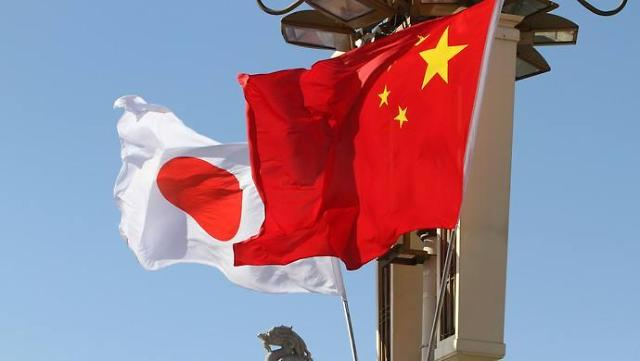
2. Military Buildup and Intensifying Military Competition in Northeast Asia
The Sino-Japanese rivalry is becoming increasingly tangible in the military domain. China is ranked as the world’s third-strongest military power according to Global Firepower (GFP) in 2026, with approximately 2 million personnel and a navy of around 370 vessels—the largest in the world. Centered on three aircraft carriers (Liaoning, Shandong, and Fujian), China is expanding its blue-water naval capabilities, while also rapidly modernizing advanced systems such as the Chengdu J-20 and missile forces.
Meanwhile, Japan maintains its position as the world’s seventh-ranked military power and is developing a technology-driven force based on a Self-Defense Forces personnel strength of approximately 240,000 to 250,000. The Maritime Self-Defense Force possesses advanced capabilities centered on Aegis combat system destroyers, state-of-the-art submarines, and F-35 Lightning II, and is pursuing the acquisition of counterstrike capabilities through the introduction of long-range missiles.
This military buildup by both countries is notable in that it reflects an expansion of their operational scope and strategic roles.
Recently, this competition has also translated into observable military activities. The Japan Maritime Self-Defense Force’s transit through the Taiwan Strait and Chinese naval exercises in the Western Pacific are increasingly viewed as mutually responsive actions, heightening regional tensions. Meanwhile, maritime operations and aerial encounters continue around the Senkaku Islands.
Furthermore, the expansion of joint military exercises among the United States, Japan, and the Philippines, coupled with an increase in China’s corresponding military activities, is reinforcing the reciprocal nature of military competition in the region and further complicating the regional security environment. These trends indicate that tensions are extending beyond bilateral dynamics into a more layered structure of regional military competition.
Consequently, the parallel processes of military buildup and mutual deterrence are increasing the risk of unintended incidents while intensifying strategic competition across Northeast Asia.
3. Economic Security Competition and the Restructuring of Interdependence
The Sino-Japanese rivalry is rapidly extending beyond the military sphere into the economic domain. In particular, control over strategic resources is emerging as a key instrument of competition.
China is applying pressure on Japan through export restrictions on dual-use goods with potential military applications, while Japan is responding through supply chain diversification and the strengthening of economic security policies.
This trend is further deepening the integration of economics and security. Whereas economic interdependence once served as a stabilizing factor that helped mitigate conflict, it is increasingly viewed as a potential vulnerability that can amplify the impact of disputes when they arise. Competition in key industrial sectors such as semiconductors, batteries, and rare earth elements, when combined with technological rivalry, is further enhancing their strategic significance.
Furthermore, the deterioration of mutual perceptions is a factor that is structurally entrenching the conflict. Public sentiment toward China in Japan and toward Japan in China has already been relatively low, and recent disputes are further intensifying these negative perceptions. The interaction of historical issues, the Fukushima treated water release issue, and the Taiwan issue is deepening emotional confrontation, which in turn undermines the sustainability of policy compromise.
4. Implications for the Korean Peninsula
As demonstrated by the First Sino-Japanese War and the Russo-Japanese War, competition among East Asian great powers has been closely linked to the fate of the Korean Peninsula. The deepening Sino-Japanese tensions continue to carry complex implications for the Korean Peninsula today.
The most notable change is the growing interconnectedness and uncertainty of the regional security environment. The Taiwan Strait and the East China Sea are linked to South Korea’s principal maritime transport routes, and tensions in these areas could impose economic costs. At the same time, rising military tensions across the region are contributing to greater uncertainty in the security environment surrounding the Korean Peninsula.
In particular, the strengthening of the U.S.–Japan alliance and the expansion of Japan’s security role are accelerating these changes. Military cooperation between the United States and Japan could affect not only the Taiwan Strait but also the security environment of the Korean Peninsula, potentially leading to adjustments in the role and operational scope of U.S. Forces Korea. These developments further increase the complexity of South Korea’s security environment.
Furthermore, if military tensions between China and Japan escalate, there is a risk of unintended incidents, and the ripple effects could extend to the Korean Peninsula. These risks could become more pronounced if regional crisis management mechanisms fail to function effectively.
The economic implications are also clear. The Taiwan Strait and the Western Pacific are major maritime routes for South Korea’s trade, and instability in these areas could lead to higher logistics costs and disruptions in supply chains. Furthermore, economic tensions between China and Japan are closely linked to South Korea’s industrial structure, making it highly likely that specific regulations or export controls would have a direct impact.
In addition, these changes in the diplomatic and security environment could also influence the domestic policy landscape. If differences in perceptions regarding policies toward China and Japan widen, policy implementation may become more contentious, potentially placing a burden on the consistency and continuity of foreign policy.
5. Conclusion: The Importance of Conflict Deterrence and Conflict Management
Recent Sino-Japanese tensions are deepening instability in the broader East Asian security environment, and the Korean Peninsula is not immune to these effects. In particular, the growing interconnectedness of the regional security landscape and shifts in economic interdependence are expected to have a lasting impact on the Korean Peninsula.
If military tensions between China and Japan persist, there is a risk that unintended incidents or misunderstandings could escalate into broader conflict dynamics. If heightened military activity is accompanied by limited diplomatic communication, it may become increasingly difficult to manage the situation in a stable manner.
In this regard, the importance of conflict management is further underscored. Diplomatic communication and confidence-building measures aimed at reducing misunderstandings and preventing unintended incidents are essential, and sustained dialogue through regional cooperation frameworks can also play a critical role in easing tensions.
Ultimately, the trajectory of strategic competition between China and Japan is a key variable shaping the future direction of the East Asian security order, and the Korean Peninsula is also likely to undergo continuous change within this structural environment. In this context, South Korea likewise faces a growing need to continuously refine its situational awareness and response capabilities in order to adapt to evolving strategic conditions.