

Why U.S.–North Korea Talks Must Resume for Peace on the Korean Peninsula During Trump’s Visit to China

Sang-man Lee
Visiting Professor
Kyungnam University and Shandong University
1. The Korean Peninsula in the Context of U.S.–China Strategic Competition: Structural Implications of the Summit
U.S. President Trump’s visit to China, along with the U.S.-China summit, is likely to mark an inflection point, redefining the Korean Peninsula issue as a central element of U.S.-China strategic competition—extending beyond the bounds of regional security. U.S.-China relations constitute a foundational determinant of regional stability, and the intensity and scope of this competition structurally shape North Korea’s strategic calculus, as well as the complexity of crisis management on the Peninsula.
Within this context, North Korea—perceiving an emerging multipolar order and a relative decline in U.S. hegemony—is prioritizing closer cooperation with Russia and stronger ties with China over engagement with South Korea and the United States. Although a shift may occur after the conclusion of the war in Ukraine, it remains difficult for South Korea and the United States to secure favorable negotiating conditions in the near term.
In particular, the Trump administration’s second-term concept of a “decent peace” and Xi Jinping’s third-term principle of “fighting without breaking” can be understood as strategic efforts to reshape U.S.-China relations toward a framework of “managed coexistence” rather than “comprehensive confrontation.” If such a framework takes hold, the North Korean issue is likely to be treated not as an independent variable, but as a dependent factor within the broader architecture of U.S.-China order formation.
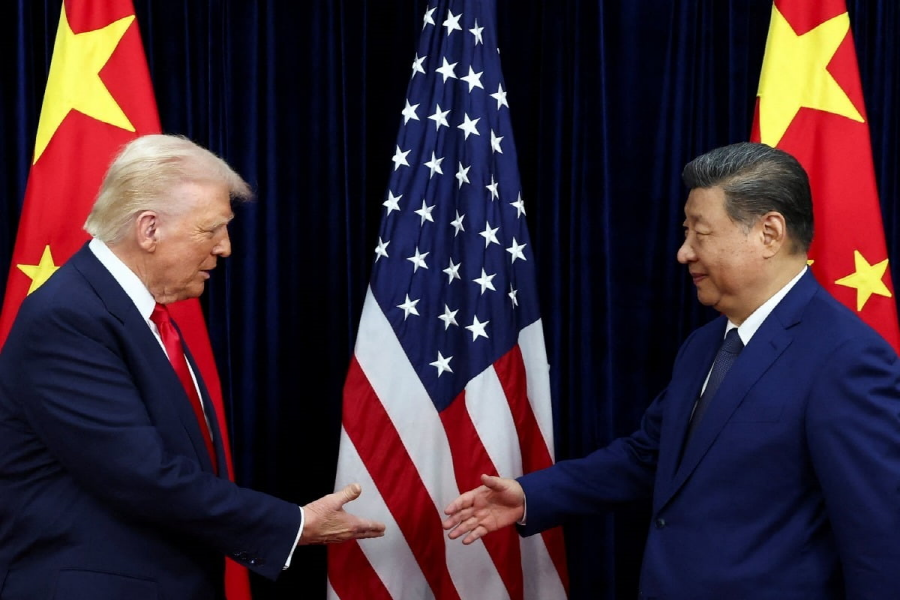
Furthermore, if the United States and China pursue a “grand bargain” on the Korean Peninsula, the summit is likely to serve not merely as a bilateral consultation but as a platform for shaping international norms that define the Peninsula’s future order. At the same time, exogenous factors—such as developments in the Middle East—may introduce additional uncertainty into this structural realignment.
Ultimately, while a U.S.-North Korea summit could function as a mechanism for President Trump to achieve tangible negotiation outcomes and as a strategic tool for Xi Jinping to manage regional order through calibrated buffering, there remains a persistent risk that South Korea’s national interests may be marginalized or subordinated in the process.
2. North Korea’s Strategic Shift Amid the Stalemate in U.S.-North Korea Dialogue: Learning from Conflict and Institutionalizing Nuclear Deterrence”
The current situation on the Korean Peninsula is marked by deepening structural instability amid a prolonged stalemate in dialogue that has persisted since the 2019 Hanoi U.S.-North Korea summit. Mutual distrust over denuclearization and sanctions relief has effectively stalled negotiations, while simultaneously accelerating the development of North Korea’s nuclear and missile capabilities. This stalemate has grown beyond a mere diplomatic impasse, serving instead as a catalyst for a fundamental transformation in North Korea’s security perceptions and strategic orientation.
Recent military conflicts in the international system have provided North Korea with important lessons for its strategic calculus. The Russia–Ukraine war has underscored the vulnerability of non-nuclear states to external military intervention, while simultaneously reinforcing the deterrent value of nuclear weapons in preventing direct attacks.
In addition, patterns of U.S. military engagement abroad have reinforced the perception that denuclearization—absent institutional guarantees of regime security—could increase regime vulnerability. Together, these experiences have led North Korea to reconceptualize its nuclear arsenal not as a negotiable asset, but as an indispensable pillar of regime survival.
This shift in perception was subsequently institutionalized following the Eighth Party Congress. North Korea formally designated South Korea as a “hostile state,” placed responsibility for the U.S.-North Korea impasse on the United States, and codified its nuclear status as an essential strategic asset.
As a result, denuclearization has evolved from a negotiable objective into a precondition, significantly increasing the structural challenges of resuming dialogue. Consequently, North Korea has moved from being a “participant in denuclearization negotiations” to an “agenda-setting actor” that treats its nuclear status as a fait accompli, further entrenching barriers to renewed negotiations.
3. U.S.-China Strategic Calculations and Approaches to the North Korean Nuclear Issue: CVID, Dual-Track Strategy, and Disarmament Pathways
Amid intensifying U.S.-China strategic competition, the North Korean nuclear issue has emerged as a central point of contention, reflecting divergent approaches to order-building that extend beyond the domain of nonproliferation. The United States has raised the threshold for negotiations by insisting on North Korea’s complete abandonment of its nuclear deterrent under the CVID framework (Complete, Verifiable, and Irreversible Dismantlement).
In contrast, China has promoted a phased, reciprocal approach centered on “dual suspension” and “dual-track parallelism,” emphasizing de-escalation and the creation of conditions conducive to dialogue. However, this approach carries the inherent limitation of potentially diluting the ultimate objective of denuclearization.
The central challenge is that North Korea has effectively become an “independent variable,” shaping negotiation parameters based on its nuclear deterrent. In this context, the pathway toward resolving the nuclear issue is likely to evolve incrementally within an arms control–oriented framework.
Practically speaking, while denuclearization may remain the stated ultimate goal, the operational structure of negotiations is expected to follow a phased disarmament trajectory—beginning with a freeze on nuclear testing, followed by the establishment of caps on nuclear stockpiles, and culminating in the gradual reduction of nuclear arsenals.
Accordingly, resolving the North Korean nuclear issue requires a composite strategy that distinguishes between objectives and pathways, rather than relying on a binary choice between CVID and the dual-track approach. A framework that maintains denuclearization as the ultimate objective, while employing arms control as a pragmatic pathway, represents the most viable strategy for managing the North Korean nuclear challenge under prevailing constraints. Such a framework can guide North Korea toward long-term denuclearization and facilitate peaceful coexistence on the Korean Peninsula.
4. China’s Role and Influence on North Korea: Balancing Tacit Acceptance and Control”
On the Korean Peninsula, China serves as a pivotal structural actor whose role extends beyond that of a conventional stakeholder, contributing both to crisis moderation and the shaping of the negotiation environment. While some assessments suggest that China is tacitly acquiescing to North Korea’s nuclear status amid recent geopolitical developments, a more nuanced reading characterizes Beijing’s approach as a calibrated combination of strategic management and limited acceptance, aimed at preventing instability.
Although China does not formally endorse North Korea’s nuclear development, it recognizes the constraints on immediate denuclearization and has adopted a crisis-management–oriented posture.
While China’s direct leverage over North Korea remains limited, it exerts significant indirect influence by addressing, to a degree, the regime’s “legitimate” security concerns. Specifically, China retains the capacity to calibrate pressure and relief through its role as North Korea’s primary provider of food, energy, and essential goods, as well as its position as Pyongyang’s largest trading partner. In addition, China shapes North Korea’s external operating environment by modulating the implementation and enforcement intensity of UN sanctions. High-level exchanges and summit meetings between North Korea and China serve not merely symbolic purposes but function as strategic signaling mechanisms linked to U.S.-North Korea dynamics, contributing to the partial alignment of North Korea’s external strategy.
China’s influence operates not through direct coercion, but via a mechanism of “structured inducement of choice.” In other words, while China cannot dictate North Korea’s actions, it shapes the strategic environment in ways that constrain the range of available options and guide behavior in preferred directions. Accordingly, China’s North Korea policy should be understood as a calibrated strategy situated between “full control” and “complete laissez-faire,” aimed at simultaneously preventing crisis escalation and preserving influence.
5. A Shift in South Korean Diplomacy: From ‘Pace Maker’ to ‘Peacemaker’
South Korea must transition from serving merely as a facilitator of negotiations—or even as a “pace maker” that manages sequencing and tempo—to becoming a “peacemaker” that actively shapes both the direction and outcomes of talks. To achieve this, Seoul should pursue a dual-track strategy that combines the maintenance of credible deterrence and crisis-management capabilities anchored in the ROK-U.S. alliance with the expansion of diplomatic maneuvering space through engagement with China.
Furthermore, in light of President Trump’s “results-oriented, direct deal-making” approach, South Korea must mitigate the risk of marginalization by institutionalizing prior coordination mechanisms with the United States, particularly regarding the structure of negotiation exchanges and the delineation of red lines.
At the same time, South Korea must prevent North Korea’s demand for recognition as a nuclear-armed state from becoming an entrenched baseline for negotiations. To achieve peaceful coexistence on the Korean Peninsula, Seoul should also maintain pragmatic flexibility by adopting a dual framework in which “denuclearization constitutes the objective, and arms control serves as the pathway.”
At the inter-Korean level, given near-term structural constraints, priority should be placed on low-intensity tension management and incremental confidence-building measures, including preventing accidental clashes in border areas, restoring military communication channels, and the phased restoration of the September 19 Military Agreement.
Moreover, by situating the North Korean nuclear issue within a broader multilateral framework—rather than limiting it to a strictly bilateral U.S.-North Korea context—South Korea should aim to promote the institutionalization of a security order that links denuclearization with a sustainable framework for peaceful coexistence between the two Koreas.
In conclusion, peace on the Korean Peninsula is not an automatic byproduct of great power negotiations; it is a political outcome that must be actively constructed through deliberate strategic design and proactive diplomacy. Accordingly, South Korea must move beyond the role of a passive intermediary to assume the position of a “peacemaker”—a central actor that shapes negotiation structures and guides outcomes. This is not merely a matter of choice, but a strategic imperative within the broader context of U.S.-China strategic competition.
-
PREV [Thematic Analysis]
-
NEXT [Thematic Analysis]