

Restructuring Inter-Korean Exchanges and Cooperation for a Transition to Peaceful Two-State Relations

Eun-ju Choi
Sejong Institute
Inter-Korean relations have entered a qualitatively new phase that cannot be adequately explained by existing policy frameworks. North Korea is moving away from its longstanding conception of inter-Korean relations as a special relationship oriented toward unification and is instead redefining them as adversarial relations between two sovereign states.
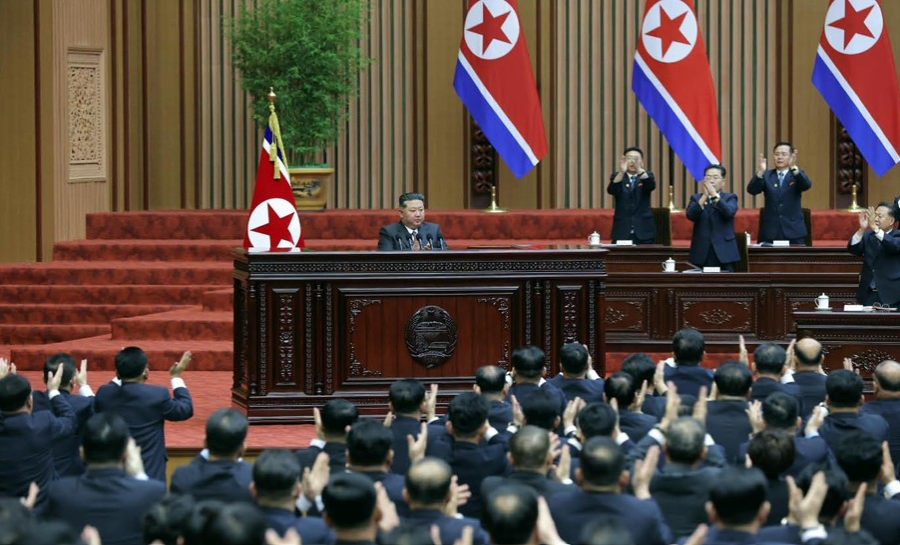
This shift was formalized at the Ninth Plenary Meeting of the Eighth Central Committee of the Workers’ Party of Korea in December 2023, which explicitly characterized inter-Korean relations as hostile state-to-state relations. It was further reinforced in Kim Jong-un’s January 2024 speech before the Supreme People's Assembly, where a legislative initiative was introduced to codify the Republic of Korea as the primary hostile state in the constitution.
Subsequent measures—including the reorganization of unification-related institutions and official narratives, the severing of inter-Korean transportation links, and the fortification of border security—indicate that this is not a tactical adjustment but a structural transformation. The Ninth Congress of the Workers’ Party of Korea in February 2026 reaffirmed this strategic trajectory.
These developments necessitate a fundamental reassessment of South Korea’s policy toward North Korea, particularly in the domain of inter-Korean exchange and cooperation. To date, such engagement has largely been predicated on a linear logic: expanded exchanges foster trust, which in turn contributes to peacebuilding and lays the groundwork for eventual unification.
Within this framework, exchange and cooperation have been understood both as outcomes of improved relations and as instruments for shaping an environment conducive to unification. This premise, however, is now being fundamentally challenged. By redefining inter-Korean relations as hostile interactions between two sovereign states, North Korea has altered the underlying assumptions that have guided past policy.
Under these conditions, the continuation of legacy approaches risks widening the gap between policy intent and strategic reality. Accordingly, exchange and cooperation should be reconceptualized—not as mechanisms for restoring prior patterns of engagement, but as instruments for managing adversarial relations in a stable manner and gradually creating the conditions for a long-term transition to peaceful coexistence.
A more nuanced understanding of North Korea’s persistent reluctance toward inter-Korean cooperation is essential in this regard. Pyongyang’s resistance cannot be attributed solely to isolationism or ideological rigidity; rather, it is rooted in fundamental concerns about regime survival. North Korea has consistently perceived even South Korea’s proposals for reconciliation and cooperation as potentially leading, over time, to regime erosion and absorption-based unification.
From this perspective, inter-Korean exchanges may be viewed as channels for political, social, and cultural penetration. These concerns are further compounded by anxieties over sovereignty and internal control. The inflow of external information, cultural influences, and interpersonal networks associated with inter-Korean engagement is regarded as potentially destabilizing.
Moreover, North Korea does not approach economic cooperation solely in terms of material gain. It remains wary that increased external assistance and economic interdependence could weaken policy autonomy or create structural dependency. This helps explain its consistent resistance even to unilateral aid or to relationships perceived as hierarchical or patronizing.
Recent developments in North Korea’s policy toward South Korea and its broader foreign policy orientation reflect these concerns with greater clarity. Pyongyang has deemphasized traditional themes of shared nationhood, reconciliation, and unification, and is instead recalibrating its approach around national security and state interests.
Statements made at the Ninth Congress of the Workers’ Party of Korea—particularly the pledge to eliminate “outdated ideas and remnants of the past era” and to prevent any revival of previous frameworks—signal a deliberate departure from the legacy paradigm of inter-Korean relations grounded in unification discourse. The congress also emphasized a new five-year policy direction centered on state interests and self-reliance, reinforcing this broader strategic shift.
Concurrently, North Korea has increasingly foregrounded the concept of “national interest” in its foreign policy. This shift suggests that future cooperation decisions will be guided less by symbolic or ideological considerations and more by calculations of security and practical utility. In effect, while North Korea appears to be closing the door to broad-based engagement, it is simultaneously clarifying the conditions under which limited, interest-based cooperation may remain feasible.
Importantly, North Korea’s policy toward South Korea should not be analyzed solely within the confines of inter-Korean relations. Increasingly, Pyongyang appears to be integrating its South Korea policy into a broader strategic framework encompassing its approach to the United States, its relations with China and Russia, and its external economic strategy.
Recent assessments of the Ninth Congress of the Workers’ Party of Korea likewise suggest that Pyongyang is embedding its South Korea policy within a wider geopolitical and security calculus. This suggests that if South Korea continues to treat inter-Korean relations primarily as a special intra-national issue, it risks misalignment with the evolving strategic context.
From North Korea’s perspective, South Korea is no longer a partner for unification but rather an external actor to be managed within the broader calculus of regime security and diplomatic balance. Accordingly, South Korea must adopt a multidimensional analytical and policy approach that situates inter-Korean relations within the wider Northeast Asian security environment and North Korea’s overall foreign strategy.
Within this altered landscape, the identification of viable areas of convergence becomes critical. The key lies in identifying domains in which North Korea can derive tangible benefits without triggering its core security concerns. Bilateral initiatives led exclusively by South Korea are likely to generate political sensitivities in Pyongyang.
By contrast, multilateral frameworks mediated by international organizations or third parties may entail relatively lower political costs. Furthermore, while North Korea is likely to remain highly sensitive to exchanges involving significant symbolic or informational exposure, it may exhibit limited receptivity in functional areas where regime risks are low and practical benefits are evident—such as public health, disaster management, environmental protection, and technical standardization.
From the standpoint of North Korea’s stated priorities—national interest, the maintenance of state functions, and societal stability—these sectors represent domains in which pragmatic considerations may outweigh ideological constraints. Consequently, the basis for inter-Korean cooperation should be sought not in symbolic or nationalistic narratives, but in functional forms of cooperation that mitigate North Korea’s concerns while delivering tangible benefits.
In particular, cooperation in public health and disaster management represents the most viable point of entry. Transnational challenges such as infectious diseases, floods, droughts, wildfires, and typhoons cannot be effectively addressed by a single state acting alone. Because these issues are not directly tied to military or ideological competition and instead relate to basic state functions and public safety, they provide a more politically defensible basis for North Korea’s participation.
A similar logic applies to environmental and climate cooperation. Issues such as yellow dust, fine particulate matter, deforestation, wildfires, and water quality are inherently transboundary and lend themselves to being framed as technical or functional cooperation rather than politically sensitive bilateral engagement.
Technical cooperation also holds considerable potential, particularly in non-political domains such as disaster forecasting, meteorological and agricultural analysis, technical standards, and public health data systems. In addition, humanitarian and livelihood-oriented cooperation may reduce political sensitivities if structured as human security initiatives implemented through international organizations or third-party mechanisms rather than as direct inter-Korean assistance.
It is important to underscore, however, that identifying such areas of convergence does not imply the immediate resumption of cooperation. Rather, these domains constitute a minimal policy space that preserves the possibility of future engagement under more favorable conditions.
The significance of sectors such as public health, disaster management, environmental cooperation, and technical standardization lies less in their immediate outputs than in their function as buffers—preventing inter-Korean relations from becoming fully entrenched in military confrontation and mutual exclusion. In this sense, identifying common ground should be understood not as an expression of optimistic cooperation, but as a component of a long-term strategy for managing tensions and preserving pathways to peace.
Against this backdrop, South Korea’s policy framework should be recalibrated along several dimensions. First, in the near term, policy emphasis should shift toward risk management and the establishment of conditions for a peaceful transition in relations, rather than toward the immediate resumption of exchanges. Without measures to reduce military tensions, prevent accidental escalation, and ensure a baseline level of predictability, any form of cooperation is unlikely to prove sustainable.
Second, adjustments in policy discourse and signaling are required. Rather than relying on unification-centric narratives, greater emphasis should be placed on concepts such as peace, coexistence, stability, and risk management. At the same time, assurances regarding respect for North Korea’s system and the non-pursuit of absorption-based unification should be consistently reflected in official statements and policy documents.
Third, South Korea should proactively establish multilateral cooperation frameworks that do not depend on North Korea’s immediate participation. Regardless of Pyongyang’s response, Seoul should work with international organizations and regional partners to build functional platforms that North Korea could join at a later stage.
Fourth, it is necessary to develop a forward-looking diplomatic architecture that prevents South Korea from being marginalized amid the evolving dynamics among the United States, North Korea, China, and Russia. Given that North Korea’s policy toward South Korea is embedded within its broader foreign strategy, South Korea’s response must likewise extend beyond the confines of inter-Korean relations alone.
Ultimately, the task at hand is not to restore past patterns of inter-Korean engagement, but to create new conditions that enable a stable and peaceful two-state relationship under changed strategic realities. Efforts that emphasize the abstract necessity of cooperation while neglecting North Korea’s underlying concerns are unlikely to yield meaningful results.
Conversely, a strategy that accurately interprets those concerns and identifies pragmatic areas of convergence—offering tangible benefits while minimizing perceived risks—may open limited but meaningful avenues for engagement. Inter-Korean exchange and cooperation should no longer be treated merely as symbolic indicators of improved relations.
Rather, they must be reconfigured as calibrated policy instruments for managing adversarial relations and laying the groundwork for a gradual transition to peaceful coexistence. Such a transition will not be achieved through declaratory policy alone, but through sustained analytical rigor, strategic patience, and persistent diplomatic efforts grounded in a realistic appraisal of the other side’s interests and constraints.