

Enhancing Korea–ASEAN Cooperation Amid Growing Anti-Korean Sentiment

Nam-eun Kim
Chungnam National University
Earlier this year, an unusually large wave of hateful and derogatory exchanges unfolded across South Korean and Southeast Asian online platforms. The incident began when a Korean fan attempted to film with a so-called “heavy-duty camera”—a type restricted at the venue—during a DAY6 concert in Malaysia and was stopped.
The problem escalated when this incident spread on social media, with the debate quickly moving beyond internal fandom disputes over concert etiquette to include mockery and racially discriminatory comments targeting appearance, food culture, and economic status.
The manner in which some Korean users tracked and disseminated the personal information of Southeast Asian fans—escalating even to expressions of “migrant worker hatred”—reveals a common mechanism through which online conflicts intersect with domestic discourses of migrant exclusion and racist rhetoric.
Particularly noteworthy in this situation is how Southeast Asian netizens expressed solidarity by using the hashtag “SEAblings.” A portmanteau of Southeast Asia and “siblings,” SEAblings functioned as a signifier framing Southeast Asia as a “sibling community.” This symbol served as a linguistic device through which Southeast Asian youth positioned themselves not merely as a “K-pop consumer market,” but as actors responding to discrimination and asserting relational norms.
What is particularly noteworthy is that this form of grassroots regionalism emerged at the very moment President Lee Jae-myung conducted top-down summit diplomacy during state visits to Singapore and the Philippines (March 1–4, 2026), presenting core agendas such as AI transformation, supply chain management, energy and food security, advanced technology cooperation, and economic solidarity. The government framed these visits as efforts to strengthen strategic partnerships and deepen cooperation in living standards and industrial development.
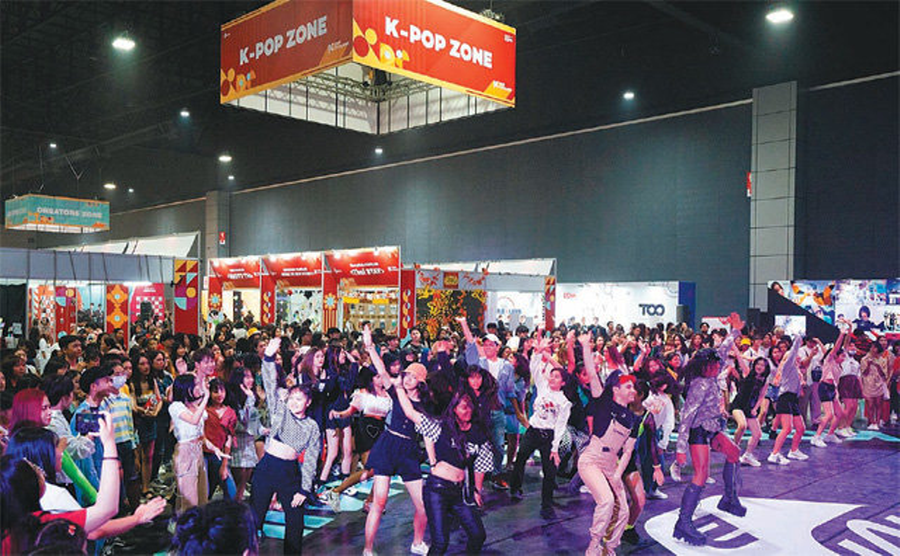
Korea–ASEAN relations are currently being reconfigured simultaneously at two distinct levels. At the top level, summit diplomacy institutionalizes cooperation in security, economic resilience, and advanced technology under the framework of a “strategic partnership.” At the societal level, however, the SEAblings phenomenon—mediated through fandom networks and digital platforms—frames “respect and non-discrimination” as essential conditions for sustaining the relationship.
If these two layers diverge, the achievements secured through summit diplomacy become vulnerable in terms of social acceptance and public trust. This dissonance cannot be addressed through the optimistic assumption that “increasing cultural exchange will mitigate the problem.”
Instead, what is required is a restructuring that institutionally incorporates the “lower-level conditions” shaping the success or failure of cooperation—such as everyday experiences of discrimination, the amplifying effects of platform-based conflicts, and the interdependence between migrant labor and the cultural industry—into the cooperation agenda.
1. The ‘SEAblings Incident’: How Fandom Conflict Became Racialized and Fostered Regional Solidarity
This incident illustrates how conflicts within global fandom communities can become racialized as they spread online. In the initial phase, Malaysian fans raised concerns regarding violations of venue rules and disruptive behavior.
However, as photos and videos circulated and mutual mockery intensified, the debate quickly escalated into a collective confrontation framed as “Korea versus Southeast Asia.” Korean media specifically reported cases in which some Korean users tracked down the personal details of Southeast Asian fans and exposed their status as “migrant workers,” subjecting them to ridicule. This suggests that when certain users draw upon domestic anti-migrant rhetoric to escalate a dispute, the conflict can move beyond the realm of fandom norms to encompass issues of racial hierarchy and social exclusion.
The #SEAblings hashtag functioned as a symbol of solidarity at a moment when internal fandom disputes escalated into collective confrontation and racialized hierarchical language was mobilized. Importantly, the hashtag served not merely as an emotional expression, but as a signifier that collectively organized Southeast Asian youth across national boundaries, visualizing regional solidarity while articulating a clear normative demand: “We can love K-pop, but we reject racism.”
In short, the SEAblings incident demonstrates that Southeast Asian youth are emerging not as passive consumers of Korean content, but as politicized fandom actors capable of recognizing discrimination and mobilizing collective responses. This shift should not be viewed solely as a market risk; rather, it reflects the rise of new negotiating actors demanding the establishment and enforcement of norms within Korea–ASEAN relations.
2. The ‘Growth and Stability’ Framework in Summit Diplomacy and the Cultural Cooperation Gap
President Lee’s visits to Singapore and the Philippines have been framed around the themes of “growth” and “stability” in presenting diplomatic achievements. The Ministry of Foreign Affairs, for example, characterizes the Korea–Singapore relationship through three pillars of strategic partnership—security cooperation, economic solidarity, and advanced technology collaboration—while emphasizing strengthened communication and cooperation in supply chains, energy, and food security.
KTV’s special coverage similarly frames the visits as efforts to link external cooperation with “economic and livelihood achievements,” interpreting their outcomes within a framework of stability and growth rooted in everyday life and industrial development.
As summit diplomacy increasingly emphasizes the “growth and stability” framework, the cultural sphere is often reduced to a symbolic repertoire. Culture is invoked to express friendship and create a diplomatic atmosphere, yet issues arising from cultural consumption—such as discrimination, hate speech, platform-driven conflict, and migrant rights—are frequently marginalized within the cooperation agenda.
The SEAblings incident illustrates how these spaces of cultural consumption can become vulnerable arenas that undermine trust in bilateral and regional relations. The spread of the Korean Wave represents not only the diffusion of cultural goodwill but also the expansion of interaction points, including digital platforms and performance venues. As these points of contact broaden, experiences of discrimination are shared more rapidly, and conflicts are more easily politicized as normative issues.
Accordingly, Korea–ASEAN cooperation must move beyond simply expanding cultural events. It should institutionally embed norms and procedures designed to prevent, mitigate, and mediate conflicts arising within cultural and social domains. Inclusive cultural cooperation should thus function not as promotional content, but as an operational framework incorporating clear rules and dispute-resolution mechanisms.
3. Inclusive Cultural Cooperation: Framing the Issue as ‘Cultural and Social Risk Governance’
Viewing SEAblings solely through the lens of “anti-Korean sentiment” or “boycott risk” may be useful for short-term responses, but it risks undermining social acceptance and trust in the medium- to long-term. The core message embedded in SEAblings is conditional support: consumption may continue, but discrimination will not be tolerated. In this sense, the phenomenon should be understood less as an obstacle to cooperation and more as a litmus test for whether Korea–ASEAN relations can endure not only as a strategic framework, but also as a normative relationship.
To translate this recognition into policy, the governance of cultural and social risks must be prioritized within the South Korea–ASEAN cooperation agenda. Specifically, the following policy package should be considered.
Incorporating a “Digital Public Sphere” Agenda into the Official Cooperation Framework
Summit meetings, joint statements, and cooperation visions should explicitly address responses to online hate speech and racism, multilingual fact-checking and mediation protocols, and youth exchange platforms. This approach would shift conflict management from a reactive, post-incident model to continuous oversight.
The objective is not to restrict freedom of expression, but to establish transparent operational procedures—detection, verification, explanation, and recurrence prevention—supported by multilingual correction and mediation systems as shared standards.
Joint Design of Operational Standards for Overseas Performances and Cultural Events
The SEAblings incident demonstrates how conflicts can escalate rapidly when venue regulations, on-site management, and platform-driven amplification intersect. Accordingly, operational standards for concerts and cultural events should be jointly designed at the Korea–ASEAN level. These standards should include multilingual announcements of venue rules, accessible complaint-handling channels, designated on-site mediation personnel, and clear procedures with defined timelines for official explanations in the event of disputes.
Institutionalizing Youth and Fandom Communities as Collaborative Partners, Not Markets
Through permanent consultative mechanisms, such as a “Korea–ASEAN Youth and Fandom Forum,” the current reactive model of post-incident damage control should be transformed into a framework focused on prevention and coordination. Fandom communities should be recognized not merely as consumers, but as co-designers of platform governance and cultural norms. When institutionalized, grassroots regional dynamics such as SEAblings can evolve from potential sources of conflict into instruments of cooperative engagement.
Co-producing Educational and Cultural Literacy Programs
Hate and discrimination cannot be explained solely by gaps in information. Nevertheless, educational mechanisms are necessary to examine how the language of hatred produces social harm and how the production and consumption structures of K-culture can reinforce hierarchy and conflict.
A practical approach would be to jointly develop and distribute shared educational content—covering anti-hate awareness, multicultural understanding, and platform literacy—for use in schools, universities, and youth programs as part of Korea–ASEAN cooperative initiatives.
4. Conclusion: Integrating ‘Signals from Below’ into Institutions for Sustainable Cooperation
South Korean media interpreted this incident as revealing elements of “Southeast Asian contempt” and racism within Korean society, warning that although the Korean Wave draws strength from diversity, exclusivity could pose a long-term risk. This assessment is valid.
However, from the perspective of Korea–ASEAN relations, it is even more important to recognize that SEAblings is not merely a sign of rejection toward Korea. Rather, it constitutes a normative demand that respect and non-discrimination be recognized as prerequisites for sustainable cooperation.
The Lee Jae-myung administration’s efforts to strengthen strategic partnerships through visits to Singapore and the Philippines represent a necessary response to contemporary geopolitical and geo-economic challenges. Yet such strategic cooperation can endure only when underpinned by social trust—a trust that is most vulnerable within the sphere of cultural consumption.
Inclusive cultural cooperation, therefore, entails institutionalizing this vulnerable sphere within the broader cooperative framework through shared norms and operational procedures.
While summit diplomacy emphasizes the language of “growth and stability,” the SEAblings movement articulates the language of “respect and non-discrimination.” When these two discourses remain disconnected, cooperation becomes fragile. Conversely, when they are integrated and institutionalized through standards, coordination procedures, and mediation mechanisms, Korea–ASEAN cooperation can evolve beyond mere market expansion into a sustainable partnership connecting East and Southeast Asia.
The SEAblings phenomenon provides a clear example illustrating this direction.