

Challenges in Advancing the Korean Peninsula Peace Initiative Amid Global Turbulence

Jae-hung Chung
Senior Fellow
Sejong Institute
I. The Evolving Strategic Environment: Multipolarity and Sino-Russian Alignment
Amid the protracted Russia–Ukraine war, intensifying U.S.–China strategic competition, and escalating instability in the Middle East, the China–Russia joint statement issued in Moscow on May 8, 2025, has been widely interpreted as a declaratory commitment to accelerating the transition toward a multipolar international order. In the view of both Beijing and Moscow, this transition represents not a contingent development but an irreversible structural and historical trend.
Against the backdrop of growing Global South activism and the institutional expansion of BRICS and Eurasian frameworks, China and Russia are positioning themselves as principal architects of an alternative order distinct from the U.S.- and Western-led rules-based system.
Through enhanced coordination within BRICS, the Shanghai Cooperation Organization (SCO), and other multilateral platforms, the two countries are actively cultivating political and economic alignment with emerging powers. For South Korea, this deepening Sino-Russian strategic convergence presents a complex and enduring diplomatic challenge.
China and Russia increasingly frame their cooperation as a response to what they characterize as U.S.-led unilateralism and the persistence of a residual unipolar order. Escalating U.S.–China rivalry, growing tensions between China and Japan, and cross-Strait instability have further reinforced the logic of strategic alignment between Beijing and Moscow. The two governments have articulated common positions on the Russia–Ukraine war, conflicts in the Middle East, and security developments on the Korean Peninsula and in the Taiwan Strait.
This trajectory was reaffirmed on February 1, 2026, in Beijing, when Wang Yi, Director of the Foreign Affairs Office of the Chinese Communist Party, met with Sergei Shoigu, Secretary of the Russian Security Council. Both sides emphasized the importance of safeguarding what they describe as a UN-centered international order while advancing multipolarity. They also underscored mutual support for each other’s “core interests” and pledged enhanced strategic coordination in addressing complex global challenges.
Russia reiterated its support for the One-China principle and expressed opposition to Japan’s military normalization efforts. Notably, Moscow has increasingly framed the Russia–Ukraine war, conflicts in the Middle East, and developments on the Korean Peninsula and in the Taiwan Strait as interconnected geopolitical issues tied to the principle of “indivisible security” in Eurasia. This conceptual framework reinforces joint efforts to coordinate policy responses within the UN, the SCO, and BRICS.
On February 4, 2026, Presidents Xi Jinping and Vladimir Putin held a virtual summit and agreed to further strengthen their “Comprehensive Strategic Partnership.” Both leaders criticized U.S. “America First” policies, including tariff measures and regional interventions, and pledged closer coordination.
President Putin designated 2026 as the 25th anniversary of the China–Russia Treaty of Friendship and proposed a medium- to long-term “Grand Plan” encompassing political, economic, military-security, energy, scientific, and people-to-people cooperation. President Xi emphasized safeguarding a UN-centered international system and preserving global strategic stability as core responsibilities of bilateral relationship.
These developments indicate not merely tactical alignment but a sustained effort to institutionalize strategic coordination across diplomatic, economic, and military domains.
II. Expanding Military and Strategic Coordination
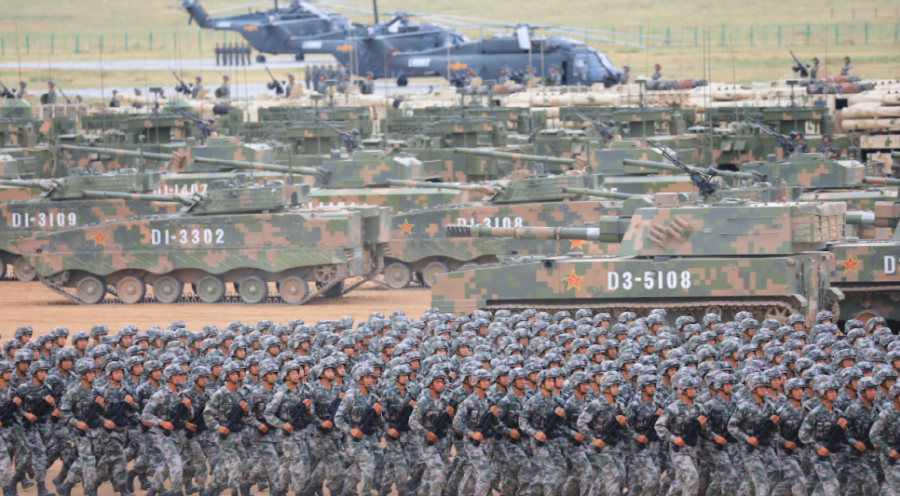
Sino-Russian coordination has increasingly extended into the military sphere. While not constituting a formal alliance, their operational cooperation has expanded in both scale and geographic scope since the outbreak of the Russia–Ukraine war. Joint exercises have moved beyond Northeast Asia to include the Arctic, the Western Pacific, and Central Asia. Activities such as joint air patrols, missile early-warning drills, naval exercises, and reconnaissance operations have become more increasingly regularized.
China and Russia have expressed particular concern over strengthened trilateral security cooperation among South Korea, the United States, and Japan, as well as Japan’s evolving defense posture. In response, Beijing and Moscow are likely to expand diplomatic and informational coordination through multilateral platforms, while also signaling deterrent resolve through continued joint military activities in sensitive maritime zones, including the East Sea (Sea of Japan), the East China Sea, the Taiwan Strait, and the South China Sea.
This evolving pattern of cooperation functions as a strategic counterweight to the U.S.- and Western-led security architecture. As both governments describe the current period as one of “great changes unseen in a century,” they are accelerating efforts to reshape institutional norms and power alignments through BRICS, the SCO, and related initiatives.
China’s promotion of the Belt and Road Initiative (BRI), the Global Development Initiative (GDI), the Global Security Initiative (GSI), and related frameworks reflects a comprehensive vision for reforming global governance.
The result is an increasingly structured strategic rivalry between two competing blocs: on one side, U.S.–ROK–Japan security cooperation anchored in the ROK–U.S. alliance; on the other, deepening a North Korea–China–Russia alignment. This dynamic is contributing to the consolidation of a quasi–new Cold War structure in Northeast Asia and elevating the Korean Peninsula as a focal point of major-power competition.
III. Reframing the Korean Peninsula in a Systemic Context
Under these conditions, the Korean Peninsula can no longer be viewed solely through the lens of inter-Korean relations or U.S.–North Korea diplomacy. Instead, it must be understood as embedded within a multilayered geopolitical structure involving the United States, China, and Russia. Without careful management, the Peninsula risks becoming a structural flashpoint within a broader system of great-power rivalry, thereby increasing the probability of unintended escalation.
Accordingly, peace on the Korean Peninsula must be reconceptualized not as a discrete diplomatic event or declaratory milestone, but as a medium- to long-term strategic objective aligned with systemic shifts in the international order. Stability, in turn, must be institutionalized rather than episodically negotiated.
IV. Reconceptualizing the Korean Peninsula Peace Initiative as a Strategic Buffer
In this context, the Korean Peninsula Peace Initiative advanced by the Lee Jae-myung administration warrants analysis beyond its immediate inter-Korean dimension. It can be interpreted as both a strategic survival mechanism and an effort to create diplomatic maneuvering space within an emerging bipolar—or multipolar—competitive order.
Central to the initiative is the concept of “institutionalized peaceful coexistence.” This approach seeks to transform the Peninsula from a forward operating arena of bloc confrontation into a managed zone of stability. By developing legal and institutional mechanisms to mitigate the fragility of the armistice regime and reduce the risk of accidental or unintended conflict, Seoul aims to create a stabilizing buffer amid intensifying U.S.–China–Russia strategic competition.
Such institutionalization does not imply neutrality or alliance dilution. Rather, it reflects a pragmatic effort to secure greater strategic autonomy within existing alliance commitments while preventing the Peninsula from becoming a proxy theater for systemic confrontation.
Conclusion
The convergence of Sino-Russian strategic alignment and intensified U.S.–Western counterbalancing has ushered in a transitional period in the global order. For South Korea, the challenge lies in navigating this structural transformation without allowing the Korean Peninsula to become a destabilizing variable in great-power competition.
The Korean Peninsula Peace Initiative should therefore be understood as a forward-looking strategic framework designed to expand South Korea’s diplomatic space amid what Beijing and Moscow characterize as a “great transformation unseen in a century.” Its ultimate success will depend not only on inter-Korean engagement but also on Seoul’s ability to manage alliance dynamics, engage regional stakeholders, and embed Peninsula stability within the broader architecture of an evolving international order.
-
PREV [Current Affairs Analysis]
-
NEXT [Feature Article]