

Prospects for a U.S.–North Korea Summit and the Strategic Environment on the Korean Peninsula

Jung Kim
Graduate School of North Korean Studies
In a January 18, 2026 editorial, The Washington Post argued that U.S. policy toward North Korea should move beyond the exclusive pursuit of the “denuclearization of the Korean Peninsula” and instead acknowledge North Korea as a de facto nuclear power for the purposes of negotiation.
The editorial recommended a shift toward an arms management framework—focused on freezing, capping, and ultimately reducing North Korea’s nuclear arsenal—rather than continuing to insist on denuclearization as the sole objective. Its central argument was not the abandonment of long-standing principles, but the recognition that an ideals-only approach, detached from prevailing realities, risks exacerbating instability. The editorial cautioned that, absent near-term and practical measures to limit the scale and operational risks of North Korea’s nuclear forces, Pyongyang’s capabilities would continue to expand, thereby increasing the likelihood of miscalculation or accidental conflict.
The editorial attracted attention not only for its substantive argument but also for the way it illuminated an emerging current within Washington policy circles. The Washington Post interpreted the Trump administration’s complete omission of North Korea from the December 2025 National Security Strategy (NSS) as a deliberate choice, suggesting that the explicit emphasis on denuclearization in the 2017 strategy has become increasingly detached from prevailing strategic realities.
Against the backdrop of intelligence assessments showing North Korea’s continued buildup of nuclear capabilities and preparations for a possible resumption of nuclear testing, negotiations premised on prior denuclearization commitments face prohibitive entry conditions.
The editorial cited estimates suggesting that North Korea may possess as many as 50 nuclear warheads and assessed that its nuclear test sites could be reactivated on short notice. It characterized the current situation as one of nuclear “entrenchment,” rather than a reversible deviation from past commitments.
Importantly, the editorial did not advocate unconditional or formal recognition of North Korea as a nuclear-armed state. It explicitly acknowledged the risk that accepting the nuclear reality could intensify domestic debates over nuclear armament in South Korea and Japan.
Accordingly, it argued that any shift in focus—from denuclearization to freeze-and-cap measures—would need to be accompanied by transparency, close alliance coordination, and clearly defined costs imposed on Pyongyang. The substance of the proposed shift therefore lies not merely in redefining objectives, but in constructing crisis management mechanisms that integrate alliance cohesion, verification, and enforceability.
Assessing broader trends within the U.S. policy community requires looking beyond the omission in the NSS itself. Recent defense planning documents point to a relative recalibration of U.S. roles on the Korean Peninsula, with South Korea expected to assume greater primary responsibility for deterrence. This adjustment reflects both the prioritization of strategic competition with China and a broader effort to reinforce allied self-reliance.
The absence of explicit references to denuclearization in these documents further supports the interpretation that U.S. policy is shifting from a strategy centered on resolution toward one focused on long-term management. Within this framework, North Korea is treated less as a problem to be decisively resolved and more as a persistent risk to be contained.
This evolution, however, is neither uncontested nor uniform. Arms management approaches resonate with realist deterrence theorists, yet they remain deeply controversial among policymakers who prioritize non-proliferation or view any concessions as legitimizing a nuclear fait accompli.
Domestic political constraints in the United States further circumscribe policy maneuverability. Sanctions relief cannot be delivered through presidential discretion alone; congressional oversight, statutory requirements, judicial considerations, and allied concerns collectively narrow the available negotiating space.
Consequently, even if a summit were convened, it could risk devolving into largely symbolic diplomacy, yielding limited working-level outcomes without durable constraints. Importantly, a shift toward arms control does not inherently simplify negotiations; rather, it raises the political burden of specifying—and defending—the concrete concessions the United States would be prepared to offer.
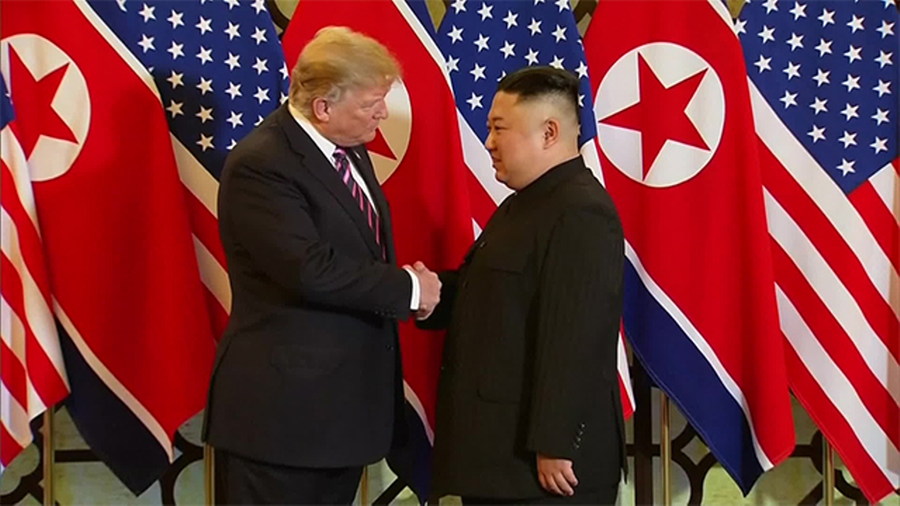
Against this backdrop, the prospect of a U.S.–North Korea summit within the year remains plausible but uncertain. If President Trump favors top-down diplomacy, a summit could be staged as a political breakthrough for both domestic and international audiences. North Korea, however, is likely to approach such talks with elevated expectations. Pyongyang has long sought negotiations premised on its status as a nuclear power, framed in terms of arms management rather than disarmament.
Should the United States adopt a freeze-and-cap approach, North Korea would almost certainly attempt to link such a shift to some form of implicit recognition. The success or failure of a summit would therefore hinge on how far Washington is prepared to offer concessions with recognition-adjacent effects, and on whether U.S. allies—particularly South Korea and Japan—are willing to accept the strategic and political implications that would follow.
Possible negotiation outcomes within the year appear to converge around two scenarios. The first is symbolic diplomacy, which may ease tensions atmospherically but fails to impose meaningful constraints on North Korea’s nuclear and missile programs. The second is a limited, or “mini-agreement,” centered on an observable freeze—such as halting fissile material production or suspending specific missile tests—paired with narrow, reversible concessions and limited verification.
For such an agreement to be strategically meaningful, several conditions are essential. Weak verification would render any freeze indistinguishable from a tactical delay. Concessions that undermine alliance deterrence could amplify regional instability even if a freeze were nominally achieved. Accordingly, minimum verification standards—specifying what is verified, where, and by what means—as well as the scope and sequencing of concessions must be clearly defined and agreed upon within the alliance in advance.
For South Korea, the policy challenge is inherently dual-layered. First, as U.S. engagement with North Korea shifts toward a management-oriented approach, Seoul must reinforce the credibility of extended deterrence while containing domestic anxiety and debates over nuclear armament. Second, South Korea cannot passively accept a management paradigm; it must articulate a strategic pathway that links short-term risk management to a longer-term environment conducive to disarmament and denuclearization.
This requires avoiding a false trade-off between crisis management and deterrence. Crisis management does not substitute for deterrence: deterrence suppresses crises, while diplomacy manages and ultimately resolves them. Only their parallel operation provides the foundation for a sustainable peace regime on the Korean Peninsula.
Within this context, the “Three Major Goals of the Korean Peninsula Peace Initiative” require recalibration to reflect present realities. The first goal—a Korean Peninsula free of war and nuclear weapons—should be retained as a guiding ideal while pursued pragmatically through a phased approach. If immediate nuclear elimination is unattainable, preventing war and mitigating nuclear risks must take precedence.
Establishing and verifying ceilings on North Korea’s nuclear and missile capabilities can help prevent further expansion, thereby creating conditions for eventual reduction or abandonment as the regional environment evolves. This approach does not lower long-term ambitions; rather, it reflects strategic realism aimed at preserving the prerequisites for achieving enduring objectives. In this light, The Washington Post’s freeze-and-cap proposal can be understood as an effort to institutionalize this intermediate phase of risk management.
The second goal—establishing a peace regime without war—should be understood as an institutional framework rather than a purely political declaration. Its core elements include preventing accidental conflict, maintaining communication during crises, and ensuring transparency, all of which are inseparable from verification mechanisms. Practical measures such as permanent military hotlines, rules of engagement for encounters at sea and in the air, advance notification of exercises, and structured military-to-military contacts could be implemented in the near term.
These initiatives must be accompanied by sustained reinforcement of alliance deterrence. In a context where U.S. deterrence roles may be relatively recalibrated, South Korea must simultaneously enhance self-reliance and redesign operational concepts within the alliance framework to ensure credible crisis management and regional stability.
The third goal—contributing to global peace—is closely linked to preventing the normalization of nuclear proliferation. If North Korea’s nuclear status becomes entrenched and allied anxieties intensify, pressures for regional nuclear armament are likely to influence policy debates. Mitigating these risks requires maintaining a credible linkage between crisis management, alliance deterrence, and the long-term objective of non-proliferation, ensuring that short-term stability measures do not inadvertently undermine broader global security norms.
In sum, the strategic environment surrounding a potential U.S.–North Korea summit is defined less by diplomatic opportunity than by the challenge of managing risk without legitimizing proliferation. Whether engagement produces stability or accelerates fragmentation will hinge on the clarity of objectives, the discipline of alliance coordination, and the credibility of verification and deterrence mechanisms that underpin any negotiated outcome.
-
PREV [Thematic Analysis]
-
NEXT [Feature Article]