

MASGA and Nuclear-Powered Submarines: A New Phase in the Evolution of the ROK–U.S. Alliance

Tae-jun Kim
Director, Institute for Korean Peninsula Security Studies
Honorary Professor, Korea National Defense University
I. Maritime Hegemony and the Strategic Logic of MASGA
1. Strategic Competition Moves Seaward
The principal arena of contemporary international politics has shifted decisively toward the maritime domain. Under President Donald Trump’s “America First” doctrine, U.S.–China strategic competition expanded beyond trade and technology into a contest over maritime access and sea control.
The world’s oceans function as critical arteries of the global economy, carrying energy resources, food supplies, and key industrial inputs such as semiconductors. Control over these sea lines of communication increasingly determines which states possess the capacity to shape international norms and rules.
Recent U.S. actions—such as operations aimed at exerting pressure on Venezuela’s Nicolás Maduro—underscore this strategic reality. States with blue-water naval capabilities retain the option to intervene selectively and decisively, while those lacking such capabilities are relegated to more passive roles in international affairs.
Nowhere is this dynamic more pronounced than in the Indo-Pacific. The potential for a Chinese attempt to coerce or invade Taiwan has accelerated competition for maritime dominance across the broader region, including the South China Sea. As a result, both Washington and Beijing are concentrating national resources on naval expansion, making maritime power a central variable in the emerging international order.
2. China’s Quantitative Expansion and the Erosion of America’s Industrial Base
According to The Military Balance 2025 published by the International Institute for Strategic Studies (IISS), China has already surpassed the United States in the number of surface combatants, fielding approximately 435 vessels compared to the U.S. Navy’s 294. China now operates three aircraft carrier strike groups, significantly enhancing its capacity for regional sea denial and blockade operations.
The United States retains clear qualitative advantages in nuclear-powered aircraft carriers, attack submarines (SSNs), ballistic missile submarines (SSBNs), and AEGIS combat systems. However, its ability to translate qualitative superiority into sustained force expansion has been constrained by the weakening of its shipbuilding industrial base. Following the Cold War, the bifurcation of civilian merchant shipbuilding and military production exposed structural inefficiencies, leading to cost overruns, production delays, and reduced output.
By contrast, South Korea and China have leveraged their robust commercial shipbuilding sectors, including experience in large-scale merchant and specialized vessels, to enhance productivity and maintain industrial competitiveness. This divergence has become a critical factor shaping the balance of maritime power.
II. Nuclear-Powered Submarines and Stability on the Korean Peninsula
1. The Strategic Role of SSNs in a Maritime Competition Era
The evolving maritime security environment in Northeast Asia represents not merely a change in operational conditions but a fundamental shift in strategic orientation. North Korea’s pursuit of enhanced submarine-launched ballistic missile (SLBM) capabilities, combined with China’s expanding SSN and SSBN fleets, has shifted the center of gravity of South Korea’s security concerns from land-based threats to the maritime domain.
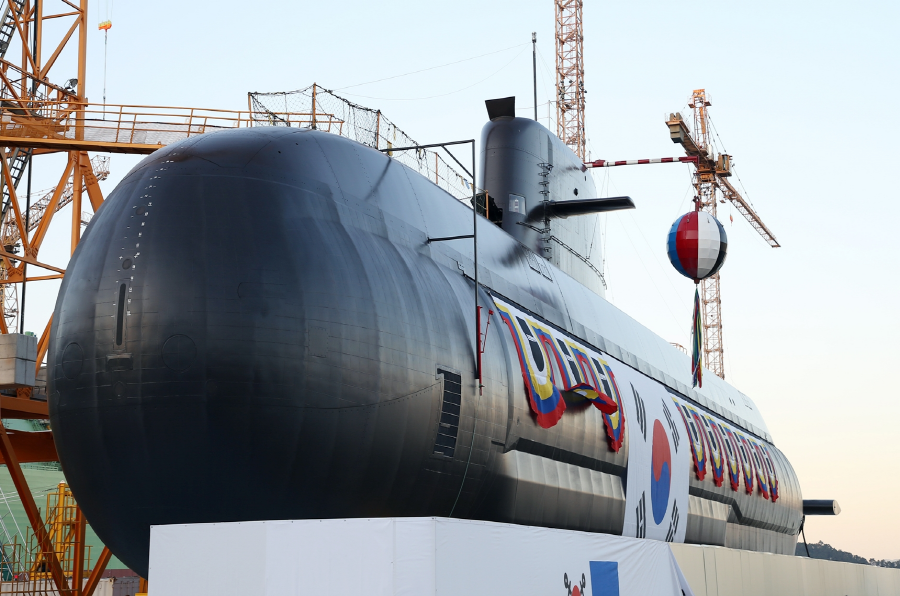
In this context, nuclear-powered attack submarines are emerging as a critical strategic capability. An SSN is not simply an advanced weapons platform: it represents a qualitative transformation in deterrence posture. With extended submerged endurance, high survivability, and true blue-water operational reach, SSNs provide South Korea with the ability to deter North Korean nuclear and missile threats while countering potential Chinese maritime coercion or blockade strategies.
This capability goes beyond incremental force enhancement. It lays the foundation for more credible and independent deterrence and enables Seoul to pursue a more autonomous and flexible security policy within the alliance framework.
2. The Imperative of Compliance with International Norms
Any South Korean pursuit of SSNs must be accompanied by robust institutional safeguards aligned with international nonproliferation norms. Ensuring that nuclear technology is not diverted for weapons purposes is essential for maintaining international confidence and legitimacy.
Failure to adhere to these norms would carry significant costs:
● Diplomatic Isolation: Noncompliance could place South Korea under suspicion as a proliferation risk, undermining trust with key partners such as the United States, the European Union, and Japan.
● Economic Consequences: Potential sanctions by the IAEA or UN Security Council would adversely affect not only the nuclear and defense sectors but also broader trade and financial relations.
● Alliance Strain: The ROK–U.S. alliance rests on mutual trust. Violations of international norms could generate political backlash in Washington, jeopardizing cooperation initiatives such as MASGA.
● Domestic Costs: Diplomatic and economic penalties would ultimately impose tangible burdens on South Korea’s economy and security, potentially negating the benefits of SSN acquisition.
Accordingly, SSN development must be framed not as unchecked military expansion but as a carefully governed security initiative consistent with global norms. Only under such conditions can South Korea maintain its standing as a responsible advanced state.
Ultimately, SSNs are not merely instruments of power but stabilizing assets essential to maintaining peace on the Korean Peninsula and strategic balance in Northeast Asia. In an era of intensifying maritime competition, proactive maritime capability development is increasingly synonymous with deterrence and stability.
III. MASGA and the Transformation of the Alliance
1. Structural Weaknesses in U.S. Shipbuilding and the Origins of MASGA
The decline of the U.S. shipbuilding industrial base after the Cold War produced systemic inefficiencies that now constrain naval expansion. Prolonged construction timelines and chronic cost overruns have become endemic. MASGA—Make American Shipbuilding Great Again—emerged as a response to these vulnerabilities.
Initially proposed by South Korea as a means to mitigating protectionist pressure from the Trump administration, MASGA evolved into a mutually beneficial industrial cooperation framework. By integrating South Korean capital, technology, and production expertise, the initiative offered a pathway to revitalizing U.S. shipbuilding capacity while creating domestic employment. President Trump embraced MASGA not merely as a slogan but as a national-level industrial strategy.
2. Hanwha’s Role and the Expansion of MASGA
In 2024, Hanwha’s acquisition of the Philadelphia Shipyard marked a tangible expansion of MASGA from concept to implementation. The shipyard’s capabilities are being extended beyond merchant vessels construction to include warship production as well as maintenance, repair, and overhaul (MRO) services.
The Trump administration’s plan to expand the U.S. Navy to 381 ships further underscored the security implications of this cooperation. Hanwha’s ongoing expansion of the Philadelphia facility, together with its partnership with U.S. firm HavokAI on a 60-meter-class unmanned surface vessel, illustrates MASGA’s extension into advanced defense technologies. With $3 billion allocated for unmanned systems, MASGA is increasingly embedded in the future architecture of U.S. naval power.
3. South Korea’s Industrial Power as a Strategic Asset
South Korea is the world’s second-largest shipbuilding nation, accounting for more than 25 percent of global market share. Firms such as Hyundai Heavy Industries, Samsung Heavy Industries, and Hanwha Ocean possess globally competitive capabilities in LNG carriers, ultra-large container ships, and specialized vessels, alongside extensive experience in constructing AEGIS destroyers and submarines.
This industrial base constitutes a strategic national asset rather than merely a commercial advantage. It has reached a level of sophistication at which discussions of SSN construction are no longer theoretical. MASGA has thus accelerated the evolution of the ROK–U.S. alliance from a traditional security partnership into an integrated industrial, technological, and strategic alliance.
4. South Korea’s Strategic Choice
MASGA has reshaped U.S. perceptions of South Korea—from a recipient of security guarantees to a strategic provider of tangible industrial and technological value. At the same time, U.S. support for South Korea’s pursuit of SSNs offers Seoul a credible deterrent against North Korea’s SLBM threat and China’s maritime coercion strategies.
This convergence represents more than military enhancement. It constitutes a strategic choice essential to sustaining peace on the Korean Peninsula and preserving balance in Northeast Asia. SSNs and MASGA together mark a historic step in redefining the ROK–U.S. alliance as a comprehensive partnership integrating security, industry, and technology.
In an era defined by competition for maritime hegemony, South Korea’s turn toward the sea reflects a decision about its future role as a power. It answers a fundamental question—what kind of state will South Korea become?—and signals a decisive moment in the transformation of the alliance.