

An Assessment and Outlook on the South Korea–Japan Summit

Ki-tae Lee
Research Fellow
Sejong Institute
Strategic Context and Significance of the Summit
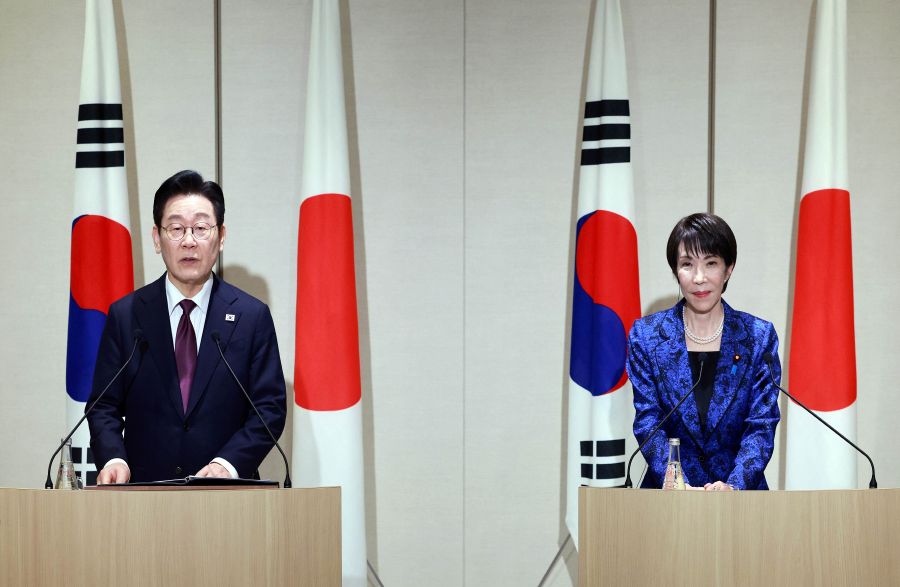
The South Korea–Japan summit held in Nara, Japan, from January 13 to 14, 2026, between President Lee Jae-myung and Prime Minister Takaichi Sanae marked an important inflection point in assessing both the stability of bilateral relations and the future trajectory of cooperation.
The meeting materialized following President Lee’s proposal during the October 2025 Gyeongju summit to convene in Nara, the hometown of Prime Minister Takaichi. By selecting Nara—widely regarded as a historical starting point of Korea–Japan exchange spanning more than 1,500 years—the two leaders deliberately combined symbolic diplomacy with substantive engagement.
This choice of venue signaled a shared intention to move beyond historical contention toward a phase of institutionalized cooperation following the normalization of relations. The summit thus functioned not merely as a bilateral event, but as an indicator of a broader effort to reframe South Korea–Japan relations within a forward-looking and pragmatic framework.
The timing of the summit was equally significant. Both governments face increasingly complex external environments that necessitate closer bilateral coordination. Prime Minister Takaichi has maintained a firm security posture since publicly acknowledging last November the possibility of an existential crisis for Japan in the event of a Taiwan contingency—a stance that has garnered domestic approval ratings approaching 80 percent. At the same time, these remarks have exacerbated tensions with China, which has since intensified diplomatic pressure aimed at isolating Japan.
President Lee, while reaffirming South Korea’s principle of non-intervention in Sino-Japanese disputes during the preceding Korea–China summit, has nonetheless recognized the practical need for cooperation with Japan to mitigate the risks associated with China’s economic pressure. In this context, the Korea–Japan summit served as a platform for aligning diplomatic responses to shared challenges while reaffirming the complementary nature of the bilateral partnership.
Institutionalizing Shuttle Diplomacy
The most immediate outcome of the summit was the continuation and institutionalization of shuttle diplomacy. By sustaining consecutive summit engagements with both former Prime Minister Ishiba Shigeru and Prime Minister Takaichi, President Lee has sought to anchor Korea–Japan relations in a framework that transcends individual leaders or specific administrations.
At Nara, the two leaders agreed to evolve shuttle diplomacy from a symbolic practice into a substantive mechanism for cooperation. As the agendas expanded to encompass global and forward-looking issues—such as supply chain resilience, digital technology collaboration, and clean energy development—the geographic and political scope of bilateral cooperation also broadened.
This evolution reflects a shift toward a “pragmatic cooperation model” that prioritizes concrete mutual interests over historical disputes. The summit further reinforced the trend toward institutionalizing leader-level dialogue as a standing consultative platform rather than a series of ad hoc events.
A New Modality for Addressing Historical Issues
A second notable outcome of the summit was the exploration of a new approach to cooperation on historical issues. Whereas the Japanese government has traditionally exercised caution in addressing matters related to victims of forced mobilization during the colonial period, the summit produced an agreement to pursue joint investigations—including DNA identification efforts related to victims at the Hashima (Battleship Island) coal mine—on humanitarian grounds.
This approach represents a departure from conventional debates centered on legal liability, instead emphasizing shared values of human dignity and historical truth. As such, it offers a constructive signal for rebuilding trust in bilateral relations.
Given the symbolic weight of Hashima, cooperation on this issue may provide a starting point for broader engagement on historical matters. The South Korean government characterized the agreement as a first practical step toward the gradual restoration of trust on historical issues, underscoring a victim-centered and humanitarian-oriented framework.
Expanding Citizen-Focused Cooperation
A third major achievement of the summit lies in expanding forms of cooperation that yield tangible benefits for citizens of both countries. President Lee and Prime Minister Takaichi agreed to strengthen bilateral coordination against transnational crimes that directly affect daily life, including fraud, narcotics trafficking, cybercrime, and hacking. This development broadens the scope of South Korea–Japan security cooperation beyond traditional military and strategic domains into public safety.
In addition, practical initiatives—such as simplifying immigration procedures, expanding youth exchange programs, and increasing school trips and cultural exchange opportunities—are expected to allow citizens to directly experience the benefits of bilateral cooperation. This citizen-centered approach is likely to deepen societal support for diplomacy and help sustain exchanges even during periods of political friction.
Taken together, these measures suggest that South Korea–Japan relations are transitioning toward a form of substantive diplomacy closely connected to everyday life, with the potential to serve as a new model for cooperation in East Asia.
Managing Cooperation and Conflict in Parallel
Looking ahead, South Korea–Japan relations are likely to further institutionalize shuttle diplomacy while refining areas of practical cooperation. Priority fields—such as economic security and supply chains, clean energy, emerging technology standards, and disaster preparedness—are increasingly well-defined and likely to be structured around deliverables that produce visible outcomes for the public.
At the same time, the expansion of cooperation must be accompanied by systematic conflict management. Historical and territorial disputes remain latent sources of instability. In particular, the potential dispatch of Japanese cabinet-level officials to Shimane Prefecture’s planned “Takeshima Day” event in February could provoke domestic backlash in South Korea and reignite bilateral tensions.
To mitigate such risks, both governments will need to continuously review and strengthen diplomatic management mechanisms, including emergency consultations, coordinated media responses, and permanent working-level communication channels.
Furthermore, building on the Chosei coal mine investigation, both sides appear inclined to pursue a gradualist strategy that expands humanitarian cooperation and victim support without immediately confronting the core legal disputes surrounding historical issues. Over time, this incremental trust-building approach may create space for more mature engagement with the underlying historical questions.
Conclusion
In sum, the Nara summit represents a strategic turning point aimed at moving Korea–Japan relations beyond crisis management toward the structured institutionalization of cooperation. The central challenge going forward will be to broaden areas of collaboration while maintaining stable mechanisms for managing conflict, thereby transforming the bilateral relationship from an object of diplomatic management into a partnership oriented toward co-evolution and shared regional responsibility.
-
PREV [Feature Article]
-
NEXT [Current Affairs Analysis]