

Peace Regime on the Korean Peninsula: Current Status and Policy Challenges

Eunju Choi
Ph. D. in Economics; Research Fellow,The Sejong Institute
The contemporary security environment surrounding the Korean Peninsula has entered a period of structural instability that renders past policy approaches inadequate. At the global level, the intensifying U.S.–China strategic rivalry and the protracted Russia–Ukraine conflict have increased systemic uncertainty.
At the regional level, North Korea’s concurrent pursuit of nuclear and conventional capabilities, combined with the collapse of crisis-management mechanisms such as inter-Korean communication lines, has significantly eroded the Peninsula’s stability architecture.
In this context, a reactive or declarative peace framework is inadequate. Addressing this environment requires a comprehensive strategy that integrates military deterrence, diplomatic engagement, and strategic discourse, supported by an implementable operational design. The objective must be to construct a sustainable peace architecture, beginning with measures to reduce military tensions and build trust, and evolving toward substantive inter-Korean exchanges and institutionalized cooperation.

1. Structural Transformation of the Peninsula’s Strategic Landscape
The strategic landscape of the Korean Peninsula today differs fundamentally from that of the past. The intersection of three key developments—the redefinition of North Korea’s inter-Korean policy, the institutionalization of North Korea–Russia alignment, and the consolidation of U.S.–China strategic competition—has created a qualitatively new environment.
At the 2025 plenary session of the Workers’ Party of Korea (WPK) Central Committee, Pyongyang formally redefined inter-Korean relations as state-to-state—specifically, as relations between two hostile states in conflict. This shift was institutionalized through follow-up measures by the Supreme People’s Assembly, which abolished inter-Korean and unification-related agencies.
Building on the ideological framework of “Our State Firstism,” the North has entrenched its national identity while closing institutional pathways for inter-Korean functional cooperation. The result is a sharply reduced space for civilian, social, and economic exchanges that previously helped mitigate tensions.
2. Escalation of Military and Security Risks
In the military domain, the codification of North Korea’s nuclear force policy has been followed by frequent on-site inspections by Kim Jong Un, accelerating the testing and deployment of tactical nuclear systems, solid-fuel ICBMs, hypersonic glide vehicles, and reconnaissance satellites. The severing of inter-Korean hotlines and military communication channels has amplified the risk of inadvertent escalation.
South Korea now faces a threefold security challenge: strengthening the credibility of extended deterrence, managing the influence of external actors, including China and Russia, and ensuring crisis control in emergency contingencies.
Simultaneously, the North Korea–Russia Comprehensive Strategic Partnership Treaty has transformed bilateral relations into a quasi-alliance. Institutionalized cooperation now spans a wide range of sectors, military, energy, ICT, agriculture, health, and even peaceful nuclear technology and AI, providing Pyongyang with expanded avenues to circumvent sanctions and enhance strategic autonomy.
3. Policy Constraints in the Era of Structured U.S.–China Competition
The growing systemic rivalry between Washington and Beijing, encompassing security, technology, and economic domains, poses a dual strategic burden for Seoul: maintaining the coherence of the ROK–U.S. alliance while managing relations with China.
North Korea, meanwhile, is pursuing a diversified foreign policy: economic engagement with China, military and scientific collaboration with Russia, and renewed outreach to socialist states such as Vietnam. From Pyongyang’s perspective, the functional necessity of South Korea as an economic partner is diminishing.
4. Constraints and Emerging Opportunities
Despite these constraints, opportunities persist. North Korea’s hardline “two-state theory” and absence of dialogue mechanisms raise the risk of miscalculation, while domestic political polarization in South Korea undermines policy continuity.
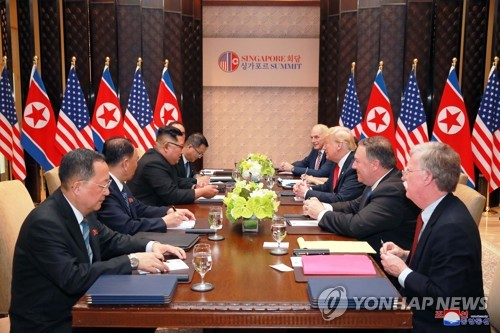
Nonetheless, renewed U.S.–North Korea summit diplomacy remains conceivable, and Seoul retains diplomatic space to serve as a facilitator within multilateral cooperation frameworks involving China, Russia, and Japan, particularly in non-political, less politically sensitive areas.
North Korea’s growing emphasis on regional development and livelihood improvement has generated increasing demand for external resources and technology. The regime has also shown pragmatic openness toward cooperation in areas such as public health, education, forestry, climate adaptation, and disaster response. These domains represent practical entry points for South Korea to propose humanitarian assistance and technical exchanges that could reopen channels of dialogue.
5. Rethinking the Framework of Inter-Korean Cooperation
Given the difficulties in bilateral engagement, Seoul must expand coordination with international organizations and regional partners. Past South Korean cooperation models, focused on infrastructure, material provision, and labor-intensive processing, are now less viable amid China’s logistical dominance and Russia’s reemerging economic role. Future cooperation must therefore aim for complementarity rather than competition with North Korea’s existing partnerships.
Seoul should redefine its strategic role in supporting improved U.S.–North Korea relations. Even in the absence of direct coordination with Pyongyang, South Korea can jointly design, with Washington, a suite of cooperative initiatives in nontraditional security areas such as health, food security, disaster management, and supply chain resilience. In doing so, Seoul can assume responsibility for planning and implementing components of these projects, transforming itself from a passive observer to an active co-designer.
This would help create a virtuous cycle: progress in U.S.–North Korea relations leading to progress in inter-Korean relations, thereby institutionalizing peace through practice rather than declarations.
6. Building a Sustainable Peace Regime
Denuclearization remains both the objective and baseline of a peace regime on the Korean Peninsula. To move toward a nuclear-free peninsula, South Korea must focus on building an operational ecosystem that balances deterrence and diplomacy, integrates multilateral coordination, and aligns with global norms.
Rather than focusing on the magnitude of aid or investment, South Korea should give priority to developing an institutional design: creating mechanisms, standard procedures, and ready-to-launch cooperation packages that can be activated when conditions permit. By transforming political momentum into procedures and institutions, Seoul can shift inter-Korean relations from “managed disconnection” to “managed engagement,” turning risk into a strategic asset.
Conclusion
Sustaining peace on the Korean Peninsula demands more than rhetoric: it requires strategic coherence, institutional readiness, and actionable policy design. South Korea must act as both coordinator and architect, navigating between great-power competition and regional transformation. By doing so, Seoul can translate the complexity of the current crisis into an opportunity—transforming volatility into structured engagement and embedding peace within a sustainable regional framework.
-
PREV [Thematic Analysis]
-
NEXT [Feature Article]