

The Political Calculus of Kim Ju-ae’s Public Appearances and the Prospects for Succession

Hong, Min
Senior Research Fellow, Korea Institute for National Unification
Executive summary
Speculation that Kim Ju-ae is being prepared as a formal successor to Kim Jong Un has re-emerged following her public accompaniment of the leader on overseas and high-visibility occasions. However, available evidence remains thin and ambiguous. Careful analysis of North Korea’s dynastic logic, institutional succession patterns, military culture, and the tactical uses of symbolic imagery suggests that Kim Ju-ae’s exposure to date is more likely instrumental and symbolic than proof of an activated succession plan.
Key uncertainties remain—most importantly whether and how Pyongyang would manage hereditary continuity (and attendant surname issues), the absence of institutional succession mechanisms associated with prior transfers of power, and the need for military legitimacy in a heavily male-centered command culture.
1) Limited empirical basis for claims of an active succession project
Claims that Kim Ju-ae is the designated successor rest largely on impressions and selective public sightings rather than on robust, systemic indicators (e.g., staged party training, institutional appointments, secretive elite grooming visible through proxy signals). North Korean state media and visual releases have not provided a sustained documentary record that would normally accompany a carefully managed succession process.
Indeed, a documentary of Kim Jong-un’s China visit contained almost no substantive footage of Kim Ju-ae, undermining the notion of a deliberate, fully formed public introduction.
2) The dynastic dilemma: Baekdu bloodline and the surname problem
The Kim family’s “Baekdu bloodline” is a foundational legitimation trope for the regime. If succession passed to a daughter who subsequently married and bore children with another surname, the regime would face politically sensitive questions about hereditary continuity.
The costs—symbolic, organizational, and potentially destabilizing—of altering the long-standing dynastic form are non-trivial. Any transition that risks undermining the perceived purity of the revolutionary bloodline would require major ideological and institutional management.
3) Historical pattern of succession in the DPRK
Succession in North Korea has followed a relatively consistent pattern: long periods of secrecy and internal preparation; controlled exposure only after the successor accumulates adult status, party membership, and bureaucratic/ideological credentials; and deliberate, staged conferral of roles and titles.
Previous successions involved intensive covert training, incremental institutionalization, and eventual public legitimization. Kim Ju-ae—still a minor—has not shown the hallmark indicators of this process (e.g., party posts, systematic ideological training visible in state propaganda, or gradual accrual of governing responsibilities).
4) Military culture, authority, and the problem of legitimacy
North Korea’s regime rests on a masculinized military-revolutionary legitimacy that prizes command of the armed forces and symbolic linkage to anti-Japanese armed struggle traditions.
Effective control of the Korean People’s Army—and ultimate authority over nuclear forces—has historically required either demonstrated military credentials or the ruthless consolidation of control. Kim Jong-un himself invested heavily, including through purges and reorganizations, to secure military obedience.
It is not evident that Kim Ju-ae currently embodies the symbolic or experiential codes necessary to command the military establishment, making any immediate transfer of supreme command implausible.
5) Symbolic utility of Kim Ju-ae: a metaphor for the future
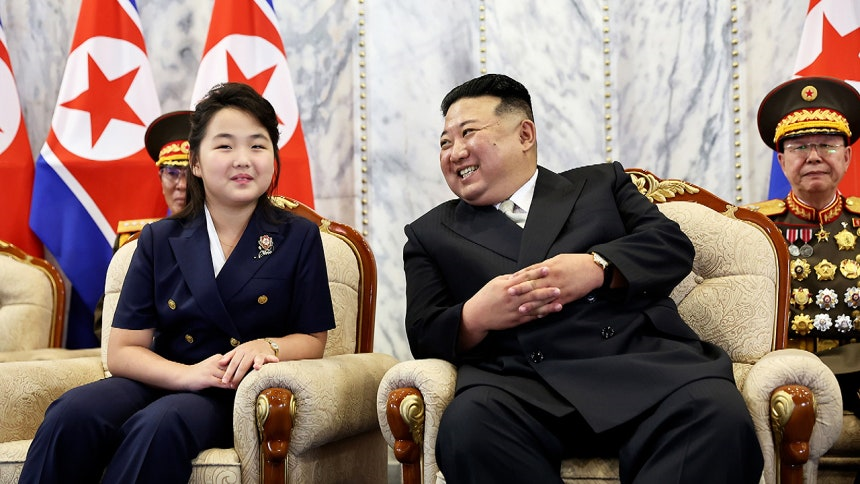
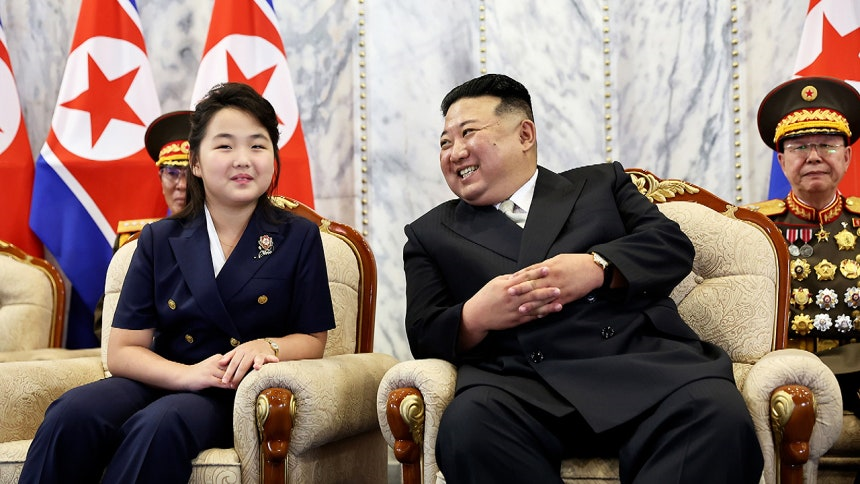
The initial, calibrated exposure of Kim Ju-ae (first widely noted in late 2022) appears to serve multiple symbolic functions: (1) reframing North Korea’s narrative from belligerence to a focus on protecting “future generations,” (2) humanizing the leadership by showing family continuity and normalcy, and (3) creating a visual token that links regime security to posterity.
In other words, Ju-ae operates as a legitimating symbol—useful in propaganda—without necessarily indicating an immediate operational succession plan.
6) The public persona problem: image vs. authority
Kim Ju-ae’s on-camera demeanor—observed largely as private, childlike gestures (e.g., linkage with her father, moments of affection)—differs markedly from the public apprenticeship images shown for Kim Il-sung’s and Kim Jong-il’s heirs, who were portrayed receiving briefings and learning statecraft.
The current imagery emphasizes familial normalcy rather than staged authority acquisition, which is inconsistent with the early visible markers of past successors.
7) Timing: the medium-term horizon for a visible succession
If the regime intends to institutionalize hereditary continuity in the current generation, a plausible timetable would extend over roughly a decade.
Sources and analysis suggest: (a) special education and secret training typically commence in childhood and intensify until adulthood (party membership at ~18), (b) party and state positions are then conferred gradually, and (c) public recognition follows only after internal systems of loyalty and competence are consolidated. Reports that a son born in 2017 exists may imply a multi-pronged, generational approach to succession planning that only becomes overt in about ten years.
8) Kim Yo-jong’s centrality in any succession mechanics
Kim Yo-jong appears to play a prominent, operational role in managing messaging and possibly logistics around elite transitions. Her frequent accompaniment of Kim Jong-un, issuance of high-level policy statements, and apparent involvement in itinerary and diplomatic choreography suggest she is likely to be instrumental in designing and executing any future succession architecture—even if the eventual nominal successor is a child of Kim Jong-un.
Policy implications and recommended analytic posture
• Avoid deterministic conclusions. Current evidence does not justify treating Kim Ju-ae as a de facto successor; competing scenarios remain plausible.
• Monitor institutional signals. Key indicators to watch include: formal party or state appointments; appearance in staged educational or military-briefing roles; curated propaganda shifts emphasizing state office rather than familial affection; and discrete elite reassignments that align a bureaucratic pipeline behind a named heir.
• Evaluate elite cohesion and military messaging. Any visible succession will require elite buy-in—especially military acquiescence. Signals of military co-optation or reorganization tied to succession should be flagged immediately.
• Track Kim Yo-jong’s portfolio. Her actions and pronouncements may presage the design and timing of any succession mechanism.
• Maintain scenario flexibility. Over the medium term, plan for multiple outcomes: a long-gestation hereditary succession, an elite-driven collective arrangement with a figurehead, or continued personalization around Kim Jong-un with family symbolism used for domestic legitimation without imminent transfer of power.
Conclusion
Kim Ju-ae’s public appearances are politically significant, but their meaning is primarily symbolic at present. They reflect an intentional attempt by the regime to cultivate images of dynastic continuity and to harness empathy for “future generations” as a legitimating frame—useful instruments for internal cohesion and external messaging.
However, the institutional prerequisites and symbolic codes that have historically accompanied North Korean successions are not yet evident in the public record. Analysts should therefore retain a cautious, evidence-driven posture: watch for structural, bureaucratic, and military indicators before concluding that a formal succession process is underway.