


Marketing In North Korea (9)
- Ryugyong Kimchi, A feast of sweet and spicy flavors
'Making Kimchi Battle' and 'Kimchium'

Jeon Byung-kil
Senior Consultant of YESInnovation
former of Secretary General of UniKorea Foundation
The history of kimchi, the signature dish of the Korean people, dates back to the Three Kingdoms period of Korea. Kimchi has been around since the Goryeo and Joseon dynasties. The history of cabbage kimchi, the most popular type of kimchi, is not as long as you might think. Cabbage kimchi began to be eaten in the late Joseon Dynasty, when chili peppers from Japan became common as a condiment and the exotic vegetable "Cabbage" was cultivated.
The main ingredient in kimchi, Cabbage, has been classified as "Chinese Cabbage" in the Codex Alimentarius. However, as kimchi has become globalized, it has been pointed out that it is incorrect to call the ingredient Chinese cabbage since Korea is the main producer of kimchi. That's why the Korean cabbage, with its yellowish flesh, has been recognized by the Codex Alimentarius Commission since 2012 under the name Kimchi Cabbage. The power of kimchi has changed the international food classification.
Kimchi is also enjoyed in North Korea. North and South Korea may be divided, but the culture of eating kimchi has never been. In North Korea, kimchi isn't just a side dish, it's a staple and food for half the year. Greenhouse cultivation is not common in North Korea, so fresh vegetables are not available in the winter. As a result, the only side dishes on their winter table are three or four types of kimchi, and it can't survive the winter without them. To make kimchi, it usually need 200 kg of cabbage and 50kg of radish per person. Neighbors help each other make kimchi because it's too hard to do alone. That's why North Korea calls it making kimchi warfare.
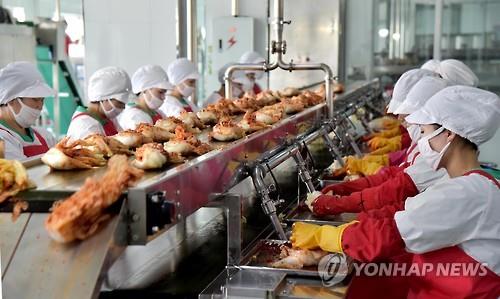
The Ryugyong Kimchi Factory, completed in 2017 / Yonhap News Agency
Storing kimchi is just as important as making it. This is because the flavor of kimchi depends on where it's stored and how it's aged. When kimchi is aged around 7℃, it ferments and tastes better. Koreans have traditionally buried jangdok(jar) in their yards and stored kimchi there to keep it at the right temperature without freezing. In South Korea, the residential culture has shifted toward shared housing, such as apartments, and the number of houses without yards has increased. This made it difficult to achieve and maintain the aged flavor of the kimchi. We ended up with a "kimchi refrigerator" that most closely resembles the way kimchi is stored and fermented in a kimchi jar. Currently, most households in South Korea use kimchi refrigerators.
In North Korea, kimchi is stored in a place called Kimchium(Kimchi storage). Each family makes as little as 300Kg and as much as a ton of kimchi. They dig a large pit called a "kimchium" in the yard of their house or apartment and put in large and small kimchi venom. Kimchi has been a staple food in both North and South Korea for many years, so wintertime kimchi making has a similar format and culture.
Ryugyong Kimchi Factory... Modernization! Industrialization!
Since its establishment in 1948, North Korea has encouraged women to be active in society to compensate for the shortage of labor. To reduce the workload of women in the home, North Korean authorities have created various food production factories to make food. However, the quality of the product and the supply chain was poor. Kimchi has also been produced in factories since the late 1980s, but it has not been well received by residents. The economic crisis of the 1990s led to the collapse of the production-distribution-consumption structure due to inadequate supply of vegetables.
In the mid-2010s, Kim Jong-un ordered the construction of a modernized Pyongyang Ryugyong Kimchi factory. It introduced a system to automate the entire production process of the kimchi factory and paid attention to hygiene management. As early as 2000s, North Korea was working on developing vacuum packaging technology and long-term preservation of food. Ryugyong Kimchi Factory produces more than 70 types of products, including cabbage kimchi.
Since the completion of Ryugyong Factory, a new scene has emerged in addition to selling kimchi in grocery stores and general markets. Separate kimchi shops have been opened in various locations in Pyongyang, including Pyongyang Station and around Bonghwasan Inn, so that Pyongyang residents can purchase directly from the shops. Pyongyang residents who have used the service are generally satisfied with the taste of the kimchi and the convenience of the store.
There are four types of packaged kimchi : 150g, 200g, 500g, and 5kg, but Consumers mostly buy 200g and 500g. In South Korea, consumers buy large quantities of kimchi (3kg to 5kg) from supermarkets or online shopping malls and store it in a kimchi refrigerator. North Korea, on the other hand, has a much lower penetration of refrigerators than South Korea and unreliable electricity, making it difficult to maintain the freshness of kimchi. Therefore, consumers in Pyeongyang buy less kimchi and consume it quickly. For larger 5kg packages of kimchi, buy from a place that has a refrigerator and reliable electricity. It is mainly for high volume demand, such as restaurants and institutions.
Quality control and the spread of production plants
Ryugyong Kimchi Factory focuses on quality control. The cabbage kimchi made by Ryugyong Kimchi Factory has received ISO 2200, an international certification for food safety, and the December 15 Quality Medal, which is awarded to the best products in North Korea. Prior to this, in 2017, North Korea registered the brand logo of the Ryugyong Kimchi Factory as a trademark with the World Intellectual Property Organization (WIPO) with the global market in mind. The quality control and international trademark registration of Ryugyong Kimchi appears to be a strategic approach by North Korea to capitalize on the growing global interest in Korean culture and the expanding market for kimchi.
The quality control and international trademark registration of Ryugyong Kimchi appears to be a strategic approach by North Korea to capitalize on the growing global interest in Korean culture and the expanding market for kimchi. In 2019, seven kimchi factories were established in Sinuiju and Pyeongseong, Haeju and Songlim, Cheongjin and Ganggye, and Nampo City. Kimchi factories have sprung up in the administrative centers of each province, partially fulfilling the demand for kimchi from local residents.
However, contrary to the hype, some say it doesn't work as well as expected. On April 3, 2019, the North Korean kimchi factory in Pyongyang, South Pyongan Province, which was built under the direction of Kim Jong-un, was reportedly in trouble due to poor sales, the Radio Free Asia (RFA) reported. "The kimchi factory, which was set up under Kim Jong Un's direction, has been struggling to sell less than half of the kimchi it produces and has been unable to circulate funds since its inception," RFA quoted local sources as saying.
The Ryugyong Kimchi Factory in Pyongyang produces 2,000 tons of kimchi, 2,000 tons of pickles, and 200 tons of processed mushrooms annually. The daily production of kimchi is 6 tons, which is enough to feed 50,000 to 60,000 people every day. This is not a lot of production for Pyongyang's population of over 3 million. The demand for kimchi is relatively stable, as it is not only from Pyongyang residents but also from organizations such as hotels and restaurants in the city. Ryugyong Kimchi is also supplied to North Korean restaurants in Dandong, China. There is no better location for a kimchi factory in North Korea than the Ryugyong Kimchi Factory. Ryugyong Kimchi Factory does not only produce kimchi, but also produces pickles and processed mushrooms to diversify its sales.
The kimchi factories built in each region are not as well located and have less demand compared to Pyongyang. The local population does not have much purchasing power, and there is a significant lack of large demand sources. In addition, it is more difficult to store kimchi in rural areas due to poor electricity and low penetration of refrigerators. The North Korean media also focuses on the Ryugyong Kimchi factory, while local kimchi factories are not given much coverage. Most North Koreans still eat kimchi stored in kimchiums, where they compete in fierce making kimchi battles over packaged kimchi from modern kimchi factories.
A North Korean housewife's dream may be to skip the laborious kimchi making process and buy delicious factory-made packaged kimchi, store it in a kimchi refrigerator, and enjoy it with her family for a long time. This is the kind of everyday happiness that housewives want. The state has a minimal obligation to provide the conditions for that happiness.