


Pastor Kim's Real Thoughts: Pondering the Takedown While Circling Kim Il-sung’s Statue
Kim Jin-hong
Chair of Dure Cultural Foundation, Pastor at Dure Online Church
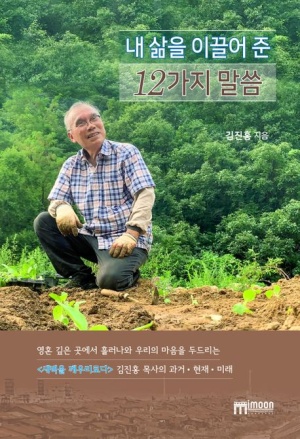
In the illuminating pages of his latest autobiography '12 Words that Guided My Life,' released this past October, Pastor Kim Jin-hong of Dure Online Church has captured the attention and curiosity of many. A distinguished figure in the realms of theology and social activism in South Korea, Pastor Kim is celebrated for initiating the 'Dure Spirit' – a unique blend of church ministry, community service, and industrial innovation. His influential book, 'Wake Up The Dawn,' has reached global audiences, translated into various languages including Korean, English, Japanese, Chinese, and Russian, spanning over 100 editions and even inspiring a film adaptation.
With '12 Words that Guided My Life,' Pastor Kim shares the depth of his experiences and insights, considering it a work close to his heart, much like 'Wake Up The Dawn.' In its introductory pages, he delves into the societal and personal upheavals he has witnessed for 82 years, pointing out South Korea’s extraordinary journey. Amongst the 120 new governments established post-World War II, South Korea remarkably stands out for its triumphant stride towards industrialization, democratization, and its transformation into a knowledge-based information society. He expresses immense pride in this unique legacy, highlighting the critical tasks that lie ahead – achieving an advanced South Korea and realizing national unification.
The autobiography is rich with personal anecdotes and powerful narratives, particularly focusing on Pastor Kim's relentless efforts during the North Korean famine in 1998. His commitment led to the creation and personal supervision of orphanages and the Dure Farm, providing sanctuary for thousands of orphans across various regions in North Hamgyong Province. He staunchly believed and practiced the philosophy that aid directed towards North Korea must tangibly benefit its citizens, steering clear of the elites and privileged classes. Pastor Kim’s voice resonates with deep concern and empathy as he shares, “There are still nights filled with restlessness, my thoughts lingering on our North Korean brethren.” He underscores the imperative journey towards reunification, coupled with the necessity of supporting North Korea—a path he believes can only be achieved by dismantling the Kim Jong-un regime and establishing a democratic unification. He remains optimistic about the future, assuring his readers that this anticipated change is fast approaching. Given the depth and breadth of his experiences in North Korea, his fascinating stories will be unveiled across two engaging episodes.
1. Pondering a Monument’s Fall: Thoughts around Kim Il-sung’s Statue
Each time I find myself in Pyongyang City, I make a reservation at the Koryo Hotel, situated atop Moranbong Hill. A short walk from the hotel reveals the towering statue of Kim Il-sung. (Editor’s Note: Post Kim Jong-il’s death in December 2011, a statue commemorating him was also erected.)

The statues of Kim Il-sung and Kim Jong-il, situated on Mansudae Hill in Pyongyang City. This location was once the site of Jangdaehyun Church in 1907. / Korean Central News Agency
This spot offers a panoramic view of the Taedong River and the heart of Pyongyang. On every visit, I ensure to take a moment to circle the statue, immersing myself in contemplative thought. I often find myself wondering, if one were to tie a rope around the statue’s neck, from which angle would it need to be pulled to bring the statue crashing down?
My thoughts harbor a special purpose. This very spot was once home to Jangdaehyun Church, a cornerstone in the revival of the Korean church in 1907. A church rich in history was razed to the ground to erect the statue of Kim Il-sung. As a pastor deeply rooted in the Korean church, I am driven by a sense of mission to dismantle this statue and resurrect the Jangdaehyun Church in its rightful place.
Following this, I crossed the Tuman River to Rajin-Sonbong, and began laying the foundations for an orphanage and a farm. The orphanage, now considered one of the finest in North Korea, stands as a testament to our success. Working in North Korea requires a level of shrewdness, and these are stories from those initial days of setting up the orphanage.
During my trip to Rajin-Sonbong, I had securely stowed away $30,000 in cash, tucked away in my pocket. When I met with the Mayor of Rajin-Sonbong City, and we agreed to initiate the orphanage project, I had one crucial condition to lay out.
“There’s one absolute condition when it comes to running the orphanage. If you're not on board with it, let's just forget the whole thing—I'm not moving forward with the project.” The North Korean authorities raised their eyebrows at my firmness, and questioned, “What kind of conditions could be so crucial for our country’s welfare?” I answered confidently, “This mission is to help our motherland, and for that, we need to lay down some clear ground rules from the very beginning.” The Mayor, now intrigued, urged me to continue, “Please, enlighten us about this condition you speak of.” I held my ground and declared, “I want full control of managing the orphanage, right from the construction stage to its day-to-day operations.” The Mayor hastily responded, asserting, “That’s not how things operate here. You provide the funding, and we will handle the management.”
I held my ground, stating, “The funds for this orphanage are amassed from the donations of our compatriots worldwide. I bear a responsibility to them. I’ve brought $30,000 with me for this cause, and if you deny us self-management, I will just leave with these funds.” I reached into my pocket, pulled out the $30,000, and brandished it for them to see.
Even after I firmly insisted on my terms and showed them the wad of cash, they continued to assert that such an arrangement was against their country's policies. I held my ground, responding, “If that’s how it is, then there’s nothing more to discuss. We can consider the orphanage project cancelled, and I will be on my way.” With that, I turned to leave. However, they weren’t ready to let go just yet. They sent an official after me, pleading for me to at least leave the funds as a donation. Yet, my resolve didn’t waver.
As I was packing up and getting ready to leave, a North Korean official showed up, a mere 30 minutes before my departure time. He looked me straight in the eye and said, “Mr. Kim, your determination is truly remarkable. We’ve decided to accept your terms.”
And so, we began the work of building the orphanage. We brought in a team of skilled carpenters from Yanbian, China, and assembled a construction crew, striking a balance between our own hires and those recommended by the city. As we wrapped up the construction and tallied the costs, it turned out we had managed to build the orphanage for just $27,500. Meanwhile, a large church in Seoul was undertaking a similar project, constructing a facility comparable to our orphanage. However, by following the city's extravagant recommendations, they ended up spending a staggering $3 million.
This whole experience taught me a crucial lesson: when dealing with North Korean authorities, or in any similar situation, it is imperative to stand by your principles and stay firm. Straying from this path could lead to costs skyrocketing nearly tenfold. This principle is universal, applicable whether it's our government or private organizations seeking to assist North Korea; maintaining integrity and steadfastness is absolutely vital.
<To be Continued>
-
PREV [Feature Article]
-
NEXT [SAND Research Report]