

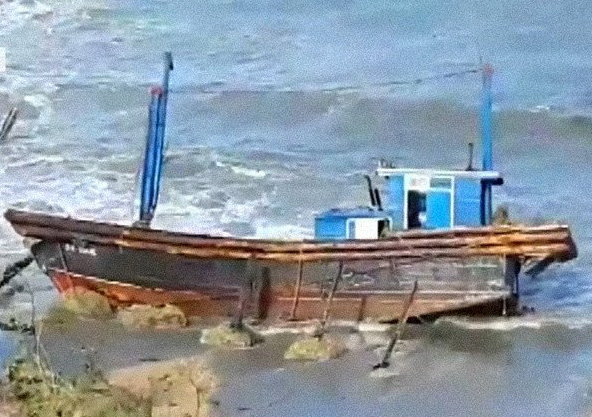
On the night of May 6th, nine members of a North Korean family crossed the Northern Limit Line (NLL) aboard a fishing boat and defected to South Korea. This is the first case of a family using a fishing boat to escape to South Korea since July 2017, marking approximately six years since the last family defection. While it has primarily occurred along the east coast, the fact that they used a wooden boat to defect through Yeonpyeong Island, a highly sensitive area due to the 2010 Bombardment of Yeonpyeong, is quite unusual. The perilous situation, where they risked their lives, including those of young children, demonstrates the urgency they faced. The reasons for their escape from North Korea are known to be related to the severe COVID-19 lockdown measures, strict internal control, food shortages, and longing for South Korea through access to external information.
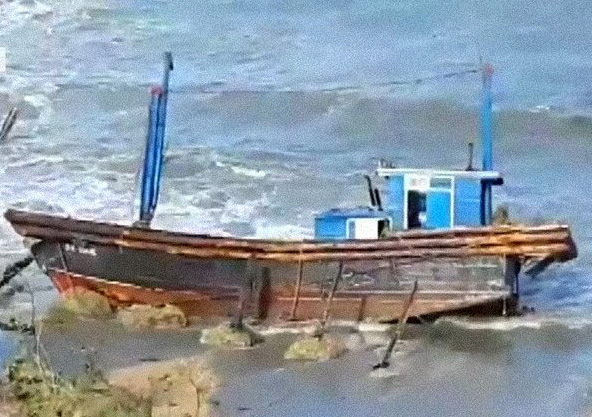
On the night of the 6th, the South Korean military detected unusual movements, including a North Korean fishing boat approaching the NLL, through surveillance equipment. As the boat crossed the NLL and headed south, the authorities immediately dispatched forces to the sea and conducted a search and inspection when they boarded the vessel. They clearly expressed their intention to defect to our soldiers on the boat. After confirming their "intention to defect," the military authorities transferred them to Unit A in the metropolitan area, where they underwent joint interrogations with relevant agencies such as the National Intelligence Service, Ministry of Unification, and the police. With the confirmed intention to defect, it is expected that the interrogation will soon be finished, and they will be moved to a protective center or Hanawon.
As per the National Intelligence Service, on May 19th, two families from North Korea chose to defect in response to the increased control measures implemented within the country during the COVID-19 pandemic. The National Intelligence Service revealed that these defectors had developed admiration for South Korea through watching South Korean broadcasts, leading them to make the decision to defect when the social control measures in North Korea became stricter due to COVID-19. It was also noted that the defectors are relatives within their families. As the Yoon Seok-yeol government has emphasized the principle of accepting all defectors, it is expected that domestic settlement support will be provided to them.
The recent defection of North Korean families by boat marks the first instance in approximately six years since July 2017. Given the heightened surveillance and control measures by North Korean authorities, this family-based defection using a fishing boat has garnered significant attention. It was reported that the North Korean military's border security near the NLL became more stringent after an incident in April where the North Korean coast guard violated the NLL and subsequently retreated upon warning shots fired by the South Korean navy. North Korea's border closure due to the COVID-19 pandemic remains in effect. The fact that these families chose to defect by boat in an area near Yeonpyeong Island, where previous provocations and battles took place, indicates heightened surveillance and security compared to other regions. The departure point, between Hwanghae-do and Yeonpyeongdo, includes Jangjaedo and Mudo, islands that Kim Jong-un personally visited and led on two occasions in 2013 and 2017. North Korea considers this area to be a strategically important military stronghold, resulting in strict border control.
Despite these circumstances, the reason behind risking their lives to escape with their children on a small boat points to the challenging conditions within North Korea. The defection of these families across the NLL signifies the difficult internal situation, including food shortages. North Korea has faced challenges in importing food, fertilizers, and pesticides due to sanctions imposed by other countries and the impact of COVID-19. Additionally, natural disasters such as droughts and typhoons have led to a decrease in food production, exacerbating the food shortage. In June 2021, Kim Jong-un himself acknowledged the difficulties in people's lives due to inadequate food production during a meeting of the Central Committee of the Workers' Party of Korea. International organizations such as the Food and Agriculture Organization of the United Nations (FAO) and the World Food Program (WFP), which have continuously monitored North Korea's food situation, have also expressed concerns based on their own investigations. According to the Ministry of Unification, North Korea's food production was 4.51 million tons in 2022, a 3.8% decrease compared to 4.69 million tons in 2021. The prohibition of private grain distribution in local markets, enforced by North Korea's policy of promoting "food sales outlets" to strengthen state control, has also contributed to the food shortage. Furthermore, the shift from corn to wheat cultivation in 2022 led to a significant decline in corn production. According to Professor Kim Byung-yeon from Seoul National University (December 2022), North Korean residents' income has decreased by around 40% compared to 2016. In terms of monthly income for a family of four, it was less than $30 in 2022, compared to $40 in 2016. The price of rice has increased by 20%, and corn by 50% compared to early 2016.
The food shortage has resulted in considerable suffering among the North Korean population. Reports have surfaced that North Korea reduced the daily grain ration per soldier from 620g to 580g, and cases of malnutrition have been reported, with dozens of deaths occurring daily in the Kaesong region. Numerous cases of theft, such as stealing potato and soybean seeds planted in May from farms, have been observed in the Yanggang Province, leading to the organization of armed guards to protect the farmlands in the region.
Even in the worst economic conditions, North Korea prioritizes spending on military development, such as missile programs, rather than the economy. Last year, North Korea conducted 71 missile launches, and in the current year, it has already carried out nine ballistic missile tests. According to the Korea Institute for Defense Analyses (KIDA), the total cost of all types of ballistic missile launches conducted by North Korea last year amounted to a maximum of $530 million (689 billion KRW). Furthermore, it has been reported that when North Korea resumed trade with Russia, it initially imported luxury items for the ruling family, such as horses for riding. Last November, when the North Korean-Russian train service resumed after a two-year hiatus, dozens of horses were imported for Kim Jong-un's family and high-ranking officials, prioritizing their needs over the well-being of the general population. Kim has visited missile launch sites this year but has not visited any sites related to the livelihood of the people.
North Korea has enacted various oppressive laws that restrict its citizens' freedom, such as the "COVID-19 Restriction Law" that imposes the death penalty for violating quarantine measures, the "Law on Rejecting Reactionary Ideology and Culture" aimed at blocking external information, the "Pyongyang Cultural Language Protection Law," and the "Youth Cultural Education Guarantee Law." These laws aim to control the population to the extent that people have no freedom.
In addition, Kim Jong-un's project, the construction of 50,000 apartments in Pyongyang, forces the mobilization of labor from rural areas, and requisitions construction materials from residents. The combination of oppressive laws, border closures, Kim Jong-un's pursuit of nuclear weapons and missiles, and failed food policies has resulted in a deteriorating quality of life for North Korean citizens. For them, defection may be the only path to survival. This symbolic event demonstrates that no oppression or suppression can defeat the hearts and minds of North Korean citizens as they strive to reach South Korea.
We urge North Korea to lift the irrational "COVID-19 lockdown" that intensifies the suffering of its citizens in line with other nations easing COVID-19 restrictions. It is necessary to immediately abolish various oppressive laws that violate the human rights of the population, such as the "COVID-19 Restriction Law" and the "Law on Rejecting Reactionary Ideology and Culture." Furthermore, North Korea should accept international recommendations to halt nuclear and missile development and redirect related budgets towards economic development and improving the lives of the people.
-
PREV [Academic article]
-
NEXT [Feature Article]