

Bringing U.S.–North Korea Dialogue and a Nuclear Moratorium onto the APEC Summit Agenda

Seung-hyun Lee
Visiting Professor
Yonsei University
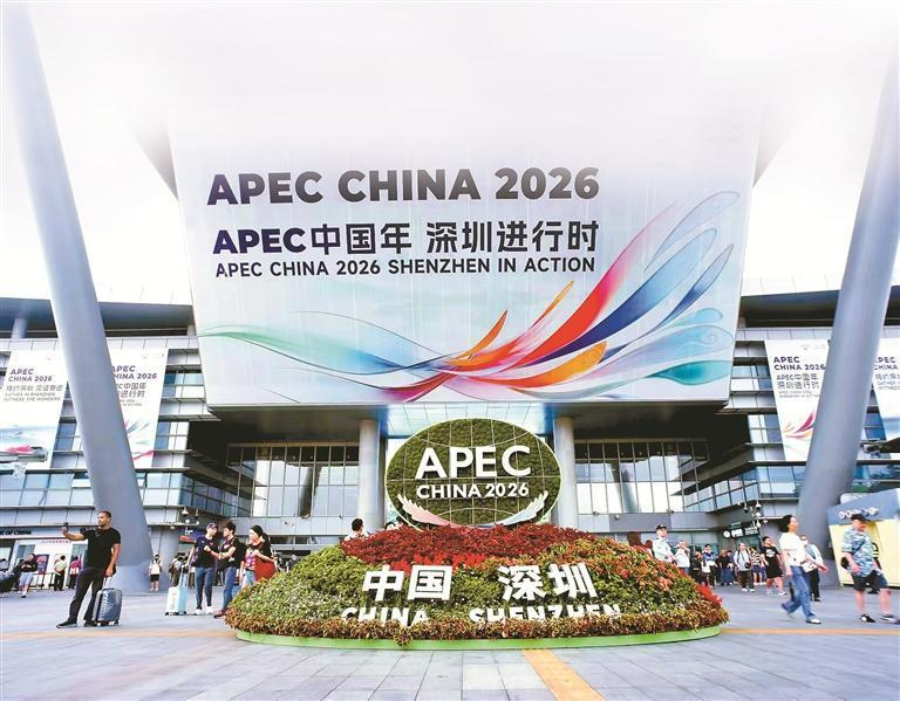
Following last year's gathering of world leaders in Gyeongju to address major international political and economic issues, the 2026 APEC Summit is scheduled to take place in Shenzhen, China. Meanwhile, U.S. President Donald Trump has continued to express interest in creating conditions conducive to renewed dialogue between the United States and North Korea. Pyongyang has shown some responsiveness to these expressions of interest, suggesting that the possibility of bilateral engagement remains open. Moreover, a group of Chinese scholars and experts from the host country of this year's APEC Summit has expressed its willingness to support efforts to facilitate U.S.–North Korea dialogue.
Although there is broad recognition of the need to resume dialogue between Washington and Pyongyang, particularly on issues surrounding North Korea's nuclear program, a significant diplomatic catalyst appears necessary to break the current impasse. The APEC Summit could provide an important opportunity, in terms of both timing and location, for Trump and North Korean leader Kim Jong-un to meet for direct talks. Potential venues could include the China–North Korea border region, Panmunjom, or even Pyongyang. Although a visit by Trump to Pyongyang could present considerable logistical and political challenges, its potential diplomatic and symbolic significance makes it an option worthy of serious consideration.
While the United States has signaled its willingness to engage in dialogue with North Korea without preconditions, Pyongyang has maintained its preference for conditional engagement. North Korea continues to insist that certain prerequisites be met and remains reluctant to enter negotiations without assurances that its concerns will be addressed. This fundamental divergence appears to reflect a structural asymmetry: North Korea has relatively limited policy options, whereas the United States enjoys considerably greater strategic flexibility.
An examination of the differing conditions and policy options put forward by North Korea and the United States, as well as the reasons these differences have remained unresolved, can help South Korea reaffirm the importance of bilateral dialogue and identify ways to facilitate its resumption.
First, it is necessary to examine North Korea's stated preconditions for dialogue. Pyongyang has consistently demanded that Washington abandon what it characterizes as its "hostile policy toward North Korea." Second, North Korea has objected to what it describes as the application of "double standards.“
By "hostile policy," Pyongyang refers to international economic sanctions, joint U.S.–South Korea military exercises, and the deployment of U.S. strategic assets to the Korean Peninsula. North Korea maintains that these measures are intended to bring about regime change, specifically the removal of the Kim Jong-un government. Ultimately, its demand for an easing of hostile policies can be understood as an effort to secure U.S. security guarantees for the continued survival of the regime led by the Baekdu bloodline.
North Korea's allegations of "double standards" in U.S. policy are also closely related to military modernization and force development. Since the Korean War, North Korea has pursued a development strategy centered on heavy industry and guided by the principles of national defense and self-reliance. Building on this foundation, it has prioritized the development of its military-industrial sector, continued to advance its nuclear and other weapons programs, and conducted repeated missile tests.
Pyongyang argues that the United States and South Korea characterize North Korea's military activities as "provocations," while describing their own military modernization efforts as measures to "strengthen deterrence" and prevent war on the Korean Peninsula. From Pyongyang's perspective, this difference in how the two sides characterize their respective military activities constitutes a clear application of "double standards."
The United States, by contrast, has urged North Korea to enter negotiations without preconditions and address outstanding issues through direct dialogue. Washington has a broad range of policy options toward Pyongyang, extending from the temporary suspension of joint U.S.–South Korea military exercises to the easing of economic sanctions. Its approach is to bring these issues to the negotiating table for comprehensive discussion.
Historically, the United States fought a war against North Korea and subsequently explored the possibility of normalizing diplomatic relations. Under the 1994 Agreed Framework, the two countries agreed to take steps toward normalizing relations, beginning with the establishment of liaison offices and progressing toward the eventual establishment of ambassadorial-level diplomatic relations. However, these arrangements were never fully implemented.
Accordingly, the range of potential U.S. policy options toward North Korea—from military confrontation to diplomatic normalization—cannot be regarded as entirely outside the realm of possibility, even if the feasibility of either course remains limited in the near term.
Given the wide range of policy choices available to Trump, it is useful to examine these options comprehensively. Such an assessment should include not only policies that remain theoretically possible despite their limited prospects for implementation but also measures considered or pursued by previous U.S. administrations.
First, there are military options. Previous U.S. administrations have considered measures ranging from precision strikes targeting North Korea’s leadership and key government facilities to other forms of military intervention.
Second, there are options that could undermine the stability of the North Korean regime. These include supporting planned defections, establishing resettlement communities for North Korean defectors, and pursuing efforts to bring about regime change.
Third, Washington could intensify pressure on North Korea over its human rights record. Although President Trump may be unlikely to prioritize this issue, the Democratic Party’s newly established majority in Congress could create additional opportunities for congressional scrutiny and action.
Fourth, there are nuclear-related policy options, ranging from demands for complete nuclear disarmament to recognition of North Korea as a nuclear-armed state. A broad spectrum of intermediate approaches is also conceivable.
Fifth, Washington could pursue the normalization of diplomatic relations with Pyongyang.
Sixth, it could consider expanding economic and humanitarian assistance to North Korea.
Seventh, the United States could ease or lift economic sanctions.
Eighth, Washington could reconsider its policy toward joint U.S.–South Korea military exercises and the continued stationing of U.S. forces in South Korea.
By contrast, North Korea’s principal negotiating instrument is its nuclear program. Its approach therefore centers on breaking the program down into smaller components and using individual elements as bargaining chips. This creates the possibility that Pyongyang could offer concessions, such as slowing the pace of nuclear weapons development or even freezing its program at its current level.
Within this framework, the prospects for U.S.–North Korea dialogue will depend largely on the negotiating positions adopted by the two principal decision-makers: President Trump and Kim Jong-un. Both leaders have reasons to pursue engagement. President Trump’s domestic political standing has weakened considerably following the Democratic Party’s victory in the midterm elections. Consequently, he has an incentive to demonstrate foreign policy achievements, an area in which the executive branch enjoys considerable flexibility. A meeting with Kim could serve this purpose. In this respect, the outcome of the U.S. midterm elections may have somewhat strengthened Kim’s negotiating position.
As noted earlier, Kim has consistently devoted resources not only to securing support from China and Russia but also to obtaining security guarantees from the United States. North Korea has strengthened its partnership with Russia through measures including the deployment of troops to the Russia–Ukraine war. It has also leveraged the outcomes of its cooperation with Moscow to reinforce its relations with Beijing. Consequently, Pyongyang now enjoys greater strategic flexibility than it did when its policy was primarily focused on enduring external pressure.
Moreover, goods imported through informal channels from Russia and China have weakened the effectiveness of international economic sanctions against North Korea. From Kim’s perspective, the potential value of sanctions relief from the United States has therefore diminished compared with the period surrounding the Hanoi Summit. Considerable time has passed since that summit, and North Korea’s stockpile of nuclear materials has continued to grow in the meantime, further strengthening Kim’s negotiating position.
Taking these factors into account, Kim may now have greater latitude to approach a potential meeting with President Trump with a degree of flexibility. Although the urgency of engagement has diminished compared with the period surrounding the Hanoi Summit, there is little reason for him to reject a meeting outright. He could meet with Trump, accept any incentives Washington might offer, and potentially do so without making substantial concessions in return.
For any of the policy options discussed above to be negotiated and implemented, the United States and North Korea must first establish direct communication. Since the failure to reach an agreement at the Hanoi Summit, the nuclear challenge on the Korean Peninsula has grown more acute, both qualitatively and quantitatively. The upcoming APEC Summit is expected to bring together the leaders of the United States, China, and Russia at a major international gathering, and reports suggest that issues concerning the Korean Peninsula may also be discussed. If Trump and Kim were to meet and engage in dialogue on the sidelines of the summit, or use the occasion to arrange a separate meeting, such an encounter would be significant in its own right. It could also provide a critical opportunity to prevent further deterioration of the nuclear situation on the Korean Peninsula.
To date, the nuclear issue on the Korean Peninsula has been characterized by the continued advancement of North Korea’s nuclear capabilities, including six nuclear tests, the miniaturization and standardization of nuclear warheads, and repeated tests of intercontinental ballistic missiles (ICBMs). These developments have further consolidated North Korea’s status as a nuclear-armed state. Furthermore, some estimates suggest that North Korea may have the capacity to produce approximately six additional nuclear warheads annually. If this capacity is fully realized, security concerns in South Korea could intensify considerably.
Against this backdrop, even in the aftermath of the failed Hanoi Summit, it is essential to consider how to halt North Korea’s further nuclear development at its current level and establish a pathway toward subsequent reductions and eventual dismantlement, with the ultimate objective of achieving a nuclear-free Korean Peninsula. The immediate priority should be to secure a moratorium on further nuclear development.
This is where South Korea’s policy dilemma becomes apparent. Under the current circumstances, the South Korean government has defined its role as that of a “pace-setter.” The underlying concept is that while the United States serves as the “peace-maker,” South Korea acts as the “pace-setter.”
If U.S.–North Korea dialogue resumes and North Korea’s nuclear development is provisionally frozen, Trump would initially assume the role of “peace-maker.” Such an outcome could provide a starting point for reducing tensions on the Korean Peninsula stemming from North Korea’s nuclear development, while also enhancing U.S. security by addressing the threat posed by North Korea’s nuclear weapons. In the subsequent phase, however, South Korea must move beyond its supporting role as a “pace-setter” and identify a more direct and substantive role for itself as a “peace-maker.”
Various scenarios continue to be discussed regarding the resumption of U.S.–North Korea dialogue, possible changes in inter-Korean relations, and the future trajectory of the Korean Peninsula. The upcoming APEC Summit could provide an opportunity to advance these discussions, including through exchanges among the leaders of the United States, China, and Russia on Korean Peninsula issues. Seizing this opportunity to initiate U.S.–North Korea dialogue would mark an important milestone and could help pave the way for a turning point in inter-Korean relations.
-
PREV [Issue Analysis]
-
NEXT 다음 글이 없습니다.