

The Direction of South Korean Diplomacy and the Path to Peaceful Coexistence on the Korean Peninsula, as Affirmed at the UN General Assembly
Koo-rae Cho
Visiting Research Fellow Sejong Institute
Former Director-General Ministry of Foreign Affairs
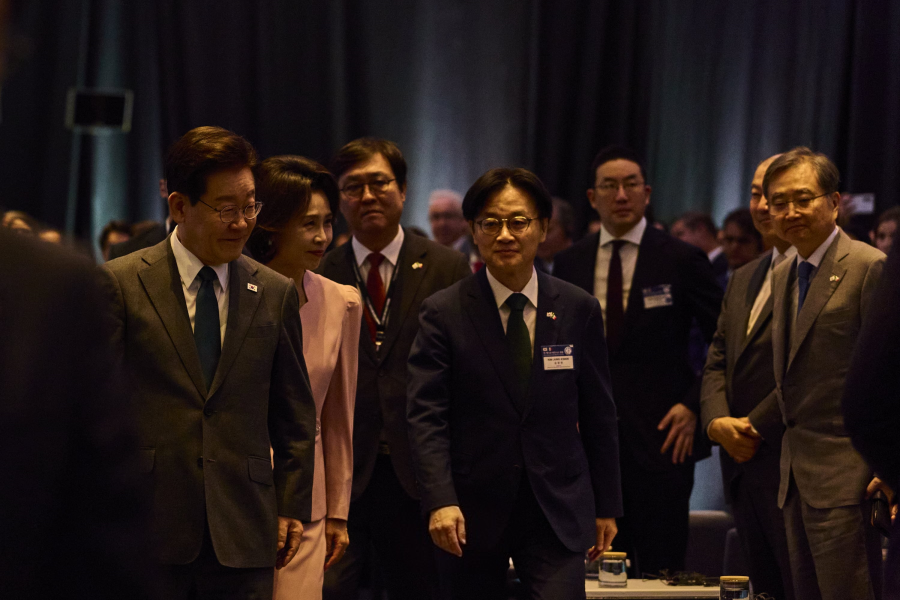
This year marks the 35th anniversary of the simultaneous admission of North and South Korea to the United Nations. In his address to the General Debate of the 81st session of the UN General Assembly on September 22, President Lee Jae-myung presented to the international community the “Three Major Blueprints for Peaceful Coexistence on the Korean Peninsula.”
The address came at a time when U.S. President Trump had repeatedly expressed his willingness to meet with North Korean Chairman Kim Jong-un before the end of the year, and just two days before the U.S.-China summit. Whereas President Lee had used the same podium a year earlier to declare the “return of the democratic Republic of Korea,” this year he focused on what a “returned” Korea would contribute to the international community and what role it would play on the Korean Peninsula.
This article reviews the principal elements of the speech, compares them with previous discussions of peaceful coexistence, and examines the challenges that lie ahead.
From “Return” to “Contribution”: The K-Initiative and Solidarity Among Constructive Contributors
The speech opened with the question, “Is today’s United Nations truly saving humanity?” After addressing climate-related disasters, armed conflicts, and tensions in the Strait of Hormuz, President Lee emphasized that the deeper the crisis, the more important it is to return to the UN’s foundational principle of multilateralism. Whereas his address a year earlier emphasized a “return to the international community,” this year’s speech focused more concretely on defining the direction of South Korea’s contributions.
(K-Initiative) As strategies for contributing to the international community, he presented three major initiatives: a “Global AI Society” centered on the establishment of a “Global AI Hub”; a “Green Great Transition,” including a plan to co-host the 4th UN Ocean Conference with Chile in 2028; and “Global Energy Supply Chain Solidarity,” aimed at responding to disruptions along maritime routes in the Strait of Hormuz and the Red Sea.
(Solidarity Among Constructive Contributors) The proposed approach is particularly noteworthy. Rather than creating exclusive organizations, the speech advocated an approach in which countries with both the capacity and the willingness to provide global public goods respect the UN-centered international order while flexibly expanding cooperation across different areas. This is significant because it illustrates how a middle power can create diplomatic space and play a meaningful role amid intensifying great-power competition and growing international fragmentation.
(South Korea-U.S. Summit) Outside the General Assembly chamber, the South Korea-U.S. summit, whose outcome had remained uncertain, was held for approximately 30 minutes, during which President Trump reaffirmed his willingness to engage in dialogue with North Korea. Two days later, the Korean Peninsula was also discussed at the U.S.-China summit, although the Chinese readout remained general, stating only that the two sides had exchanged views on the issue.
The Path to Peaceful Coexistence on the Korean Peninsula
In the section of the speech devoted to the Korean Peninsula, President Lee cited the simultaneous admission of the two Koreas to the United Nations 35 years ago as a foundation for peaceful coexistence and presented three major blueprints: “inclusive peaceful coexistence,” under which the two Koreas mutually respect each other’s political systems; “stable peaceful coexistence,” beginning with the restoration of communication channels and the management of conflicts through institutional mechanisms; and “responsible peaceful coexistence,” under which the two Koreas contribute to stability in Northeast Asia.
As key tasks, the speech called for ending the war and establishing a peace regime, while identifying the resumption of U.S.–North Korea dialogue as a potential stepping stone toward these goals. On the nuclear issue, it proposed a phased approach—hereafter referred to as the “Halt–Reduce–Nuclear-Free Korean Peninsula” plan—consisting of three stages: halting the further advancement of nuclear and missile capabilities; reducing nuclear capabilities over the medium term; and ultimately achieving a nuclear-free Korean Peninsula over the long term.
The three major blueprints were first presented in his August 15 Liberation Day commemorative address, while the principles of respecting the other side’s political system, rejecting absorption-style unification, and refraining from hostile acts were first articulated in his 2025 address and subsequently incorporated into the Fifth Basic Plan for the Development of Inter-Korean Relations.
A phased approach to the nuclear issue was also presented in the 2025 UN General Assembly address as a three-step framework of “suspension → reduction → elimination.” Accordingly, rather than focusing solely on the novel elements of this year’s speech, greater attention should be paid to the terminology used to address the international community, the role assigned to South Korea, and the sequence in which the key elements were presented.
(Choice of Terminology) First, the speech used the phrase “a nuclear-free Korean Peninsula” rather than “North Korean denuclearization,” while the term “unification” did not appear at all. Compared with the previous year, when “denuclearization” was identified as one pillar of the Exchange-Normalization-Denuclearization (END) Initiative and the final stage of the phased approach was described as “abandonment,” this represents continuity in the overall sequencing while changing the terminology used to describe it.
It also contrasts with the joint statement issued by the foreign ministers of South Korea, the United States, and Japan one day earlier, which reaffirmed the objective of North Korea’s “complete denuclearization.” The shift can be interpreted as an effort to lower the threshold for dialogue by avoiding terminology that North Korea has explicitly rejected. At the same time, however, the change leaves the administration open to criticism that it is moving away from the established formulation of denuclearization.
(Definition of Role) The second notable element is the characterization of South Korea’s role as both a “party to the process” and a “pace-setter.” Previous descriptions of South Korea’s role—“driver” (2017), “mediator” and “facilitator” (2018–2019), and “pace-setter” (August 2025)—generally positioned the United States and North Korea as the principal actors while casting South Korea in a supporting role. This distinction matters because the term “mediator” conventionally refers to a third party that is not itself a party to the dispute, whereas a “pace-setter” implies a participant that helps establish the pace without necessarily determining the outcome. The reaffirmation from the UN podium of the term “party,” which was also used in the August 15 commemorative address, can therefore be understood as a clear message to the international community that, although South Korea may play a supporting role in the context of U.S.–North Korea dialogue, it intends to remain a principal actor in discussions concerning a peace regime on the Korean Peninsula.
(Sequence) Whereas last year’s END Initiative proposed a comprehensive framework encompassing inter-Korean exchanges, normalization of relations, and denuclearization, this year’s statement explicitly identified ending the war and establishing a peace regime as core tasks, with the aim of gradually reducing nuclear risks through the dialogue process. As was the case last year, however, the statement did not specify what the first step—“suspension”—would actually entail. The scope of “suspension” could vary substantially depending on whether it applies only to nuclear tests and ICBMs, also covers short-range ballistic missiles and cruise missiles capable of targeting South Korea, or extends further to the production of fissile material and nuclear warheads, which are particularly difficult to verify externally. Without a clearly defined scope and credible verification mechanisms, the proposal has inherent limitations as a stand-alone negotiating framework.
Peaceful Coexistence as a Policy Goal
Peaceful coexistence is not a new concept in inter-Korean relations. Its historical development can be traced through several important milestones: the July 4 Inter-Korean Joint Statement (1972), which established the three principles of independence, peace, and national unity; the June 23 Declaration (1973), under which South Korea stated that it would not oppose North Korea’s participation in international organizations or the simultaneous admission of the two Koreas to the United Nations; the July 7 Declaration (1988), which characterized North Korea as a partner rather than an adversary; the National Community Unification Formula (1989, revised in 1994), which outlined a path toward unification through reconciliation, cooperation, and an inter-Korean confederation; and the Inter-Korean Basic Agreement (adopted in 1991), which committed the two sides to mutual recognition and respect for each other’s political systems and to non-aggression. Notably, the Basic Agreement defined inter-Korean relations as “not a relationship between two nations, but a special relationship formed provisionally in the process of pursuing unification.”
Successive South Korean administrations have developed their own visions within this broader framework. The Kim Dae-jung administration’s “Sunshine Policy”; the Roh Moo-hyun administration’s October 4 Declaration and efforts to advance a formal declaration ending the Korean War; and the Moon Jae-in administration’s “Berlin Proposal,” which rejected absorption-style unification, the Panmunjom Declaration, and the September 19 Military Agreement all placed greater emphasis on exchange, cooperation, and the establishment of a peace regime.
By contrast, the Lee Myung-bak administration’s “Denuclearization, Openness, and 3,000” and the Yoon Suk-yeol administration’s “Bold Initiative” and August 15 Unification Doctrine placed greater emphasis on denuclearization and the values of liberal democracy. The Park Geun-hye administration’s “Korean Peninsula Trust-Building Process” and Dresden Declaration represented an intermediate approach: while emphasizing humanitarian exchanges and trust-building, these initiatives linked large-scale economic cooperation to progress on denuclearization and sought to lay the groundwork for eventual unification.
Although the latest blueprint can be viewed as part of this broader policy lineage, three significant differences stand out.
First, the status of peaceful coexistence. Whereas peaceful coexistence was previously treated primarily as a preliminary stage on the path toward unification, it is now presented as a policy objective in its own right. The absence of the term “unification” from the speech further reinforces this distinction.
Second, the premise underlying coexistence. The “special relationship” established under the Inter-Korean Basic Agreement was based on the premise that both Koreas ultimately aspired to unification. By contrast, in late 2023, North Korea redefined inter-Korean relations as a relationship between “two hostile states.” The latest vision therefore responds to a challenge that most previous administrations did not face: how to institutionalize coexistence even when the other side explicitly rejects the objective of unification. The government’s efforts to establish a new Inter-Korean Basic Agreement should also be understood in this context.
Third, the sequencing of denuclearization and peace. This approach differs not only from previous strategies that phased in corresponding incentives on the premise of progress toward denuclearization, but also from approaches that pursued denuclearization and peace in parallel while treating complete denuclearization as a prerequisite for meaningful progress. The current approach represents a shift that takes into account North Korea’s advancing nuclear capabilities and is consistent with assessments that the U.S. negotiating objective may be evolving from complete denuclearization toward nuclear risk management.
Future Challenges
Yet, several challenges remain in translating the blueprint for peaceful coexistence on the Korean Peninsula into concrete policy. The first is the need to secure North Korean cooperation. The North Korean delegation was absent during President Lee’s address, and North Korea removed the negotiating team responsible for inter-Korean affairs at the 9th Workers’ Party Congress while reaffirming the “two hostile states” framework as a permanent policy.
Nevertheless, respect for each side’s political system and peaceful coexistence are principles that could provide a basis for limited common ground even with North Korea under the “two hostile states” framework. It will therefore be necessary to proceed steadily toward restoring communication channels, beginning with areas where the threshold for engagement is lowest.
Second, the gap between the “pace-setter” and the “direct parties” must be addressed. North Korea’s incentive to bypass Seoul and engage directly with Washington has grown stronger than in the past, raising the possibility that an agreement could emerge that provides benefits to the United States and North Korea while leaving South Korea dissatisfied with the outcome. Before any U.S.–North Korea summit, Seoul and Washington should establish clear principles, including that any adjustments to South Korea–U.S. joint military exercises should be conditional and reversible, and that U.S. Forces Korea and extended deterrence should remain outside the scope of U.S.–North Korea negotiations. The designation of South Korea as a “party to the negotiations” will have substantive meaning only if it is supported by such prior arrangements.
Third, the scope of the proposed “suspension” must be clearly defined. Since the beginning of this year, North Korea has continued to test hypersonic missiles, super-large multiple rocket launchers, ship-launched strategic cruise missiles, and cluster warheads. It also conducted a test of a new hypersonic missile on September 20, just two days before President Lee’s UN address. By contrast, North Korea has not conducted an ICBM test launch since October 2024.
Therefore, even if an agreement were reached on a “suspension of ICBM tests,” such an arrangement would have to be assessed in light of the capabilities North Korea would actually be relinquishing. North Korea could potentially present the “Hwasong-20,” which it has not yet launched, as a concession and seek corresponding measures in return. If Washington’s attention remains focused primarily on ICBMs capable of threatening the U.S. mainland, and the proposed “suspension” is limited to ICBMs, short-range ballistic missiles and cruise missiles capable of targeting South Korea would remain unaffected. Clarifying that South Korea’s proposed “suspension of further development” also encompasses these capabilities, and ensuring that this interpretation is maintained in any U.S.–North Korea negotiations, will be critical to giving substantive meaning to the proposed definition of “suspension.”
The simultaneous admission of North and South Korea to the United Nations 35 years ago marked the beginning of an era of “two competing member states.” President Lee’s speech presented the international community with a vision of moving toward “two coexisting neighbors.” The diplomatic agenda of the coming months—particularly in the lead-up to the APEC Summit in November—will provide an initial test of whether that vision can be translated into practice. In this uncertain period of transition, the significance of the declaration will depend less on the weight of the statement itself than on the precision, feasibility, and consistency of the policy framework needed to translate it into practice.
-
PREV [Current Affairs Analysis] The U.S.–China Summit and Peace on the Korean Peninsula
-
NEXT 다음 글이 없습니다.