

South Korea and Central Asia Reconnect After 1,400 Years

Son-Taek Wang
Adjunct Professor
Sogang University
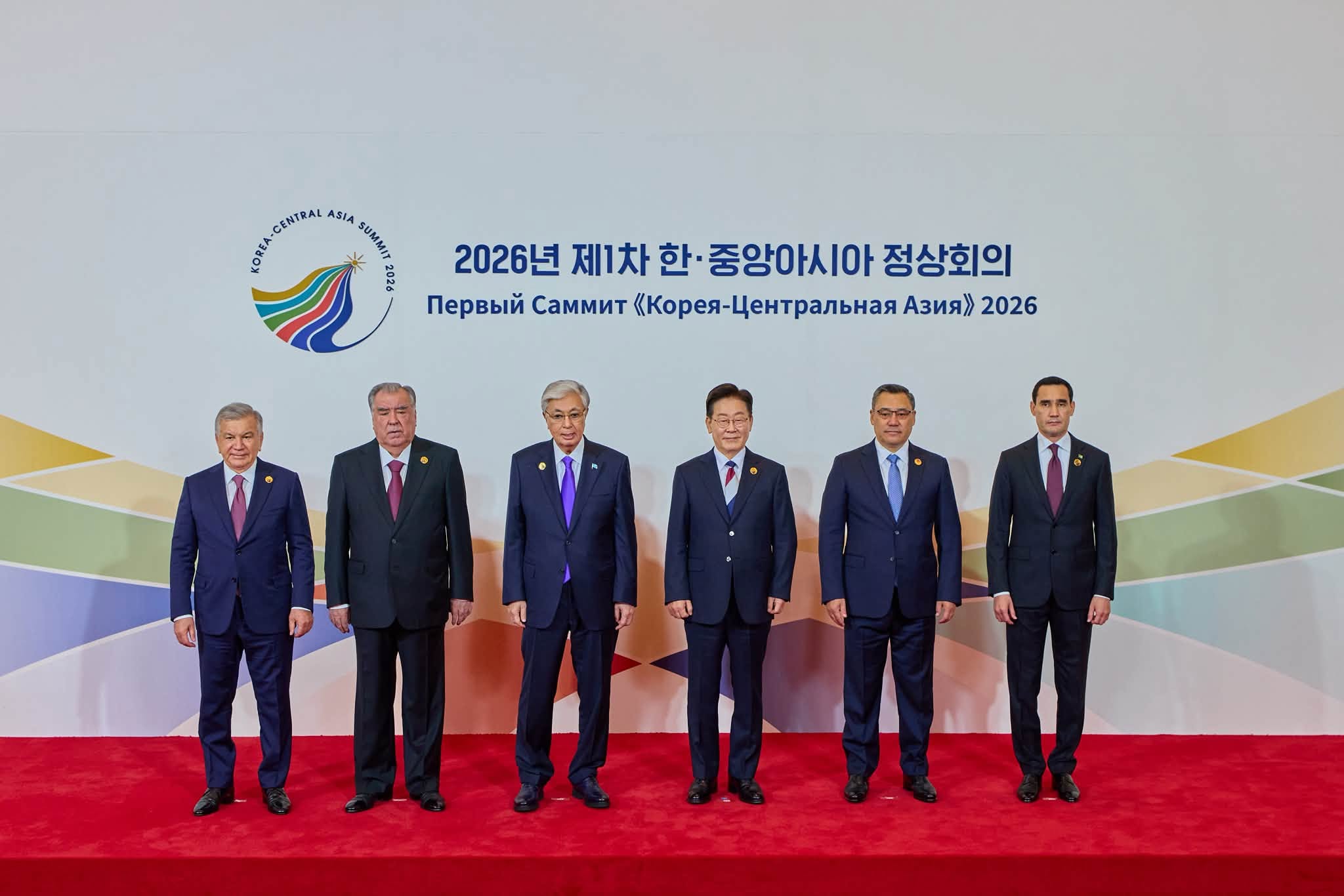
The leaders of South Korea and the five Central Asian nations gathered in Seoul for the first time. The First Korea-Central Asia Summit, attended by the leaders of Kazakhstan, Uzbekistan, Kyrgyzstan, Tajikistan, and Turkmenistan, culminated in the adoption of the Seoul Declaration.
The summit produced a substantial set of outcomes. The six participating countries agreed to convene the Korea-Central Asia Summit every two years and to establish follow-up consultative mechanisms, including a forum for industry ministers. They also expanded the scope of cooperation to critical minerals, energy, supply chains, artificial intelligence, science and technology, climate and the environment, and people-to-people exchanges. Numerous agreements and memorandums of understanding were signed during the multilateral summit and a series of bilateral meetings.
Yet the significance of the summit goes well beyond the individual agreements reached. First, South Korean diplomacy has addressed a longstanding institutional challenge. South Korea launched the Korea-Central Asia Cooperation Forum at the vice-ministerial level in 2007 and subsequently elevated it to the ministerial level as a mechanism for advancing cooperation. There had long been expectations that the forum would eventually evolve into a summit-level framework, but those expectations had remained unrealized.
There had also been concerns in Central Asia that, although numerous agreements and memorandums of understanding (MOUs) had been signed with South Korea, they had not translated sufficiently into concrete projects. If the principal weakness of Korea-Central Asia cooperation over the past two decades has been a lack of implementation rather than a lack of dialogue, the success of the new summit-level framework will ultimately depend on its ability to deliver tangible results.
Although South Korea experienced a change of government during this period, the broader direction of expanding cooperation with Central Asia has remained consistent. In particular, the fact that the vision for cooperation with Central Asia pursued under the Moon Jae-in administration’s New Northern Policy was not abandoned but instead evolved into a summit-level partnership is significant as an example of policy continuity.
Second, the summit reflects a significant expansion in the scope and ambition of South Korean diplomacy. Following the development of Korea-ASEAN cooperation and the Korea-Africa Summit, South Korea has now established the Korea-Central Asia Summit. For decades, South Korean diplomacy focused heavily on the North Korean issue and devoted substantial diplomatic resources to relations with neighboring powers such as the United States, China, Japan, and Russia. Given South Korea’s geopolitical circumstances, this focus was understandable. However, as South Korea has emerged as a developed country, its diplomacy increasingly needs to extend beyond relations with neighboring states. It is both natural and strategically valuable for South Korean diplomacy to take on a greater role in building and sustaining multilateral cooperation platforms.
Third, the summit also highlights the value South Korea can offer from the perspective of the Central Asian countries. Central Asia has historically maintained close ties with Russia, while China’s economic influence in the region has expanded substantially. The United States, Europe, and Japan have also strengthened their engagement with Central Asia. Amid this increasing engagement by major powers, Central Asian countries have sought to diversify their diplomatic and economic partnerships and avoid excessive dependence on any single major power. South Korea can therefore serve as an additional partner, expanding their strategic autonomy by providing another diplomatic and economic option.
There is also considerable potential for mutually beneficial cooperation. Central Asia possesses abundant natural resources, including uranium and rare metals, as well as markets with significant growth potential. South Korea, for its part, offers advanced manufacturing capabilities, technology, capital, and extensive experience in economic development. However, cooperation will not be sustainable if South Korea views Central Asia primarily as a source of energy and critical minerals. South Korea should support greater local processing and manufacturing and combine its technological capabilities with expertise in workforce development so that more industries, employment opportunities, and value creation remain in Central Asia. Such an approach will be essential to building a sustainable and mutually beneficial partnership.
Fourth, the summit is significant in that it highlights history and culture as enduring assets of diplomacy. The murals at the Afrasiab Palace in Samarkand, Uzbekistan, depict two figures widely believed to be envoys from Goguryeo.
The fact that people from Goguryeo traveled as far as what is now Central Asia in the seventh century is remarkable even by modern standards. It is equally striking that nearly 1,400 years later, the leaders of South Korea and the Central Asian states gathered in Seoul to discuss a new framework for cooperation. Another important historical and cultural link is the Koryo-saram, or ethnic Koreans of Central Asia. Against this historical backdrop, it is significant that the Seoul Declaration includes initiatives to commemorate the 90th anniversary of the Koryo-saram’s settlement in Central Asia.
Fifth, the summit provides an opportunity for the Republic of Korea, as a country that has emerged as a developed economy, to demonstrate how it intends to engage with the wider world. South Korea has no territorial ambitions in Central Asia and does not carry the same historical burdens associated with colonial rule in the region. At the same time, it brings extensive experience in industrialization, technological advancement, and economic development. Strong interest in and favorable perceptions of Korean culture also constitute important diplomatic assets. South Korea can leverage this distinctive position to serve as a partner in economic development and technological innovation, while offering Central Asian countries an additional option for cooperation beyond their relationships with neighboring major powers.
This very position, however, also presents difficult challenges. The five Central Asian countries differ substantially from South Korea in terms of their political systems, levels of democracy, human rights conditions, and rule-of-law institutions. South Korea cannot ignore these differences as it pursues strategic cooperation with them. At the same time, there is limited value in attempting to impose a particular political model or adopting a prescriptive approach. Instead, South Korea can share its own development experience—the “Korean model” of combining economic development with democratic progress—as a potential reference point for cooperation and dialogue.
Although the summit concluded successfully, Korea-Central Asia relations remain at an early stage. In many respects, the work ahead will be more important than the summit itself. The first priority is implementation. At the second summit, scheduled to be held in Kazakhstan two years from now, an important measure of progress will be the extent to which the projects and commitments agreed upon in Seoul have been translated into concrete outcomes.
The second priority is to avoid treating the five Central Asian countries as a single bloc. Each country has distinct political, economic, and social characteristics, as well as its own national priorities. Multilateral cooperation should therefore be complemented by tailored bilateral diplomacy and country-specific strategies.
The third challenge is diplomatic infrastructure. South Korean diplomacy is expanding beyond its traditional focus on relations with neighboring powers and increasingly seeking to build multilateral cooperation networks in which Korea plays a leading role. It remains an open question, however, whether the personnel, institutional capacity, and budgetary resources required to manage these expanding diplomatic commitments have grown at a comparable pace.
The First Korea-Central Asia Summit demonstrated the potential of South Korean diplomacy. But its true significance will be measured two years from now—and perhaps even more clearly a decade from now. If South Korea moves beyond simply cataloging the summit’s achievements and instead consistently manages the diplomatic networks it has established while responding to the specific needs and priorities of each partner, it can establish itself as a trusted and capable long-term partner.
Just as Goguryeo envoys expanded the horizons of Korea’s engagement with Central Asia more than a millennium ago, South Korean diplomacy today must look beyond its immediate neighborhood toward a broader international horizon. The hope is that this summit will mark the beginning of a new chapter in Korea’s engagement with Central Asia.