

Resuming Inter-Korean Military Talks and Creating the Conditions for Peace on the Korean Peninsula: North Korea’s Response, Prospects for U.S.–North Korea Dialogue, and the Suspension of Nuclear Activities

Nam-eun Kim
Institute of Humanities
Chungnam National University
1. The Border Crisis and the Proposal to Resume Military Talks
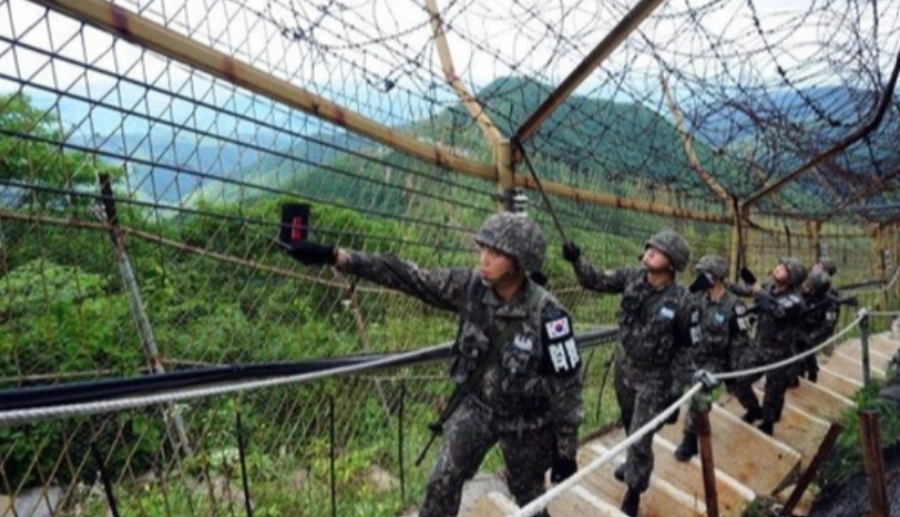
Efforts to advance peace on the Korean Peninsula must begin with preventing military confrontations that could erupt with little warning. This danger is no longer merely hypothetical. On September 21, 2026, three soldiers from the Republic of Korea (ROK) Army’s 25th Infantry Division were injured in a landmine explosion while clearing a patrol route in the western sector of the Demilitarized Zone (DMZ). Two of them sustained serious injuries.
On September 28, the ROK Joint Chiefs of Staff released preliminary findings indicating a high probability that the mine had been planted by North Korean forces. A final investigation, announced on October 5, confirmed that it was a North Korean plastic-type antipersonnel mine planted south of the Military Demarcation Line (MDL). The incident demonstrated that the continuing military standoff along the MDL is no longer simply a source of tension but a direct threat to the safety of military personnel.
North Korea denied responsibility. In statements issued on September 30 and October 2, Kim Yo-jong, a senior official of the Workers’ Party of Korea (WPK), dismissed the South Korean investigation as “a new self-inflicted farce by Seoul” and insisted that North Korean troops had never crossed the MDL. Pyongyang also maintained that its ongoing border fortification efforts—including the construction of fences and barriers and the emplacement of landmines along the MDL—were intended to permanently sever all contact with South Korea.
North Korea subsequently threatened to resume loudspeaker broadcasts directed toward the South across the border and deployed self-propelled artillery within visual range of the Aegibong Observatory in Gimpo.
Against this backdrop, the ROK Ministry of National Defense formally proposed holding inter-Korean military talks on October 23. The proposed agenda centered on three priorities: jointly verifying the precise location of the MDL on the ground, restoring military communication channels, and establishing measures to prevent inadvertent clashes in border areas.
The ministry also expressed its willingness, if necessary, to consider trilateral consultations involving the United Nations Command (UNC). It proposed that arrangements concerning the timing and venue of the talks be coordinated through Panmunjom.
This marked the second time the Lee Jae-myung administration had proposed military dialogue with North Korea, following its November 2025 initiative to clarify the location of the MDL.
Pyongyang has yet to issue an official response. Meanwhile, on October 29, North Korea launched approximately ten short-range ballistic missiles from the Wonsan area toward the East Sea. Regardless of the immediate purpose of these launches, they took place amid heightened military tensions and continued uncertainty over the proposed talks.
In the absence of functioning military communication channels, establishing a reliable mechanism to prevent unintended confrontations along the inter-Korean border has become increasingly urgent.
2. Why Military Crisis Management Also Serves North Korea’s Interests
As long as the two Koreas maintain differing interpretations of the precise location of the MDL, both remain vulnerable to unintended military confrontations. North Korea’s border fortification activities may be perceived by Seoul as attempts to alter the status quo along the border, while South Korean warning broadcasts and warning shots may be interpreted by Pyongyang as deliberate provocations.
Without reliable mechanisms for clarifying intentions and verifying incidents, even a limited confrontation could be misinterpreted as the onset of a broader military operation. Such an escalation would endanger military personnel and civilians on both sides.
This concern is reflected in the ROK Ministry of National Defense’s warning that, without extraordinary preventive measures, military personnel on both sides could continue operating on the basis of their respective interpretations of the border’s location, potentially leading to serious consequences.
North Korea, by contrast, has maintained that its border fortification measures are intended to prevent military clashes. In an October 21 statement, Kim Yo-jong asserted that permanently establishing the border would eliminate the risk of military confrontation in the area. Yet the September 21 landmine explosion occurred precisely in an area affected by these fortification activities. The construction of barriers and emplacement of landmines without first establishing a mutually recognized reference point for the MDL could create additional risks rather than reduce them.

Indeed, North Korea’s refusal to engage directly with South Korea makes practical mechanisms for managing unintended incidents all the more important. Even if the two governments fundamentally disagree over the political nature of inter-Korean relations, they share an interest in establishing procedures to clarify the location of the MDL, manage unexpected military encounters, and prevent localized incidents from escalating into broader military confrontations.
Military talks would also offer tangible operational benefits to Pyongyang. During a National Assembly audit, South Korean Unification Minister Dong-young Chung observed that North Korea appeared determined to complete its border fortification project according to its established schedule. An accidental military confrontation at a construction site, however, could endanger North Korean personnel and disrupt the project itself.
Participation in military talks would not necessarily require Pyongyang to reconsider its broader policy toward Seoul. Rather, it would provide a practical means of managing the security risks arising from the implementation of that policy.
The ROK Ministry of National Defense has also demonstrated flexibility regarding the format of potential negotiations. Trilateral consultations involving the UNC could provide an established framework for addressing issues concerning the DMZ under the Korean Armistice Agreement.
During a parliamentary audit, Defense Minister Shin-chul Kang noted that Kim Yo-jong’s statements contained relatively little direct criticism of the United States or the UNC, suggesting that this distinction might provide an opening for diplomatic engagement. For Pyongyang, which may regard direct negotiations with Seoul as politically sensitive, a trilateral format could offer an alternative institutional framework through which to participate in discussions.
Historical precedents demonstrate that the two Koreas have been able to reach practical military understandings even during periods of acute political and security tensions. At the second round of general-level military talks in June 2004, held amid the second North Korean nuclear crisis, the two sides agreed on measures to prevent accidental naval clashes in the West Sea and to suspend propaganda activities along the MDL.
A similar precedent emerged in August 2015, when a landmine explosion in the DMZ injured South Korean soldiers and triggered a sharp escalation in military tensions, including the resumption of loudspeaker broadcasts and an exchange of artillery fire. Subsequent high-level inter-Korean negotiations produced the August 25 Agreement. Under the agreement, North Korea expressed regret over the injuries, while South Korea agreed to suspend its loudspeaker broadcasts on the condition that North Korea ended its quasi-state-of-war declaration.
These experiences offer two important lessons. The 2004 agreement demonstrated that military crisis management could proceed through a separate channel even while the nuclear dispute remained unresolved. The 2015 agreement, in turn, showed that practical measures to de-escalate tensions could be negotiated without first resolving disagreements over responsibility for the original incident.
3. Negotiating Priorities and Ensuring the Durability of Agreements
Should military talks resume, the initial agenda should prioritize the restoration and reliable operation of military communication channels, the establishment of emergency contact procedures, and mechanisms for jointly verifying incidents near the MDL.
Discussions concerning the MDL should not be framed as negotiations over a new boundary. Rather, they should focus on reducing discrepancies between the two sides’ operational interpretations of the existing demarcation line. This could be achieved by cross-referencing historical documentation, including maps accompanying the Korean Armistice Agreement, with current conditions on the ground.
A practical first step would be to identify sectors where missing or deteriorated boundary markers have led to conflicting assessments, and then agree on mutually understood rules of conduct for military personnel operating in those areas.
The September 21 landmine incident should also be addressed explicitly. Fact-finding and accountability must remain part of the discussions, but disagreements over responsibility should not prevent the two sides from adopting immediate measures to protect military personnel and prevent similar incidents. A structured consultation mechanism should enable emergency communication and on-site safety procedures to function even when the parties' accounts of an incident remain at odds.
Neither making the resolution of responsibility disputes a precondition for all dialogue nor setting aside factual verification to facilitate negotiations would offer a sustainable solution. The two processes—establishing the facts and preventing further incidents—should proceed in parallel.
The talks must also address the institutional weaknesses exposed by the breakdown of previous military agreements. North Korea has not responded to South Korean communications through inter-Korean military channels since April 2023. The September 19, 2018, Comprehensive Military Agreement was subsequently rendered largely ineffective following South Korea’s partial suspension of its implementation in November 2023, North Korea’s declaration that it would no longer be bound by the agreement, and South Korea’s full suspension of its implementation in June 2024.
Significantly, inter-Korean military communication channels had already ceased functioning before the 2018 agreement was formally suspended. This sequence underscores the need to distinguish essential crisis-management mechanisms from broader political and military commitments.
Any new agreement should therefore include an explicit provision requiring the maintenance of emergency military communication channels even if other provisions are suspended. It should also establish time-bound procedures for exchanging information and jointly examining alleged violations. For matters falling within the scope of the Korean Armistice Agreement, the UNC Military Armistice Commission could play an appropriate role in facilitating verification.
Seoul should remain flexible in determining the sequence of negotiations and the level of representation at the talks. At the same time, it must uphold two fundamental principles: protecting military personnel and civilians, and ensuring the reciprocal implementation of agreed measures.
Equally important, South Korea must maintain a credible deterrence posture throughout the diplomatic process. An offer to resume military dialogue should be understood as an instrument of responsible crisis management, not as a sign of diminished resolve or a willingness to make unilateral security concessions.
4. Advancing Inter-Korean Military Talks, U.S.–North Korea Dialogue, and a Suspension of Nuclear Activities in Parallel
Inter-Korean military talks and U.S.–North Korea nuclear negotiations address distinct but complementary security challenges.
Inter-Korean military consultations are intended to reduce the risk of conventional military confrontation by establishing operational rules, communication procedures, and mechanisms for managing incidents along the DMZ. U.S.–North Korea negotiations, by contrast, would focus on placing constraints on nuclear activities, defining corresponding reciprocal measures, and establishing conditions for improving bilateral relations and reducing the risk of nuclear escalation.
Because these two processes serve different purposes, progress in one should not be made a prerequisite for initiating the other. Conditioning inter-Korean military engagement on progress in U.S.–North Korea nuclear negotiations—or making nuclear diplomacy contingent on advances in inter-Korean relations—would risk paralyzing both tracks.
The resumption of U.S.–North Korea dialogue is no less urgent than the restoration of inter-Korean military communication channels. Given Pyongyang’s refusal to recognize Seoul as a negotiating counterpart on nuclear issues, direct engagement between Washington and Pyongyang remains the principal diplomatic avenue for pursuing a negotiated suspension of North Korea’s nuclear activities.
President Donald Trump has repeatedly expressed interest in meeting with North Korean leader Kim Jong-un. However, Pyongyang’s lack of a substantive response has diminished the prospects for such a summit before the end of the year.
Meanwhile, North Korea continues to expand its nuclear capabilities. In a joint statement delivered at the International Atomic Energy Agency (IAEA) General Conference in September 2026, South Korea, the United States, and Japan cited findings by the IAEA Director General indicating continued reactor operations at Yongbyon, possible reprocessing activities, and the expansion of uranium enrichment facilities.
These developments underscore the urgency of establishing a diplomatic framework capable of constraining further advances in North Korea’s nuclear program.
During his meeting with President Trump on the sidelines of the G7 Summit in June 2026, President Lee Jae-myung outlined three potential near-term objectives: halting the further production of nuclear material, prohibiting the export of nuclear material, and suspending further technological development of intercontinental ballistic missiles (ICBMs).
At a subsequent press conference, President Lee described a phased approach under which an initial suspension of nuclear activities would be followed by reductions and, ultimately, denuclearization. He emphasized that even an initial suspension could yield meaningful benefits for the international community. President Trump reportedly acknowledged that the proposal warranted consideration.
Although this approach does not constitute a mutually agreed negotiating framework, it offers a potential starting point for defining realistic initial objectives.
Nevertheless, a suspension of nuclear activities should not be equated with dismantlement, nor should it be assumed to lead automatically to subsequent reductions.
Halting the production of additional fissile material would constrain the material basis for further expansion of North Korea’s nuclear arsenal. It would not, however, prevent Pyongyang from manufacturing additional nuclear weapons using its existing stockpiles of fissile material.
Similarly, suspending further ICBM development would primarily address threats to the U.S. homeland. Such a measure would not necessarily constrain North Korea’s development, deployment, or operation of shorter-range ballistic missiles, including systems of the type launched on October 29.
A reduction in the direct nuclear threat to the continental United States would therefore not automatically translate into a corresponding improvement in South Korea’s security environment.
For this reason, any initial agreement must clearly define the scope of prohibited activities, requirements for declarations and verification, phased reciprocal measures, and the conditions for launching subsequent negotiations on nuclear reductions.
South Korea must also engage in close consultations with Washington in advance to ensure that nuclear and missile threats to the Korean Peninsula are not marginalized in negotiations focused primarily on threats to the U.S. homeland.
A credible diplomatic strategy should seek to constrain North Korea’s nuclear capabilities in the near term while preserving a verifiable pathway toward their reduction and, ultimately, the longer-term objective of denuclearization.
5. The Shenzhen APEC Summit and South Korea’s Diplomatic Priorities
The Asia-Pacific Economic Cooperation (APEC) Economic Leaders’ Meeting is scheduled to be held in Shenzhen, China, on November 18–19, 2026.
Expectations that the 2025 APEC summit in Gyeongju might provide an opportunity for a U.S.–North Korea summit ultimately went unrealized. This experience offers an important lesson: expressions of political willingness at the leadership level, while valuable, are not sufficient to initiate substantive negotiations without prior coordination on objectives, agendas, and procedures.
Although APEC is not itself a negotiating forum for North Korea’s nuclear program or inter-Korean military issues, the Shenzhen summit offers South Korea an opportunity to intensify high-level diplomatic consultations with key regional stakeholders. Seoul should use this occasion to build support for two parallel objectives: resuming inter-Korean military dialogue and pursuing a negotiated suspension of North Korea’s nuclear activities.
With the United States, South Korea should seek a common understanding of the scope of an initial suspension of nuclear activities, the reciprocal measures that might accompany it, and the verification arrangements necessary to ensure compliance. Seoul should also explain the objectives of its proposed inter-Korean military talks and explore how a trilateral framework involving the UNC could contribute to managing tensions along the MDL.
With China, whose relations with North Korea have strengthened in recent years, Seoul should emphasize that preventing accidental military clashes and restoring communication channels serve Beijing’s own strategic interest in maintaining stability on the Korean Peninsula. Seoul should also encourage Beijing to use its influence to persuade Pyongyang to respond constructively to proposals for military dialogue.
With Japan, South Korea should coordinate closely to ensure that potential U.S.–North Korea negotiations do not place disproportionate emphasis on ICBM-related threats to the U.S. homeland while leaving regional nuclear and missile threats insufficiently addressed. A coordinated approach would help safeguard the security interests of both South Korea and Japan within any emerging diplomatic framework.
Nevertheless, regional and international cooperation must reinforce—not substitute for—direct military communication between the two Koreas. External diplomatic support can facilitate engagement, but the responsibility for managing immediate risks along the MDL ultimately rests with the military authorities on both sides.
The immediate steps required of North Korea are straightforward. Pyongyang should respond to Seoul’s proposal for military talks and engage through Panmunjom to establish appropriate communication arrangements and agree on a mutually acceptable agenda. South Korea, for its part, should be prepared to translate initial contact into concrete mechanisms for incident verification, emergency communication, and conflict prevention.
If these mechanisms function effectively, they could reduce the likelihood that an unintended confrontation along the border would undermine broader U.S.–North Korea diplomatic efforts. Conversely, progress in nuclear negotiations could help create a more favorable strategic environment for reducing military tensions between the two Koreas.
The two processes should therefore be understood as mutually reinforcing components of a broader strategy for peace and stability on the Korean Peninsula.
North Korea’s response to the proposal for military talks will be an important initial test of whether practical crisis management can reopen a pathway toward sustained diplomatic engagement and, ultimately, a more stable and lasting peace.
-
PREV Feature Article-K-AI & Biotechnology
-
NEXT 다음 글이 없습니다.