

The Strategic Implications of Managed Multipolar Competition Following the U.S.-China Summit

Jae-hung Chung
Director
Center for Diplomatic Strategy, Sejong Institute
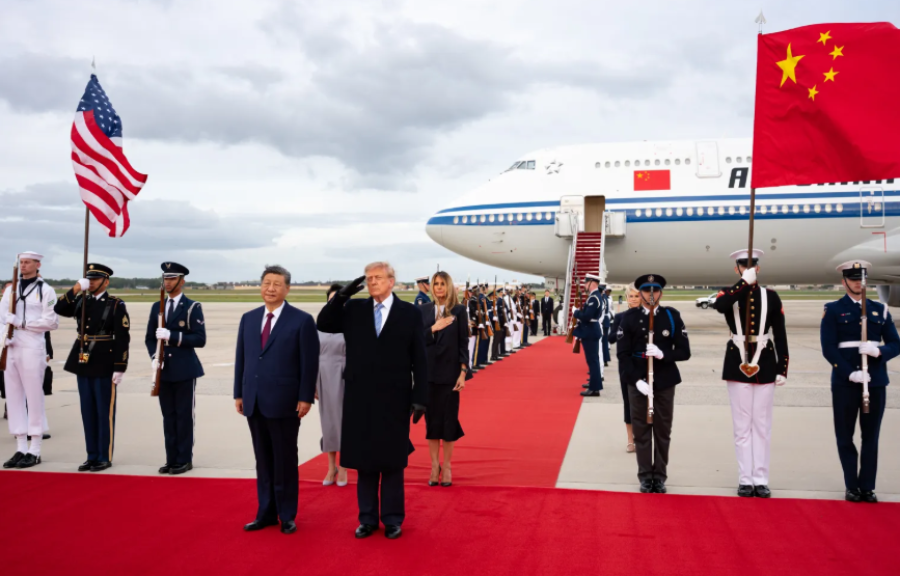
The significance of the U.S.-China summit lies not only in what the two sides agreed upon, but also in what they left unresolved. Held in Washington on September 24, 2026, the summit was less a turning point signaling the end of strategic competition between the two countries than an effort to manage the costs of that competition while preventing it from escalating into direct conflict.
Amid overlapping crises—including the protracted war in Ukraine, the conflict involving Iran, tensions in the Taiwan Strait, growing Sino-Japanese tensions, and continued security instability on the Korean Peninsula—neither the United States nor China can afford an open-ended confrontation. The summit demonstrated that, as the U.S.- and Western-led international order faces structural challenges, the dynamics of competition and cooperation among major powers are also evolving. While seeking to constrain China in strategically important areas, the United States also sought Chinese cooperation on issues involving Russia, Iran, and North Korea. China, for its part, sought to avoid a full-scale confrontation with the United States while maintaining its positions on core interests, particularly Taiwan and advanced technology.
This approach can be characterized as “fighting without breaking ties” (鬪而不破)—that is, managing disputes without allowing them to rupture the broader relationship. This suggests that although both countries recognize the importance of maintaining a stable bilateral relationship, they do not necessarily share the same strategic interests or objectives, even as they seek to protect those interests through maintaining a degree of stability.
In the economic sphere, the two sides reached a number of understandings and established a framework for follow-up negotiations. The United States emphasized tangible economic benefits, including agricultural exports, market access, and supply-chain stability, while both sides agreed to continue addressing outstanding issues related to tariffs and investment through a trade and investment consultative mechanism. A distinction, however, must be made between announcing an agreement and implementing it. Whether tariff adjustments on specific products and improvements in market access produce tangible results will depend on subsequent procedures and implementation. Meanwhile, securing reliable supplies of critical minerals, including rare earth elements, remains an issue requiring continued consultation. The continuation of economic exchanges does not, by itself, demonstrate that underlying strategic mistrust has been resolved.
In the area of crisis-risk management, it is important to distinguish carefully between what was achieved and what remains to be developed. The two countries agreed to establish a dialogue on the risks and benefits associated with artificial intelligence (AI) and to create communication channels for responding to AI-related incidents. Separately, the Chinese side stated that the two militaries had agreed to promptly conclude a memorandum of understanding (MOU) aimed at strengthening crisis communication and preventing escalation. These steps represent progress toward institutionalizing mechanisms for managing strategic risks. They do not, however, mean that rules governing the military use of AI have been finalized or that an operational military crisis-management mechanism is already in place. The summit should therefore be understood not as an end to strategic competition, but as an effort to expand communication and dialogue as mechanisms for managing that competition.

1. The Taiwan Issue
The agenda item that most clearly exposed these limitations was Taiwan. China raised the Taiwan issue as a core concern, calling on the United States to exercise caution and oppose Taiwanese independence. The fact that China made such demands, however, is fundamentally different from concluding that the United States accepted them or altered its existing policy. Neither the cordial atmosphere between the two leaders nor the conclusion of trade agreements should, by itself, be interpreted as evidence that the United States has abandoned Taiwan or that China has ruled out the use of force. The statements issued by the two sides should therefore be examined carefully, with particular attention to their differences, rather than treating either side’s characterization as reflecting a mutually agreed position.
U.S. arms sales to Taiwan are a sensitive factor that could affect future trade negotiations and summit-level diplomacy. The issue involves the interaction of China’s demands, Taiwan’s security concerns, and questions surrounding U.S. credibility with its partners and allies. At the same time, the review, approval, suspension, and actual delivery of arms constitute distinct stages in the process, and developments at one stage should not necessarily be equated with outcomes at another.
It is difficult to draw definitive conclusions about the U.S. commitment to Taiwan’s defense or the likelihood of Chinese military action based solely on the status of any individual arms transaction. More consequential is how the two countries interpret each other’s intentions and whether they maintain sufficient channels of communication to reduce the risk of miscalculation.
Tensions in the Taiwan Strait are also closely interconnected with the security environment surrounding Japan. Japan’s efforts to strengthen its defense capabilities can heighten Chinese concerns, while China’s military activities can, in turn, encourage Japan to further strengthen its own defense posture.
If tensions in the Taiwan Strait and surrounding waters reinforce one another, the risk increases that an individual crisis could escalate into a broader military confrontation. Preventing such escalation requires not only credible deterrence, but also effective mechanisms for avoiding unintended encounters at sea and in the air, maintaining military liaison channels, and ensuring that de-escalation procedures following an incident are operational.
Stability in U.S.-China relations, of course, does not imply Japan’s strategic exclusion or a weakening of the U.S.-Japan alliance. The U.S.-Japan leaders’ call on September 26 demonstrates that the United States is simultaneously maintaining dialogue with China and conducting follow-up consultations with its allies. Washington must manage its competition with Beijing while sustaining policy coordination with Tokyo and preserving the credibility of the alliance. Japan, for its part, must closely assess the implications of U.S.-China negotiations for its own security and economic interests. China, too, has an interest in engaging directly with Japan so that greater stability in U.S.-China relations can contribute to reducing tensions in China-Japan relations. As military tensions rise, preserving diplomatic channels, as well as economic and people-to-people exchanges, becomes increasingly important.

2. Iran and the Korean Peninsula Issues
On Iran, there is limited common ground between the United States and China, but their preferred approaches to addressing the issue remain different. The United States emphasized that Iran must not acquire nuclear weapons, while China stressed that Iran must uphold its commitment not to develop them. This difference in formulation does not necessarily indicate a fundamental conflict between the two countries’ nonproliferation objectives. Considered together with their opposition to restrictions or tolls on international waterways, these positions suggest a degree of common ground regarding the need to reduce nuclear-proliferation risks and uncertainty surrounding maritime transportation.
However, agreement on broad principles does not automatically translate into an end to hostilities or the normalization of navigation through the Strait of Hormuz. Developing practical solutions will require coordination on verification, sanctions, security assurances, and negotiations among the parties concerned. China has, in fact, called for the resumption of U.S.-Iran dialogue, a return to the Islamabad Memorandum of Understanding, and progress in negotiations, including on Iran’s nuclear program. During his September 16 meeting with the Iranian foreign minister, Chinese Foreign Minister Wang Yi emphasized the need for the prompt reopening of the Strait of Hormuz, stability in energy transportation, and the resolution of outstanding issues through dialogue. China’s approach—seeking to facilitate negotiations while maintaining its relationship with Iran—differs in emphasis from a U.S. approach that places greater weight on pressure. Moreover, although China and Iran maintain close relations, Beijing does not control Tehran’s strategic choices and therefore cannot guarantee that its preferences will translate into Iranian policy.
The same distinction applies to the Korean Peninsula. The United States stated that the North Korean issue was discussed during the summit, while China likewise reported that the two sides exchanged views on developments on the Korean Peninsula. However, the publicly released outcomes did not include a separate implementation plan for denuclearization of the Korean Peninsula or a timetable for resuming U.S.-North Korea dialogue. The inclusion of the Korean Peninsula on the leaders’ agenda is significant, but it would be premature to interpret this alone as a signal that a U.S.-North Korea summit is imminent or that progress on the North Korean nuclear issue is assured. Improved stability in U.S.-China relations may create more favorable conditions for dialogue on the Korean Peninsula, but it cannot determine North Korea’s strategic choices.
Chinese engagement and communication with North Korea can contribute to reducing tensions, but China’s influence has limits. North Korea makes its own strategic calculations, taking into account its expanding relationship with Russia as well as its own security interests. It is not an actor that simply follows the preferences of either China or Russia. Accordingly, expectations that a U.S.-North Korea summit will materialize primarily through Chinese mediation should be approached with caution. Rather than relying primarily on third-party involvement, the United States and South Korea should first assess whether their current policy framework—addressing denuclearization, sanctions, and North Korea’s security concerns—can create conditions conducive to negotiations.
This requires moving beyond the rigid approaches of the past. Rather than simply reiterating the importance of inter-Korean dialogue or acknowledging changes in the geopolitical environment surrounding the Korean Peninsula, policymakers should reassess the policy conditions necessary to facilitate both inter-Korean and U.S.-North Korea dialogue.
Ultimately, although Iran and the Korean Peninsula share the broad objectives of reducing nuclear risks and restoring dialogue, their security environments and the interests of the relevant actors differ substantially. Applying negotiating methods used in one region directly to the other, or attempting to bundle the two issues into a single comprehensive arrangement, risks obscuring these differences. South Korea should maintain sustained communication with both the United States and China to help ensure that tensions in the Middle East and the Taiwan Strait do not compound security risks on the Korean Peninsula. At the same time, Seoul should put forward concrete agenda items, including preventing war on the Korean Peninsula, reducing the risk of accidental escalation, and ensuring the effectiveness of crisis-communication mechanisms. These are not outcomes secured by the recent U.S.-China summit; rather, they are challenges that South Korea will need to address going forward.
3. Outlook and Implications
A defining feature of this U.S.-China summit was the close linkage between economic arrangements and the management of security risks. The United States sought tangible economic benefits—including an improved trade balance, increased agricultural exports, greater aircraft sales, and more stable supply chains for critical minerals—while also seeking Chinese cooperation on international issues. China, meanwhile, sought to preserve room for negotiation in the economic sphere while protecting its strategic interests regarding Taiwan, advanced-technology controls, and its relationships with Iran and North Korea. In this sense, economic interdependence functions both as an incentive for negotiation and as an instrument of strategic competition.
U.S.-China relations therefore cannot be understood solely through the lens of trade disputes. Differences are also apparent in the language used to characterize summit diplomacy. While the United States emphasized economic outcomes and reciprocity, China stressed strategic stability, respect for core interests, and equality in the bilateral relationship. It would nevertheless be inaccurate to suggest that these themes emerged only at this summit. A more appropriate interpretation is that the existing framework for communication and competition management between the United States and China has become more explicitly linked to discussions of economic benefits and strategic stability. The fact that the two governments characterized the same summit in different terms illustrates how the need for cooperation coexists with persistent strategic distrust.
Over the next three to six months, U.S.-China relations could continue along a path of “managed competition,” with the two sides implementing limited agreements while deferring more structural disputes to subsequent negotiations. Both governments have incentives to minimize the costs of a sudden breakdown in trade relations or an acute military crisis. Stability in the bilateral relationship, however, does not necessarily imply compromise on core interests.
A temporary easing of trade tensions may be followed by renewed sector-specific disputes, while even the establishment of crisis-management procedures will not eliminate political mistrust or the risk of miscalculation at the operational level. The willingness to avoid full-scale conflict and the capacity to prevent such conflict are distinct questions and should therefore be assessed separately.
The coming diplomatic schedule will therefore provide an important test of this trajectory. Particular attention should be paid to the follow-up dialogue on artificial intelligence (AI) in November, implementation of the trade truce extended through January 10, 2027, and leader-level communication on the margins of the Asia-Pacific Economic Cooperation (APEC) and Group of 20 (G20) summits. The two sides’ stated support for meetings hosted by the other country, together with their leaders’ expressed intentions to attend, adds significance to the continuity of dialogue. These intentions, however, do not constitute confirmed schedules, nor do additional meetings by themselves guarantee new agreements. The key question is whether understandings reached at the leadership level will translate into concrete implementation and measurable reductions in strategic risk.
The management of U.S.-China competition must also be considered alongside China-Russia strategic cooperation. The fact that Washington and Beijing are seeking to avoid direct conflict does not necessarily mean that China-Russia cooperation will weaken. As long as China and Russia maintain shared perceptions of strategic pressure, their cooperation can continue. There is therefore no inherent contradiction between an increase in U.S.-China agreements and deeper China-Russia cooperation. Given the interconnected nature of these relationships, the international order should not be assessed on the basis of a single summit. Instead, attention should be directed toward where competition and cooperation converge or diverge across specific issues.
The United States continues to exercise substantial influence through its military, financial, and technological capabilities, as well as through its extensive network of alliances and partnerships, including the U.S.-South Korea alliance, the U.S.-Japan alliance, the North Atlantic Treaty Organization (NATO), AUKUS, and the Quad.
China, meanwhile, is expanding its influence in rare earths, batteries, electric vehicles, solar power, digital infrastructure, and artificial intelligence, building on its large manufacturing base and extensive supply-chain networks. Given the two countries’ different capabilities and comparative strengths, predictions that either side will readily replace the other or unilaterally reshape the international order should be treated with caution.
The movement toward a more multipolar order does not mean that U.S. influence will disappear in the near term. The behavior of countries in the Global South, in particular, cannot be adequately explained through a simple binary framework. Many of these countries seek to preserve diplomatic autonomy and maximize economic benefits through issue-specific cooperation rather than aligning exclusively with either the United States or China. Multilateral frameworks such as BRICS and the Shanghai Cooperation Organization (SCO), along with initiatives such as China’s Global Development Initiative (GDI) and Global Security Initiative (GSI), provide additional platforms through which these countries can pursue their interests.
Although some governments have expressed concerns about what they view as selective applications of international norms by the United States and other Western countries, such criticism should not be generalized as a uniform position across the Global South. Against this backdrop, China is seeking to expand its role in shaping a more multipolar international order and advancing the interests of developing countries. The emerging international order is therefore more likely to resemble a complex competitive environment—one in which confrontation, cooperation, balancing, and transactional arrangements coexist—than a system consisting of two clearly defined blocs centered on the United States and China.
Whether this develops into a relatively stable form of managed multipolarity or generates a series of increasingly difficult-to-control crises remains uncertain. The recent U.S.-China summit can be understood, at this juncture, as a limited effort to mitigate the risks associated with strategic competition rather than to eliminate that competition. Neither excessive confidence in the mere continuation of negotiations nor dismissal of their value simply because structural competition persists would be warranted.
Accordingly, South Korea’s response should also be grounded in this reality. Maintaining a stable U.S.-South Korea alliance while expanding political, economic, and security communication with neighboring countries—including China and Russia—is a complementary set of objectives that should be pursued simultaneously. In particular, South Korea should take greater initiative in shaping the agenda and conditions for cooperation so that peace and stability on the Korean Peninsula do not become merely byproducts of agreements reached among major powers.
Above all, Seoul needs a pragmatic, national-interest-centered diplomatic strategy that moves beyond rigid bloc politics and avoids excessive reliance on summit diplomacy—one that captures tangible benefits where cooperation is possible while minimizing risks in areas with a high potential for conflict. In an era of “managed multipolar competition,” the effectiveness of South Korean diplomacy will depend not on waiting for major powers to make strategic choices, but on how effectively Seoul expands its own range of options for safeguarding security and promoting prosperity.
In this context, a strategy for halting the advancement of North Korea’s nuclear activities, together with three major blueprints for peaceful coexistence on the Korean Peninsula, could offer a practical way to address the current impasse and create incremental steps toward reopening channels of dialogue between the United States and North Korea and between the two Koreas. Ultimately, the objective should not be dialogue for its own sake, but concrete measures to halt the further advancement of North Korea’s nuclear program and establish the foundations for peaceful coexistence through a phased and verifiable process. Such an approach could provide a basis for renewed U.S.-North Korea and inter-Korean engagement while establishing a more sustainable foundation for peace on the Korean Peninsula.