

Russia’s Captured North Korean Soldiers:
War Prisoners or Civilian Lawbreakers?
Lee Dong-hoon
Correspondent, SAND Times
- Not recognized as lawful combatants… May be extradited to South Korea under a criminal treaty
- Ukraine affirms commitment to humanitarian law… North Korea and Russia’s official stance remains unknown
Ukraine confirmed on January 11 that it had captured two North Korean soldiers in Kursk, a region in western Russia. South Korea’s National Intelligence Service (NIS) also verified this report.
Now, more than two months later—and well into the second Trump administration, which is pushing for a swift resolution to the Russia-Ukraine war—attention is turning to what will happen to these North Korean captives once the fighting ends.
Because this is an international matter involving multiple nations with differing interests, any solution must be grounded in international law. That starts with defining the legal status of these individuals.
In this context, International Humanitarian Law (IHL) becomes particularly relevant. IHL governs conduct during armed conflicts, and it includes rules for how prisoners of war (POWs) are to be treated—most prominently set out in the Third Geneva Convention, signed on August 12, 1949.
According to the Third Geneva Convention, even during active hostilities, POWs in certain categories must be returned either to their home country or a neutral state. After the conflict ends, this requirement applies to all prisoners without exception.

At first glance, the process seems straightforward. If the North Koreans are recognized as POWs for fighting alongside Russian forces, they could be repatriated to Russia, stay in Ukraine, or move to a third country like South Korea. According to PPP lawmaker Yoo Yong-weon, who reportedly spoke with them, they seem inclined toward relocating to South Korea.
The complication lies in whether they actually qualify as POWs. Only lawful combatants are eligible for that status. To meet the definition, a person must serve under a commander accountable to a recognized authority, wear identifiable insignia or uniforms, and carry weapons openly. Of these, the North Korean detainees appear to meet only the last requirement.
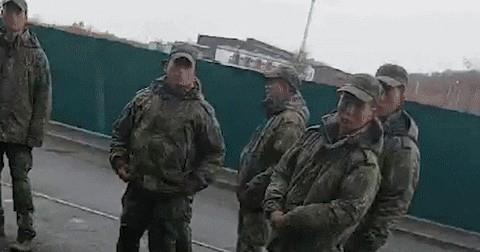
They were reportedly wearing Russian military uniforms, holding fake Russian military IDs, and—critically—neither Pyongyang nor Moscow has acknowledged their existence.
If they fail to meet the standards for POW status, they fall into the category of "unlawful combatants" or "unprivileged belligerents"—in other words, civilians engaged in unauthorized acts of violence. This means Ukraine could potentially continue to detain and prosecute them under domestic criminal law, even after the war ends.
That said, Ukraine and South Korea have a criminal extradition treaty. Under this agreement, they can request the transfer of suspects. In addition, South Korea’s Constitution considers all North Koreans as South Korean citizens, as it defines the national territory as the entire Korean Peninsula and its adjacent islands.
Under this framework, the North Korean captives could be viewed as South Korean nationals who committed crimes overseas, allowing Seoul to request their extradition. However, Ukraine’s approval would still be required, as it currently holds custody.
International Humanitarian Law also includes the principle of non-refoulement, which prohibits sending a person back to a country where they would likely face threats to their life, safety, or basic human rights.
North Korea considers defectors, including captured soldiers, as traitors. Even if these captives wished to return, they would likely face severe punishment—possibly even execution. As such, repatriating them could violate humanitarian law.
Ukraine, which has the ultimate authority in determining their fate, has stated that “all captives, regardless of nationality, are treated as prisoners of war.” This indicates that Kyiv is currently affording them POW status.
Ukraine’s ambassador to South Korea, Dmytro Ponomarenko, emphasized that the handling of these North Korean soldiers must strictly follow IHL and humanitarian principles. He added that Ukraine is responsibly addressing South Korea’s official concerns and taking them seriously.
Taken literally, this statement implies that Ukraine intends to factor in the preferences of the North Korean captives when deciding what to do with them.
The South Korean government maintains that the captured North Koreans are its citizens under the Constitution and will accept them if they wish to come. While North Korea and Russia haven’t made official statements, it's believed that Kim Jong-un and Russia’s Security Council Secretary Shoigu discussed the matter in recent high-level talks.