

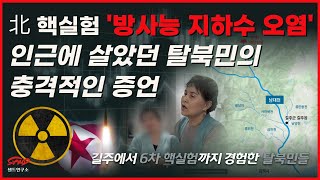
“Radiation victims in Kilju County need our attention.”

Lee
Young-ran,
Chairwoman of the Mantap Mountain Association
(originally from Kilju County)
I spent over five decades in Kilju County, Hamgyongbuk-do, home
to the Punggye-ri Nuclear Test Site. I lived through the first three nuclear
tests between 2009 and 2013 before defecting from North Korea.

It was only after arriving in South Korea that I began to
connect my unexplained headaches and low white blood cell count to nuclear
testing and radiation exposure. Back in North Korea, I had felt a sense of
pride knowing the tests were conducted in Kilju, oblivious to the potential for
radiation harm.
Reflecting on it now, the Punggye-ri site and the subsequent
underground tests significantly disrupted the local ecosystem. The rivers of
Kilju, once abundant with trout, saw them vanish post-test site establishment.
Similarly, the once plentiful matsutake mushrooms in the surrounding mountains
disappeared.
The residents of Kilju County rely on groundwater from Mount
Mantap for their drinking water. Subjected to six nuclear tests, even the
strongest granite could not withstand the strain. I remember feeling mild
tremors during the first and second tests, but the third shook the ground like
an earthquake, knocking items from shelves. Reports suggest over 40 natural
earthquakes occurred near Punggye-ri following the sixth test, likely
contaminating the groundwater flowing into Namdaecheon, which supplies the region.
My own son, then in his twenties, contracted tuberculosis
shortly after the third nuclear test in 2013, a diagnosis confirmed by Kilju's
doctors. My defection was driven by the need to secure funds for his treatment.
Despite sending back the money I earned in South Korea, I couldn't save him.
After worsening post the sixth test, he was denied treatment in Pyongyang due
to restrictions on tuberculosis patients from Kilju, leading to his untimely
death. Seven of his friends also succumbed to the disease within four years.
In Kilju, every other household has someone suffering from
stomach or lung cancer. Increases in mysterious headaches and rheumatoid
arthritis have led locals to dub these afflictions 'ghost diseases.'
This February, the Ministry of Unification disclosed findings
from radiation and exposure tests on defectors from Kilju and nearby areas.
While chromosomal changes were observed, a direct link to nuclear tests
couldn't be established due to the inability to collect key evidence like soil
or water samples from the test site.
For over eight years, defectors from near the Punggye-ri site
have reported unexplained symptoms and pain. We urge the government and
international bodies not to overlook the suffering of these individuals and to
provide them with necessary medical support and detailed research.