

The Legalization and Advancement of North Korea's Nuclear Capability and the Inevitability of Inter-Korean Nuclear Standoff

Kim Tae-woo
Director of the Nuclear Security Research Office at the Korea Institute for Military Affairs,
Former Director of the Korea Institute for National Unification (KINU)
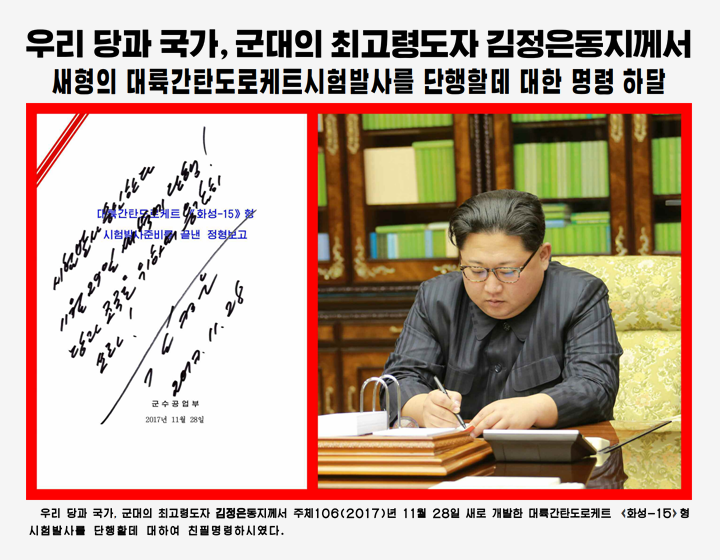
Since its first nuclear test in 2006, North Korea had maintained the position that it possessed nuclear weapons solely for deterring external threats. Statements like, "Would we use nuclear weapons against our own brethren?" were often heard in inter-Korean dialogues. However, in April 2012, their revised constitution included the phrase "an invincible military power, a nuclear-armed state, and a political ideology powerhouse," indicating a shift in stance. Furthermore, during the 7th Party Congress in 2016, they declared a kind of "No First Use (NFU)" doctrine, meaning they would only use nuclear weapons in response to aggression. In essence, they claimed to possess nuclear weapons solely for retaliation.

This may sound like a moderate expression, but in reality, it contained very harsh content. It effectively declared a "use of nuclear weapons" doctrine towards South Korea in the event of hostility in cooperation with the United States. Subsequently, Supreme Leader Kim Jong-un stated in his April 25, 2022, speech at a military parade that "nuclear capabilities are not confined to the sole mission of preventing nuclear war. If any force tries to encroach upon our country's fundamental interests, it cannot avoid fulfilling the second mission." Kim Yo-jong, Deputy Director of the Central Committee of the Workers' Party of Korea, stated in a May 5th speech, "The mission of nuclear capabilities during war is to burn up the enemy's will to fight at the initial stage." In practice, they proclaimed a doctrine of "preemptive use of nuclear weapons" against the South. Subsequently, in September 2022, during the 7th Session of the 14th Supreme People's Assembly, they adopted the "Nuclear Policy Law," which strengthened and replaced the 2013 "Self-Defensive Nuclear Possession Law." In the 2023 revision of the constitution during the 9th Session of the 14th Supreme People's Assembly, they explicitly mentioned "the development and advancement of nuclear weapons."
The Pyongyang regime has been strengthening its nuclear military capabilities and solidifying its international status as a nuclear-armed state through the legalization of nuclear weapons. These North Korean nuclear actions have naturally led to various consequences. The impoverishment of North Korean citizens has intensified, while the security concerns of South Korean nationals have deepened. Furthermore, the permanent members of the United Nations Security Council, China and Russia, have exercised their veto power to block all sanctions against North Korea in an effort to protect North Korea's nuclear program. This has led to a state of gridlock in the UN, shaking the foundation of the nuclear non-proliferation regime. North Korea has defied 11 United Nations Security Council resolutions on sanctions adopted between 2006 and 2017, conducting missile tests and recently facing allegations of illicit arms trading with Russia and supplying weapons to Hamas. In this context, it is noteworthy that since 2018, the United Nations Security Council has failed to pass a single additional resolution imposing sanctions on North Korea. However, this situation cannot persist indefinitely. While South Korea adheres to a non-nuclear stance, North Korea continues to leverage its nuclear asymmetry to threaten the South, while China and Russia work to undermine the United Nations Security Council to protect North Korea. Additionally, with North Korea's meager contribution to the UN budget (0.005%, compared to South Korea's 2.574%), the situation undermines both the United Nations and the nuclear non-proliferation regime. Consequently, it appears inevitable that a nuclear standoff between North and South Korea will continue on the Korean Peninsula. Amidst this process, there will be numerous attempts at persuasion and diplomacy, but ultimately, it seems there is no other path forward.
Three Significances of North Korea's Nuclear Legalization
Firstly, North Korea's nuclear legalization reflects its intention to establish its nuclear possession as an irreversible fact internationally by repeatedly emphasizing its nuclear possession. The development of North Korea's nuclear weapons has been a top national project since it originated from Kim Il-sung's determination during the Korean War in 1950-1953. According to defector testimonies, Kim Il-sung, the President at the time, engaged in ceasefire negotiations during the Korean War because he believed that China, a nuclear-armed country, could not defeat the United States. Kim Il-sung believed that without nuclear weapons, communist reunification was impossible. Consequently, in 1952, during the ongoing war, he established the Atomic Energy Bureau under the Academy of Sciences of the Democratic People's Republic of Korea and began establishing nuclear-related departments at Kim Il Sung University and Kim Chaek University of Technology. Furthermore, North Korea sent students to the United Institute for Nuclear Research (UINR) in Dubna, Russia, to train nuclear scientists. Through this process, North Korea developed nuclear weapons, which served as a means of self-defense against external threats, a propaganda tool to ensure the regime's authority and legitimacy domestically, a means to dominate inter-Korean relations, and a way to neutralize the obstacle posed by the South Korea-U.S. alliance to the principle of juche unification. In other words, nuclear weapons have become a "sword that must be protected at all costs" for the Pyongyang regime. In this sense, the past South Korean and U.S. governments, which have been hanging on to "nuclear diplomacy" since the early 1990s, under the misconception that they could persuade North Korea to abandon its nuclear weapons through negotiations, effectively spent "lost 30 years."
Secondly, nuclear legalization reflects North Korea's evolving nuclear strategy and doctrine. Nuclear strategies of nuclear-armed countries like the U.S. and Russia have evolved from the initial strategy of "Mutual Assured Destruction (MAD)" for nuclear deterrence to the strategy of "No First Use (NFU)" followed by "Nuclear Warfighting" for winning a nuclear war. North Korea's nuclear strategy has precisely followed this path, evolving from an initial strategy of "nuclear possession for defense and deterrence only" and "possible use for retaliation" to "nuclear use" and "no-first-use against the South." In other words, North Korea has strengthened its nuclear strategy and doctrine domestically and internationally, proclaiming itself as a "nuclear-armed country" through legalization.
However, despite being an economically and technologically weak country with an aggressive goal toward the South, North Korea's nuclear possession, especially as defined by its "Nuclear Posture Review," poses various security concerns. Specifically, the "Nuclear Posture Review" defined by the "Nuclear Weapons Law" is concerning. Unlike existing nuclear-armed countries that maintain a system where several key officials must enter their codes to launch nuclear weapons, Article 3 and 4 of the "Nuclear Weapons Law" entrusts the sole authority for nuclear weapon command and control to the supreme leader. Article 5 suggests that if a war on the Korean Peninsula breaks out, North Korea will threaten to use nuclear weapons when the South Korea-U.S. alliance is activated, effectively neutralizing it. Furthermore, Article 6 enumerates conditions for nuclear weapon use, including "when a nuclear weapon or other mass destruction weapon attack against North Korea is detected or imminent," "when attacks on the national leadership and nuclear command are detected or imminent," "when critical strategic assets are subject to lethal military attacks or imminent attacks," "when it is inevitable to prevent the expansion and prolongation of a war and to secure leadership," and "when nuclear response is inevitable for the survival of the state and the safety of the people." These conditions ultimately imply that the supreme leader can use nuclear weapons in any situation, at any time, and against anyone based on his arbitrary judgment. From the perspective of Western countries, this content is quite absurd.
Thirdly, the Pyongyang regime's legalization of its nuclear capabilities reflects its unwavering determination not to cease the advancement of its nuclear arsenal. This signifies that the threat of North Korea's nuclear capabilities to South Korea will continue to intensify in the future. North Korea has never halted its nuclear weapons development since it began in the early 1950s. Even during periods when nuclear negotiations, such as the U.S.-North Korea talks, four-party talks, and six-party talks, were underway, North Korea continued its nuclear weapons development behind the scenes. Ultimately, various nuclear agreements, such as the 1994 Agreed Framework, the September 19 Joint Statement in 2005, and the February 13 Agreement in 2007, produced through bilateral or multilateral negotiations, merely bought time for North Korea and created illusions about its willingness to denuclearize or halt nuclear weapons development. Similarly, numerous agreements between North and South Korea, including the 1991 Joint Declaration of the Denuclearization of the Korean Peninsula, the June 15th South–North Joint Declaration in 2000, the North–South Summit Declaration on October 4, 2007, the Panmunjom Declaration on April 27, 2018, and the Pyongyang Joint Declaration of September 19, contributed little to the denuclearization or suspension of North Korea's nuclear advancement.
In the midst of this, North Korea has conducted six nuclear tests to date and test-fired various projectiles over 200 times, categorizing them as "tests." In 2022 alone, they launched 103 missiles, and as of October 15, 2023, they have test-fired over 50 various missiles or projectiles 27 times. North Korea is the only country in the world that has launched so many missiles, and it is the only country that has conducted nuclear tests in the 21st century. As a result, if Pyongyang's claims are to be believed, North Korea is considered a nuclear-armed nation possessing fissile and boosted fission devices, hydrogen bombs, as well as a variety of delivery platforms including rudimentary short-range ballistic missiles, medium-range ballistic missiles, long-range intercontinental ballistic missiles (ICBMs), hypersonic missiles, nuclear warheads, and tactical nuclear-capable submarines. Estimates of the number of nuclear weapons North Korea possesses vary, with figures ranging from 20 (2022 Stockholm International Peace Research Institute, SIPRI) to 30 (2023 Federation of American Scientists, FAS) to 60 (2020 U.S. Department of Defense North Korean Tactics). There are also various estimates of North Korea's annual nuclear weapons production capabilities, although confirmation is impossible. In any case, North Korea ranks as the 9th nuclear-armed state in the world, with legislation related to nuclear matters and a military framework for tactical nuclear operations, much akin to the "North Korean Nuclear Posture Review." Currently, North Korea is deliberating on the timing and execution of its 7th nuclear test.
Two Scorpions in a Bottle
In the short term, the outlook regarding North Korea's nuclear issue is highly pessimistic. There is little indication of a change in North Korea's stance, where nuclear weapons serve as a means to maintain the regime, dominate inter-Korean relations, undermine the U.S.-ROK alliance, and ultimately achieve reunification on its terms. Additionally, North Korea appears to be positioning itself as a significant player in the escalating new Cold War between authoritarian forces, often referred to as the "axis of tyrannies," and the forces of freedom and democracy at a global level. They are likely to continue seeking "phenomenal changes through strength" on the Korean Peninsula within this context.
However, in the medium to long term, it seems unlikely that such a situation can persist indefinitely, both on a global scale and on the Korean Peninsula. Globally, democratic nations cannot indefinitely tolerate the weakening of the United Nations or threats posed by states increasing their nuclear capabilities in violation of non-proliferation agreements. On the Korean Peninsula, it is difficult to envision South Korea indefinitely accommodating North Korea's behavior, characterized by nuclear brinkmanship and repeated threats. Some experts are increasingly concerned about South Korea's ability to deal with the growing North Korean nuclear threat while adhering to a non-nuclear posture. In this regard, many experts point to historical examples where nuclear disarmament dialogues became viable when nuclear possession became a burden for both sides, rather than a means of unilateral advantage. They suggest that the Korean Peninsula's nuclear standoff could be a new starting point for achieving a "nuclear-free Korean Peninsula."
J. Robert Oppenheimer, the director of the Manhattan Project who created the atomic bomb that secured victory for the United States in the Pacific War in 1945, later expressed remorse and transformed into an anti-nuclear advocate due to the brutality and inhumanity of nuclear weapons. He likened the U.S.-Soviet nuclear standoff to "two scorpions in a bottle." However, it is unlikely that he would have wished for his own country, the United States, to become "a defenseless insect facing scorpions in a bottle." South Korea shares a similar perspective. Following nuclear standoffs, there have been numerous dialogues between the U.S. and the Soviet Union aimed at reducing or eliminating their arsenals. The Korean Peninsula may not be different. Therefore, a process of becoming "two scorpions in a bottle" where North and South Korea navigate a path towards genuine denuclearization seems inevitable, although it will involve extensive dialogues and diplomatic efforts between South Korea and the U.S., North and South Korea, the U.S. and North Korea, or multilateral parties. Ultimately, the destiny of becoming "two scorpions in a bottle" appears to be a necessary step for both North and South Korea.
-
PREV [Academic Article]
-
NEXT [Defectors' Podium]