

Leveraging the Strength of North Korean Defectors for the 'Unification of Freedom'
Kim Guk-seong, President of the North Korean Freedom Liberation Federation;
Former Colonel of the Reconnaissance General Bureau
Kim Jong-un's recent visit to Russia casts a spotlight on the escalating conflict between authoritarian regimes and advocates of liberal democracy. His quest to secure advanced technology in exchange for conventional weaponry for his nuclear ambitions carries dire implications for the Korean Peninsula and global democratic values. The encounter between the North Korean and Russian leaders poses a significant challenge to the global liberal democratic order, demanding a resolute response.
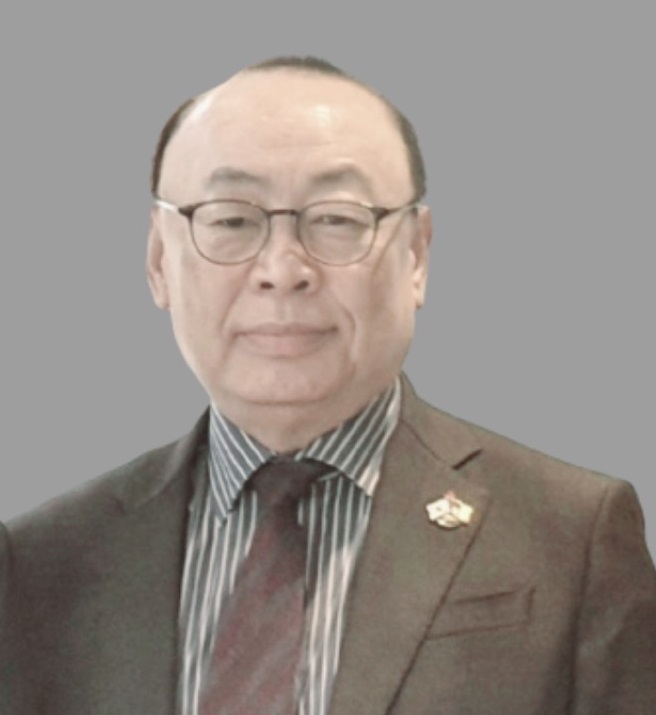
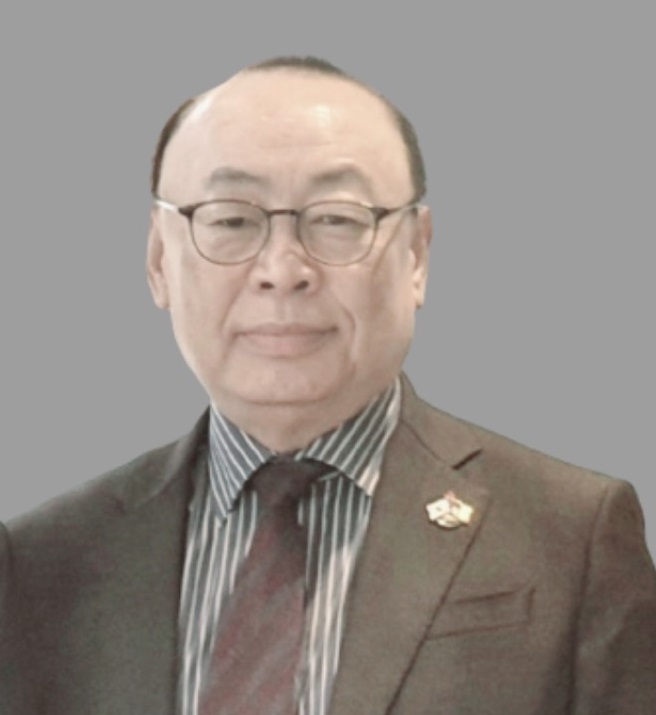
Kim Guk-seong
My journey began in 2014 when I defected from North Korea to escape the brutal purges of Kim Jong-un's regime. This experience has given me a deep appreciation for the essence of liberal democracy. Born in Pyongyang in 1959, I graduated from Pyongyang Geumseong Middle School and pursued my education in electronic engineering at Kim Chaek University of Technology. I also completed programs at the 'University of People’s Economics' and the 'Kim Jong Il Political Military University,' where spies and informants are trained. For nearly three decades, I served in various roles within North Korean intelligence, including stints at the Workers' Party's External Relations Department, the Operations Department, Office 35 (dealing with external intelligence), and the Reconnaissance General Bureau, where I assisted Kim Yong-chol, the mastermind behind the 2010 'ROKS Cheonan sinking.'
I shared a unique bond with Jang Song-thaek, the former administrative director of the Workers' Party of Korea (WPK), dating back to 1984. After Jang's execution in 2013, I learned of North Korea's intentions to capture me, prompting my defection to South Korea. I consider this decision a stroke of immense fortune, as it spared me the same fate that befell Jang Song-thaek.
Today, South Korea is home to over 36,000 North Korean defectors who have sought freedom. Together, we share a profound understanding of the value of freedom within a democratic framework, having escaped the authoritarian grip of North Korea. This year, in pursuit of a peaceful Korean unification, we established the 'North Korean Freedom Liberation Federation,' with me serving as its inaugural President. In South Korea, I am dedicated to confronting those who support North Korea and fulfilling our historic mission to end the hereditary dictatorship in the North, ultimately achieving unification.
My motivation for engaging in these group activities at this juncture is the growing influence of pro-North Korean factions within South Korea, which are intensifying their efforts as North Korea's nuclear threats escalate. Drawing from my 30 years of experience in North Korean intelligence, I can confirm that some civic groups in South Korea are under the control of North Korean intelligence. These groups align their activities with North Korea's strategic objectives against South Korea. They exploit the vulnerabilities of the democratic system and work towards political subordination of the South, leveraging North Korea's nuclear capabilities.
North Korean intelligence infiltrates significant institutions in South Korea, religious groups, and civic organizations, executing operations against South Korea's interests. Some individuals who previously engaged in humanitarian activities in North Korea have pledged allegiance to the regime and joined the WPK. They advocate for North Korea's nuclear system, ignore Kim Jong-un's human rights abuses, and label those raising North Korean human rights issues as "anti-peace forces." These groups ardently support the North Korean system, posing a growing threat in the face of rising authoritarianism worldwide.
President Yoon Suk-yeol's recent statement underscores the presence of communist forces disguising themselves as advocates of democracy, human rights, and progressivism. They employ deceitful tactics and false propaganda to undermine the core values of freedom. His call for a resolute response, irrespective of political affiliations, to counteract actions aimed at destabilizing and dismantling South Korea's democratic constitution is unprecedented among past presidents. In these critical times, such a clear and strong declaration is indeed a stroke of fortune.
South Korea's embrace of democracy has propelled it towards becoming a developed nation characterized by freedom and prosperity. In stark contrast, North Korea's choice of communist dictatorship under the Kim family's three-generation succession system has relegated it to being one of the world's most egregious human rights violators and one of the poorest countries. Today, North Koreans suffer in silence, deprived of basic human rights.
Kim Jong-un's unwavering pursuit of nuclear weapons as the cornerstone of hereditary politics poses a grave threat. Just as a moth is drawn to its demise in a flame, Kim Jong-un's nuclear ambitions will inevitably lead to his downfall. The ongoing battle between authoritarian and democratic forces is, at its core, a struggle between freedom and dictatorship. We must work tirelessly to dismantle Kim Jong-un's hereditary dictatorship, granting over 25 million North Koreans a chance to experience genuine human life. Our 'North Korean Freedom Liberation Federation' welcomes anyone who shares our vision of a free unification, transcending nationalities, and we remain steadfast in our commitment to safeguard the freedom and prosperity of South Korea.
-
PREV [Academic Article]
-
NEXT [Academic Article]