

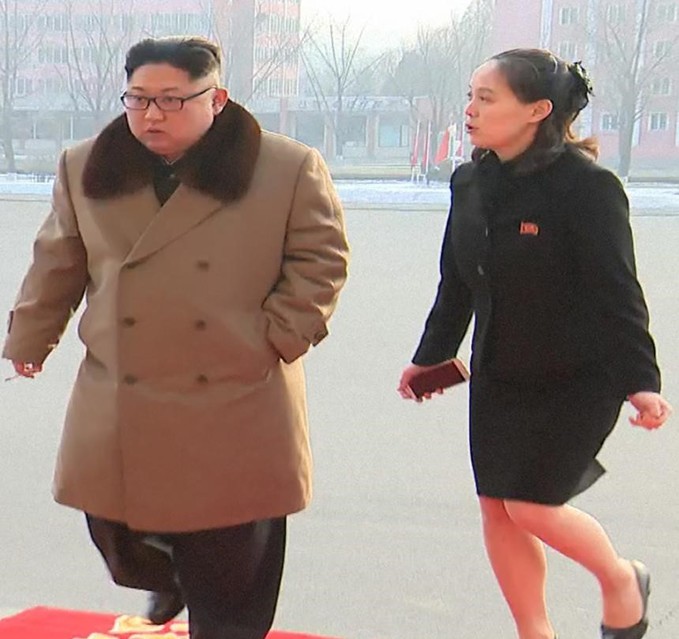
Kim Yo-jung is holding a smartphone (Source : Korea National Central TV)
North Korea's continued development of nuclear and missile capabilities has raised tensions on the Korean peninsula, and the international community often associates the country with nuclear weapons and missiles. However, domestically, North Korea places greater emphasis on "unity" among its people than on nuclear weapons. The country claims that the Suryong system, the party, and the people is more powerful than nuclear weapons.
To maintain this unity, North Korea enforces a uniform way of thinking and mental culture while strictly controlling external intervention. Information control serves as a shield to block internal unrest by indoctrinating the people.
In North Korea, the Propaganda and Agitation Department of the WPK is the primary agency responsible for promoting 'unity'. It controls all media outlets and carefully selects information for residents to receive. According to the '2022 World Press Freedom Index' by Reporters Without Borders, North Korea ranks last, 180th out of 180 countries surveyed, for press freedom. This year, North Korea held the Journalists Union for the first time in 22 years, emphasizing propaganda and agitation. This move is seen as an attempt to tighten the reins of public propaganda and agitation amid domestic and external crises, including sanctions against North Korea, economic difficulties due to the COVID-19 lockdown, changes in residents' consciousness due to the influx of outside influences, and human rights pressure from the US and South Korea.
The incident in which North Korea destroyed the Kaesong Inter-Korean Joint Liaison Office in June 2020 after Balloon Propaganda by South Korea demonstrates North Korea's fear of information inflow. In December of the same year, North Korea enacted the "Reactionary Ideology and Culture" law, which includes extreme measures such as imprisonment and even the death penalty for watching or distributing foreign media, including Korean dramas. In 2021, the "Youth Culture Guarantee Law" was enacted to strengthen organizational and ideological control over the "The Jangmadang Generation" and in January of this year, at the 8th Plenary Meeting of the 14th Supreme People's Assembly, North Korea adopted the "Pyongyang Cultural Language Protection Act" and declared that they will completely eradicate external media, including South Korean language and culture. These actions demonstrate North Korea's sense of crisis that the foundation of their regime, "unity," could be shaken by the inflow of external information.
North Korea's increasing control over information is due to its citizens' growing exposure to the outside world. In the past thirty years, more North Koreans have had access to advanced electronics such as TVs, desktops, laptops, tablets, and mobile phones, which has accelerated the spread of information both inside and outside of North Korea. The Propaganda and Agitation Department of the Workers' Party of Korea (WPK) has implemented a program called "Trace Viewer," which takes periodic screenshots of citizens' smartphones for surveillance purposes in an attempt to eliminate any gaps in their control. However, North Korean citizens are willing to pay extra to install programs that bypass this surveillance or purchase phones from which these programs have been deleted. The fundamental desire for freedom among North Korean citizens cannot easily be suppressed by the authorities.
The current situation in North Korea highlights the need for sustained information inflow to change the people's consciousness, as international pressure has limited effectiveness and denuclearization remains challenging. However, it is concerning that only a few countries support activities to bring information into North Korea, and the reality is not optimistic. Despite the U.S. government's support for human rights and information inflow activities for nearly 20 years since the passage of the North Korean Human Rights Act in 2004, South Korea, a key player in the North Korean issue, has been unable to launch the North Korean Human Rights Act for seven years due to opposition between the ruling party and the opposition. It is time for South Korea and the international community to actively support and participate in the inflow of information into North Korea in a new environment. We need to work together, as the United States alone cannot solve this issue.
To ensure North Korean citizens can access external information safely, it is essential to utilize various forms of information transmission, including analog and digital means. Expanding radio broadcasting and distributing radio equipment in North Korea should be the primary focus. Additionally, enabling citizens to use the internet by bypassing North Korea's control technology is crucial, especially since a variety of electronic devices have been distributed within the country. The efficacy of StarLink, as demonstrated during the Russia-Ukraine War, provides significant implications for alleviating the information deficiency of North Korean citizens. This influx of information will bring revolutionary changes to the consciousness of North Korean citizens. North Korea will require additional means beyond nuclear weapons to uphold its regime if the shield of "unity" is shattered.
-
PREV [Defectors' Podium]
-
NEXT [North Korea Glossary]