

NK Inside
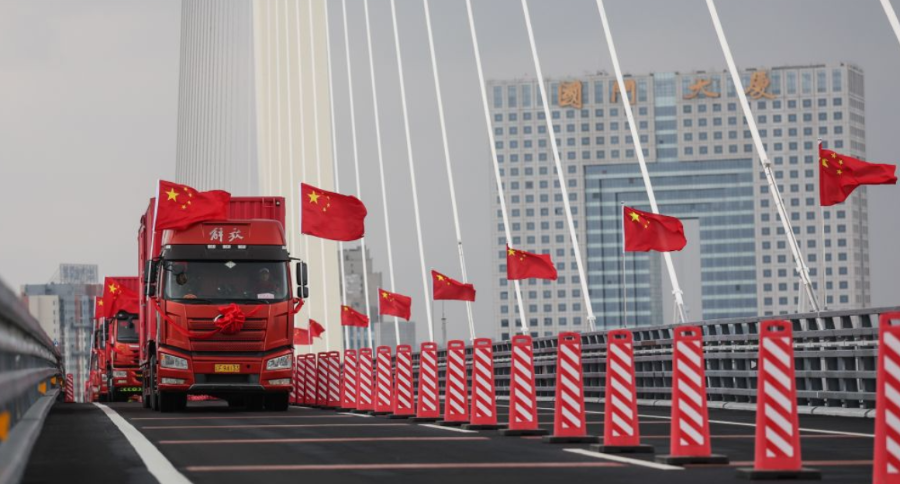
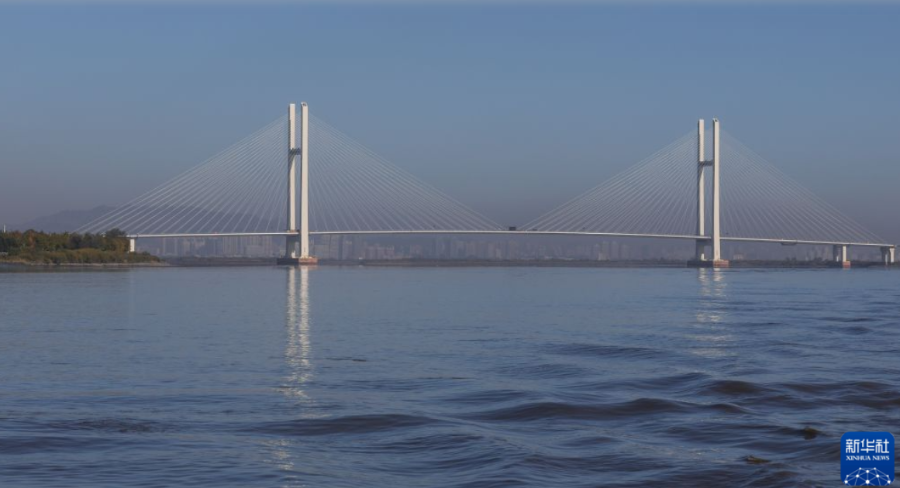
· New Yalu River Bridge to Open After 12-Year Delay as North Korea and China Plan Joint Ceremony for October 15
· North Korea Denies Responsibility for DMZ Landmine Incident Six Times but Keeps Its Own Population Uninformed
· Kim Jong-un Showcases ICBMs Capable of Striking the U.S. Mainland, Signaling Defiance Toward Trump

Myongsung Kim
North Korea has officially denied responsibility six times for last month’s landmine explosion in the western sector of the Demilitarized Zone (DMZ), which injured three South Korean soldiers, while apparently keeping its own population uninformed about the incident. Although Kim Yo-jong, director of the General Affairs Department of the Workers’ Party of Korea, repeatedly condemned the incident as a staged provocation by Seoul, North Korea’s main domestic media outlets, including Rodong Sinmun and Korean Central Television, have not reported on it.
This approach contrasts sharply with Pyongyang’s handling of the 2015 wooden-box landmine incident, which the regime publicized extensively to domestic audiences. Analysts suggest that the apparent information blackout reflects North Korea’s broader effort to institutionalize its designation of South Korea as a hostile state while minimizing references to the South in domestic political discourse.
A review of North Korean media reports as of October 13 indicates that, since the September 21 explosion, Pyongyang has rejected the South Korean military’s investigation findings on five occasions through statements issued by Kim Yo-jong and the Ministry of Foreign Affairs. Including North Korea’s official denial of responsibility at the United Nations, the total number of denials stands at six.
However, these statements were disseminated exclusively through externally oriented outlets, including the Korean Central News Agency, and were not carried by major domestic media outlets such as Rodong Sinmun or Korean Central Television, which serve as key sources of information for North Korean citizens.
North Korea continues to portray the incident as a staged provocation orchestrated by Seoul, despite the South Korean military’s conclusion—based on an on-site investigation and forensic analysis of recovered mine fragments—that the explosion was caused by a plastic-cased antipersonnel mine planted by North Korean forces south of the Military Demarcation Line (MDL). Kim Yo-jong also ridiculed the South Korean government’s proposals to reduce military tensions and reiterated Pyongyang’s position that inter-Korean relations should remain permanently severed. The North Korean Ministry of Foreign Affairs further warned that it would respond forcefully if South Korean troops entered territory claimed by Pyongyang to remove landmines.
These confrontational statements, however, have been directed primarily at external audiences. While denying responsibility and threatening military retaliation in messages aimed at Seoul and the international community, Pyongyang appears to be pursuing a differentiated information strategy, keeping its domestic population unaware of the incident altogether.
This approach stands in marked contrast to North Korea’s response to the wooden-box landmine incident in 2015, 11 years earlier.
On August 4, 2015, wooden-box landmines planted by North Korean forces exploded in the DMZ near Paju, Gyeonggi Province, seriously injuring two South Korean noncommissioned officers. North Korea issued an official statement denying responsibility 11 days later. Unlike its response to the recent incident, Pyongyang disseminated the statement not only through external media channels but also through Korean Central Television, making its position accessible to domestic audiences.
At the time, North Korea strongly protested South Korea’s resumption of loudspeaker broadcasts directed toward the North and escalated military tensions by declaring a quasi-state of war. The regime actively publicized the confrontation to its citizens, using the standoff to promote domestic solidarity and intensify hostility toward South Korea. The crisis was eventually defused through high-level inter-Korean negotiations, which resulted in an agreement to ease military tensions.
This time, however, North Korea appears to have chosen not to inform its citizens about the incident. Experts suggest that this shift is closely linked to Kim Jong-un’s policy of defining the two Koreas as separate, hostile states.
Since late 2023, North Korea has fundamentally redefined inter-Korean relations, abandoning the longstanding view of the relationship as a special one oriented toward eventual reunification and instead characterizing the two Koreas as hostile states. As part of this policy shift, the regime has sought to deepen the social and psychological divide between the two populations, including by substantially restricting the flow of information about South Korea to North Korean citizens.
Against this backdrop, analysts suggest that extensive domestic coverage of the DMZ landmine incident would be at odds with Pyongyang’s revised policy framework. Whereas military confrontations with South Korea were previously used to mobilize public support and reinforce anti-South Korean sentiment, the regime now appears to place greater emphasis on minimizing South Korea’s presence in domestic public discourse.
North Korea’s ongoing efforts to fortify the DMZ may also have contributed to this approach.
Building on activities undertaken in previous years, North Korean forces have continued installing barbed-wire barriers, laying minefields, and constructing tactical roads along the MDL in 2026, further reinforcing the physical separation between the two Koreas. During these operations, repeated crossings of the MDL by North Korean personnel, followed by warning shots from South Korean forces, have contributed to heightened border tensions.
Analysts suggest that Pyongyang may have opted to issue forceful warnings to external audiences while limiting domestic coverage of the incident, as an escalation into direct military confrontation could disrupt its ongoing border fortification efforts.
The contrast with 2015 is particularly significant: the earlier landmine incident ultimately led to high-level inter-Korean negotiations, whereas North Korea now categorically rejects dialogue with the South Korean government.
Whereas Pyongyang previously had an incentive to use military tensions as leverage in negotiations, it now appears to prioritize institutionalizing the rupture in inter-Korean relations and completing physical fortifications along the DMZ.
Kim Jong-un Showcases ICBMs Capable of Striking the U.S. Mainland, Signaling Defiance Toward Trump
North Korea has inaugurated the Museum of the Defense Revolution, showcasing an extensive array of strategic weapons and advanced military equipment, including the Hwasong-20, its latest intercontinental ballistic missile (ICBM), which is designed to reach the continental United States. Kim Jong-un, chairman of the State Affairs Commission, attended the opening ceremony in person, underscoring his ambition to build one of the world’s most powerful defense industries and reaffirming his commitment to advancing the country’s weapons systems, including its nuclear and missile capabilities. The event appears intended to highlight North Korea’s military strength while incorporating the achievements of its defense industry into the regime’s broader narrative of national power and political legitimacy.
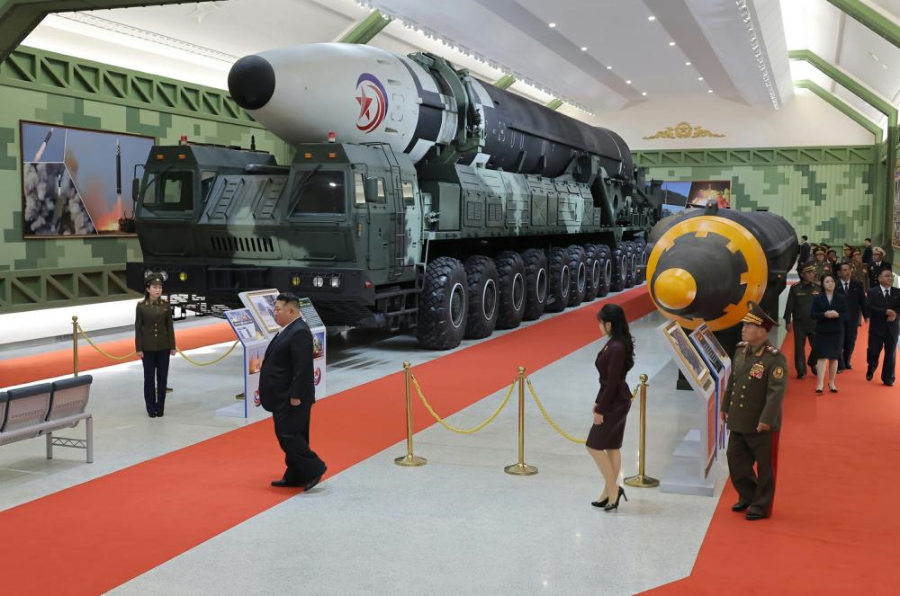
On October 13, Rodong Sinmun, the official newspaper of the Workers’ Party of Korea, reported that Kim Jong-un attended the opening ceremony of the Museum of the Defense Revolution on October 11, organized by the Second Economic Committee, and personally cut the ceremonial ribbon. The Second Economic Committee is a central institution responsible for overseeing North Korea’s military-industrial sector, including weapons research, development, and production.
In his address, Kim described the museum as an “immortal archive” and a national treasure of exceptional significance. He asserted that it demonstrates how North Korea has safeguarded its national dignity and security, ensured the well-being of its people, and maintained peace through military strength.
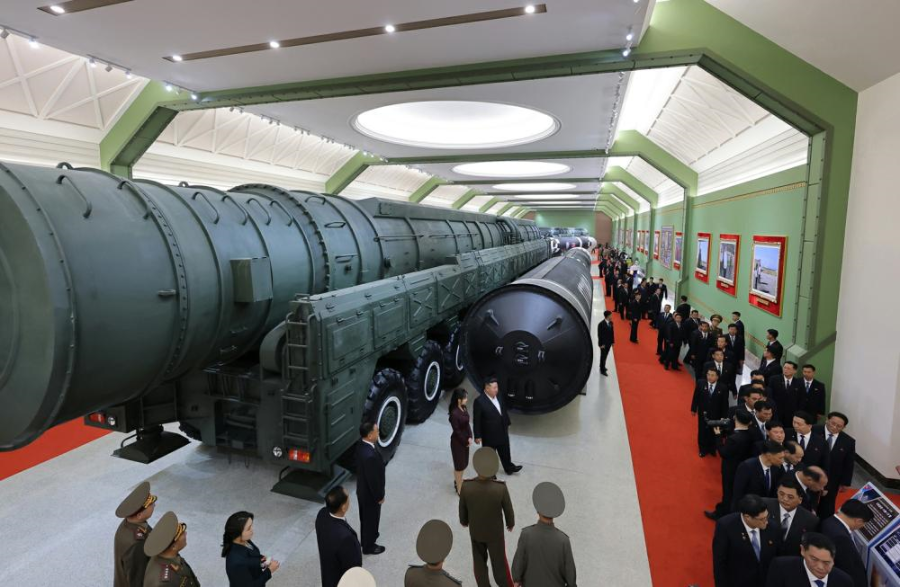
He further argued that institutions such as the Museum of the Defense Revolution embody revolutionary achievements made possible by a strong state and a people equipped with the military capabilities necessary for self-defense. His remarks framed the development of nuclear weapons and advanced military systems as essential to national survival and the preservation of peace.
Kim also emphasized that the expansion of North Korea’s defense industry had been made possible by the sacrifices and sustained efforts of its people, who had supported the country’s self-reliant defense policy despite international sanctions and prolonged economic hardship.
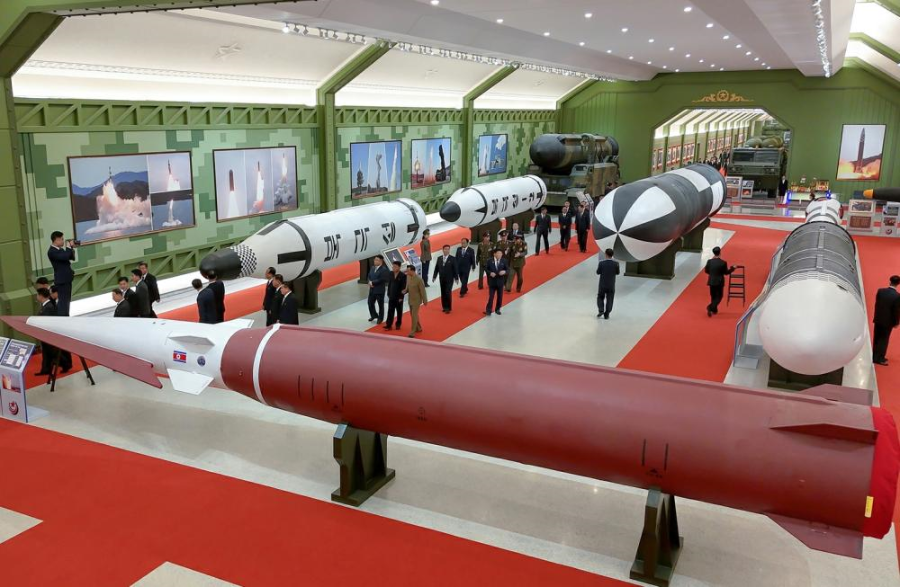
In particular, Kim declared that building the world’s strongest defense industry was a core mission of the Workers’ Party of Korea and reaffirmed the Party’s determination to continue developing and refining increasingly advanced and powerful weapons systems. He added that the museum’s exhibits and facilities would expand as new weapons systems were developed.
Kim Jong-sik, first deputy director of the Workers’ Party’s Military-Industrial Department, similarly asserted that the Party’s defense development strategies and objectives represented a fundamental transformation of the country’s defense science and technology, as well as its military-industrial infrastructure.
The opening ceremony is particularly noteworthy because North Korea presented the achievements of its defense industry not simply as milestones in weapons development but as enduring national assets and symbols reinforcing the legitimacy of the ruling system.
The 29 photographs released by Rodong Sinmun showcased a range of strategic and tactical weapons systems, including North Korea’s latest ICBM, the Hwasong-20.
First unveiled during the October 10, 2025, military parade at Kim Il-sung Square in Pyongyang, held to commemorate the 80th anniversary of the founding of the Workers’ Party of Korea, the Hwasong-20 represents the latest generation of North Korean ICBM technology. Designed to reach the continental United States, the missile is portrayed by Pyongyang as a central component of its nuclear deterrent.
Other exhibits included a 600-millimeter super-large multiple rocket launcher and its transporter-erector-launcher vehicle, a 155-millimeter self-propelled howitzer, and Pukguksong-series submarine-launched ballistic missiles. The Saetbyol-4 strategic reconnaissance unmanned aerial vehicle and Saetbyol-9 attack drone were also displayed, highlighting North Korea’s efforts to demonstrate progress not only in ballistic missile development but also in modernizing its conventional military capabilities, particularly unmanned aerial systems.
By bringing together a broad range of weapons systems—from strategic nuclear delivery platforms and long-range artillery to submarine-launched missiles and reconnaissance and attack drones—under one roof, Pyongyang appears intent on demonstrating to domestic and international audiences that its military modernization efforts are advancing across multiple domains simultaneously.
The prominence given to North Korea’s latest strategic weapons also suggests an effort to portray nuclear and missile development not as temporary military achievements but as enduring national accomplishments to be preserved, institutionalized, and continuously expanded.
Kim Jong-un was accompanied by his wife, Ri Sol-ju, and his daughter, Kim Ju-ae. Photographs released by North Korean state media showed the family touring the museum together.
Kim Ju-ae’s presence is particularly noteworthy given her increasingly frequent appearances at major military events and activities involving strategic weapons. Her participation in the opening of a museum dedicated to North Korea’s defense achievements further underscores the symbolic importance the regime attaches to its military accomplishments. By portraying its nuclear and missile programs as enduring sources of national pride, Pyongyang may also be laying the political and ideological groundwork for the continued expansion of its strategic weapons capabilities and military-industrial base.
-
PREV [NK Inside]
-
NEXT 다음 글이 없습니다.