

North Korean Trends/October 2025
Deepening Internal Cohesion and Selective Silence: Avoiding Multilateral Diplomacy While Advancing Military Power and Self-Reliance Narratives

Lee Seung-hyun
Ph.D in Public Administration
Research Fellow, SAND Institute
North Korea’s activities in October, coinciding with the 80th anniversary of the founding of the Workers’ Party of Korea (WPK), reflected three dominant themes: strengthening internal cohesion, demonstrating military power, and maintaining diplomatic restraint.
Kim Jong-un carried out ten public activities—an increase from eight in September—comprising three political, three military, two economic, and two social or cultural engagements, indicating a notable expansion in the military and economic areas.
1. Political and Diplomatic Developments
In the political and diplomatic spheres, Kim sought to reinforce regime legitimacy and highlight his state’s achievements in welfare and governance. He presided over various events, including the completion ceremony for the Pyongyang General Hospital, a meeting of party and government officials, and receptions for delegations from friendly nations.
The attendance of Chinese Premier Li Qiang and a Russian delegation led by Dmitry Medvedev at the celebration marking the WPK’s founding anniversary provided Pyongyang with valuable propaganda material, emphasizing its ties with allied powers.
In contrast, during the 2025 APEC Summit and 2025 ASEM Summit—both held in South Korea shortly after the October 10 military parade—North Korea’s official media made no comment on the events or their participants. Instead, a statement by Vice Foreign Minister Pak Myong-ho was released on October 31, declaring that multilateral denuclearization talks are an “impossible pipe dream.”
This underscores Pyongyang’s deliberate preference for bilateral or allied-centered diplomacy over multilateral forums, using limited diplomatic exposure as a strategy to control narratives and avoid external pressure.
2. Military and Weapons Development
October also featured a surge of military activities and demonstrations of new weapons. The “Defense Development–2025” exhibition held in Pyongyang from October 4–5 unveiled new ground combat systems, air defense missiles, and rail-based launchers. In his address, Kim Jong-un called for a transition toward a “self-reliant, modernized armed force,” emphasizing modernization of the North Korean navy and air force.
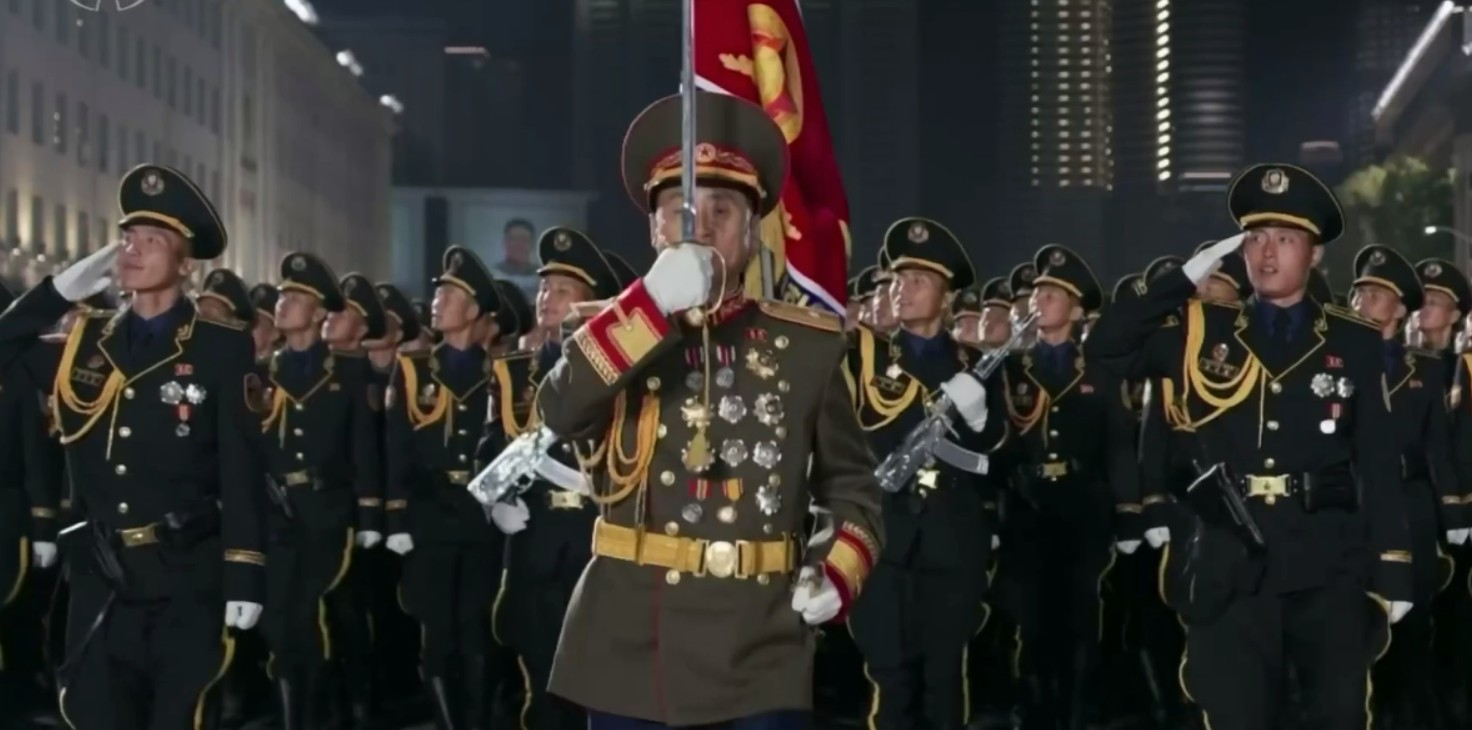
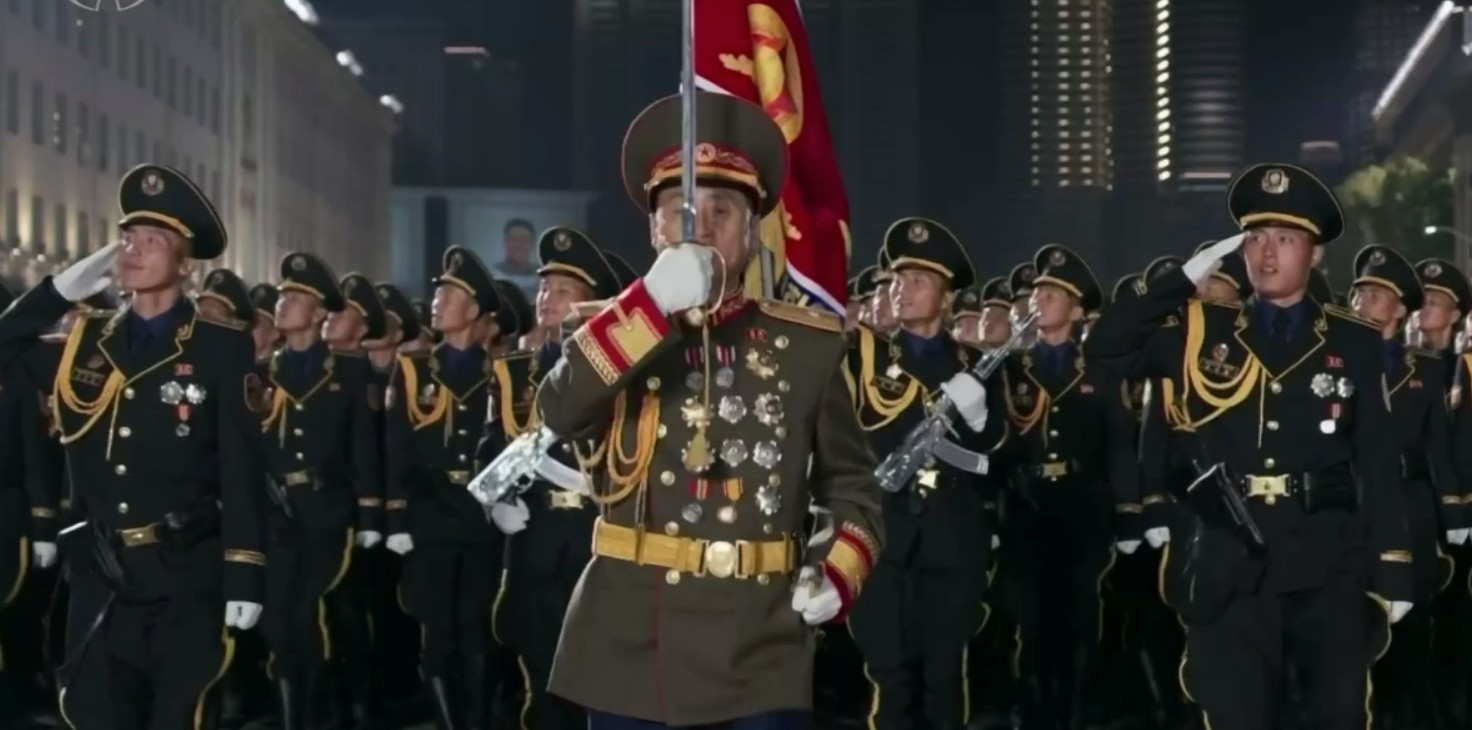
The October 10 military parade showcased strategic assets, including the new Hwasong-20 intercontinental ballistic missile. With foreign dignitaries in attendance and live broadcasts to domestic and international audiences, the event served dual purposes: projecting North Korea’s nuclear deterrence and national pride domestically, while asserting recognition as a nuclear power internationally.
On October 28, North Korea test-launched a sea-to-land strategic cruise missile in the West Sea, describing it as the “practical application of war deterrence.”
This sequence of events reflects North Korea’s multi-layered strategy aimed at reinforcing domestic stability, bolstering external deterrence, and signaling confidence in its strategic autonomy.
3. Economic and Social Trends
In the economic and social spheres, Kim Jong-un conducted a series of on-site inspections of industrial, agricultural, and construction sites, while repeatedly emphasizing that “self-reliance is the lifeline of the revolution.” He instructed officials to intensify output-oriented mobilization and strengthen cadre accountability.
Despite these directives, North Korea’s state media made little mention of the country’s deepening economic distress—supply shortages, market instability, and livelihood hardships—indicating the regime’s continued efforts to maintain tight control over information and sustain propaganda-driven messaging.
In the social and cultural domain, Pyongyang sought to enhance unity through large-scale public campaigns, mass gymnastics events, and intensified ideological education across schools and workplaces, thereby reinforcing collective discipline and loyalty to the regime.
4. Assessment and Outlook
Overall, in October, North Korea was active in military demonstrations, economic mobilization, and diplomatic minimization. The regime appears focused on internal consolidation and image management, using selective diplomatic engagement to maintain control over its international narrative while countering external isolation.
If these trends persist, Pyongyang is likely to unveil a new policy line or adjustments in its policy direction at an upcoming plenary meeting of the WPK Central Committee or the year-end review of its military and economy. Key indicators to watch include:
* The frequency and intensity of military tests, and how they are portrayed in state media.
* The relative emphasis on bilateral diplomacy with its allies, China and Russia, versus engagement in multilateral platforms such as APEC and ASEM.
* Any official acknowledgment of economic strain or shifts in rhetoric regarding people’s livelihoods.
Taken together, these factors suggest that while Pyongyang’s external posture remains hardline, its core focus lies in fortifying domestic cohesion and recalibrating diplomatic exposure. The coming months—especially November and December, when the WPK plenary and economic review are expected to be held—could mark a strategic inflection point, possibly leading to public acknowledgment of economic difficulties and a need for adjustments in internal management or resource allocation.
In essence, North Korea’s behavior in October reflects a regime seeking balance between assertive military signaling, domestic control, and strategic silence abroad. Pyongyang is taking a calculated approach designed to sustain stability as it faces mounting challenges both internally and externally.
-
PREV [North Korea Inside]
-
NEXT [North Korea Inside]