

North Korea Inside
· NIS: “March Next Year Could Mark a Turning Point for North Korea–U.S. Dialogue”
· DIA: “North Korea Could Conduct a Nuclear Test at Punggye-ri within a Short Timeframe”
· Relentless Construction Push Deepens Hardship Nationwide as North Korea Races Toward 9th Party Congress
· Kim Jong-un Inspects the ‘Storm Corps,’ Calls South Korea and U.S. “World’s Most Despicable Enemies”
Kim Myong-sung
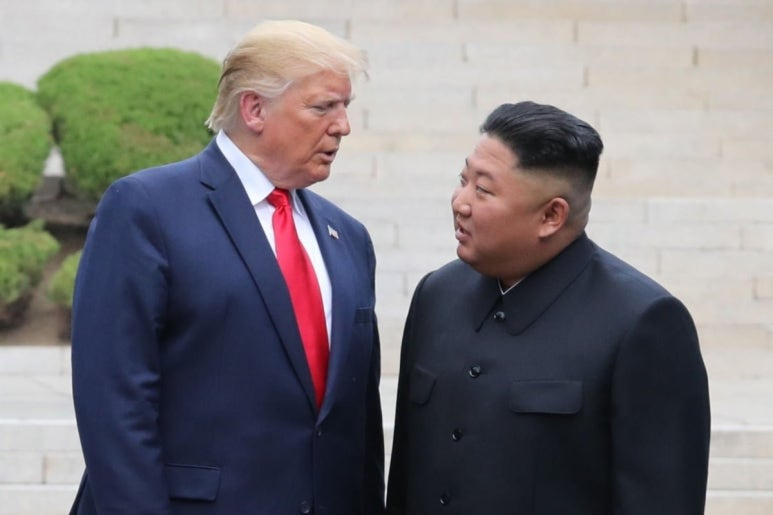
According to the NIS, the assessment draws upon several indicators, including the disposition of U.S. President Donald Trump’s working-level officials on North Korea, the relative restraint shown in nuclear-related rhetoric following Kim Jong-un’s policy speech at the Supreme People’s Assembly in September, and deliberations surrounding Foreign Minister Choe Son-hui’s planned visit to Russia during President Trump’s Asian tour, which reportedly continued until the last moment.
The agency stated, “Based on evidence such as Kim Jong-un’s direct oversight of U.S.-related affairs and increased information collection by North Korean officials handling U.S. policy, the NIS assesses the prospects for improvement in U.S.-North Korea relations as relatively high.” It added that “the strengthening of Pyongyang’s ties with Russia and the restoration of its relations with China could provide the backdrop for renewed dialogue with Washington.”
Regarding timing, the NIS projected that “a U.S.-North Korea summit could be pursued after the ninth Korea Workers Party Congress in February next year, possibly following the conclusion of the U.S.-ROK joint exercises in March and using a military parade as an occasion.”
However, an NIS official underscored that “this is not a definitive forecast of summit-level engagement, but rather an analytical judgment that March could serve as an inflection point in broader peninsula dynamics.”
The NIS provided a more pessimistic outlook for inter-Korean relations, reporting that “North Korea may seek a constitutional amendment that redefines inter-Korean relations as a de facto ‘two-state system.’” The agency added that discussions on such a change could occur at the Supreme People’s Assembly following a planned military parade early next year.
The NIS further conveyed that Pyongyang had issued directives to its overseas missions to “prohibit contact with South Korean organizations” and to “distinguish sharply between interactions with the United States and South Korea,” effectively blocking avenues for inter-Korean engagement.
South Korea’s Defense Intelligence Agency (DIA) assessed on November 5 that “if Kim Jong-un makes the decision, North Korea could conduct a nuclear test in Tunnel 3 at the Punggye-ri site within a short timeframe.”
The finding was presented during a closed-door session of the National Assembly Intelligence Committee, according to briefings by the ranking members of the committee, Rep. Park Sun-won of the Democratic Party and Rep. Lee Sung-kwon of the People Power Party.

The DIA reported that “North Korea continues to advance its nuclear capabilities, aiming to secure the international community’s tacit acceptance of its nuclear status.” The agency added that Pyongyang is “expanding uranium enrichment facilities, including those in Yongbyon, and constructing infrastructure to produce multiple types and quantities of nuclear warheads.”
On missile development, the agency noted that “North Korea appears close to operationally deploying four types of short-range missiles and 600mm multiple rocket launchers.” It further observed that “for its medium-range systems, Pyongyang is concentrating on hypersonic cruise missiles capable of evading allied missile defense networks.”
Regarding North Korea’s intercontinental ballistic missiles (ICBMs), the agency assessed their maximum range as exceeding 13,000km. The agency added that “although North Korea has so far conducted tests on lofted trajectories, a full-range test launch to verify operational range remains a possibility under close monitoring.”
The DIA also stated that North Korea “is pursuing the operational deployment of upgraded R-class submarines to enhance its nuclear delivery options and is accelerating efforts to develop covert underwater launch platforms, including nuclear-powered submarines.”
On North Korea’s reconnaissance capabilities, the agency reported that “Pyongyang is preparing additional launches—reportedly with Russian technical assistance—to secure higher-resolution military reconnaissance satellites.”
The agency added that “although balloon launches toward the South have remained suspended since last November, associated personnel and vehicle activities persist in approximately ten potential deployment zones.”
The DIA also confirmed that “North Korea continues to operate several South Korean factories in the Kaesong Industrial Complex,” noting that “light industry and consumer goods production lines remain active.” It added that “demolition of the Kaesong Industrial Complex Support Center began in December last year and has now progressed to the eleventh floor of the fifteen-story building.”
The analysis also highlighted ongoing modernization of North Korea’s conventional forces. “Development of small vertical takeoff and landing drones for reconnaissance, strike, and suicide missions has expanded significantly, with test flights and operator training increasing markedly from last year,” the DIA stated. “Two large vessels were launched at the Nampo and Najin shipyards between April and June, and Kim Jong-un has reportedly ordered the annual construction of two additional ships.”
Politically, the DIA report assessed that “Kim Jong-un is prioritizing achievements in defense and foreign policy ahead of the ninth Korea Workers Party Congress, consolidating a loyalist-based succession structure and reinforcing the stability of his regime.”
The DIA added that “Pyongyang is institutionalizing a ‘two-state framework’ by physically reinforcing the border through the construction of barriers, roads, and fences across the Demilitarized Zone (DMZ).”
“GPS jamming and loudspeaker broadcasts targeting the South continue,” the agency continued, noting that “while some loudspeaker facilities were dismantled, two new ones have been added, bringing the total to over forty.”
The report emphasized an emerging trilateral alignment among China, Russia, and North Korea. “Pyongyang is leveraging its relationships with Beijing and Moscow to demonstrate its nuclear capabilities and enhance its strategic leverage,” the DIA assessed. “Pyongyang’s cooperation on military supplies and troop deployments with Russia has entered a sustained, long-term phase.”
Specifically, it reported that “North Korean troops deployed to Russia are engaged in patrol and mine-clearing operations near the Kursk region, while Russia is transferring air defense missile technology to North Korea.” It further analyzed that “lessons learned from the Russia–Ukraine conflict have been incorporated into training of North Korean troops, resulting in a more than twofold increase in infantry and artillery exercises and expanded use of drones.”
Finally, the DIA noted that “since the Xi Jinping-Kim Jong-un summit in September, China-North Korea relations have shown a clear trajectory of comprehensive strengthening,” citing that “China’s exports to North Korea in September rose 30 percent year-on-year and 54 percent month-on-month.”
Relentless Construction Push Deepens Hardship Nationwide as North Korea Races Toward 9th Party Congress
North Korea has declared this year the “Year of Solidarity and All-out Advance,” launching what its officials call an “ultra-arduous march” through year-end. The campaign has effectively turned the entire country into a vast construction zone. As mass mobilization and tightened market controls continue, frustration is spreading among residents who complain, “They won’t let us earn money or give us food, yet they keep mobilizing us day and night.”
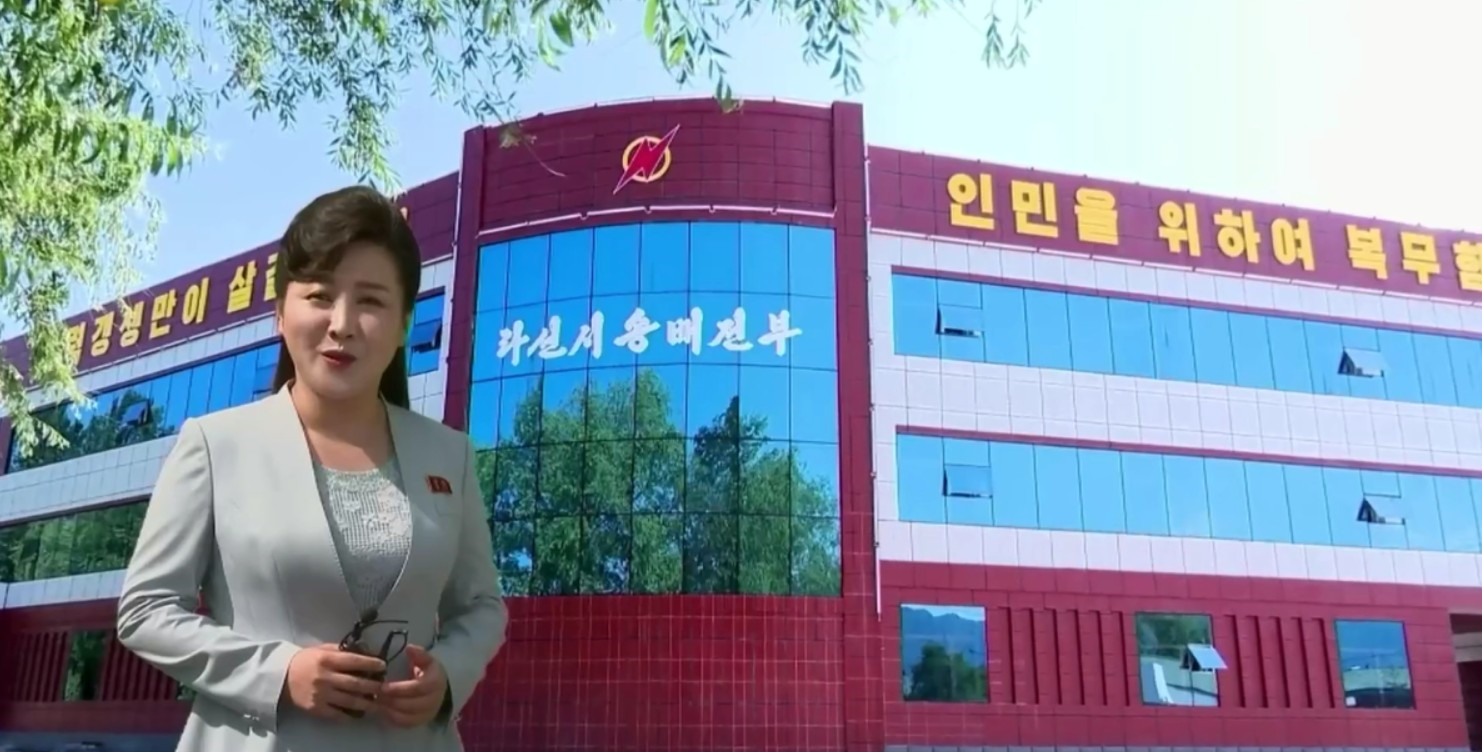
Driven by the imperative to make visible “achievements” ahead of next year’s ninth party congress, North Korean authorities are pressing citizens into continuous construction work, leaving little room for rest or livelihood activities. Reports from inside the country describe widespread exhaustion and despair, with residents saying, “We can’t live like this anymore.”
According to multiple North Korean sources on November 3, North Korean government recently issued a “national construction mobilization” order, requiring residents in urban and rural areas alike to participate in local construction projects.
The regime is promoting a so-called “20×10 Policy,” aimed at constructing local industrial plants in 20 cities and counties each year. In addition, officials have announced simultaneous improvement of “three essential facilities”—modern hospitals, integrated service centers, and grain management complexes—at the city and county level.
A resident of Hyesan, Ryanggang Province, reported, “Mobilization continues even on weekends, leaving no time to visit markets. Anyone who skips work is criticized at life review sessions, and trading is only possible late at night.”
The North Korean authorities have restricted market operations to evening hours, permitting trading only after the mobilization duties end. Yet, residents lament that “even if stalls stay open until midnight, nothing sells,” underscoring the collapse of basic economic activities. With goods piling up unsold, even wholesale traders are reportedly considering closing their businesses.
A source along the China-North Korea border added, “People arriving from Chongjin cry that life has become unbearable. They have no time to earn money, no cash to buy goods. They say, ‘We’re really going to die.’”
Pyongyang promotes these local projects under the banner of “self-reliance” while the state financial support reportedly covers only 20–30 percent of total costs. Local governments are expected to raise the remainder, often by selling farm grains or imposing new “support contributions” on residents. As one source noted, “The state offers only slogans: everything else comes from the people’s pockets.”
Mobilized residents express mounting anger. “Even if we work ourselves to death, we don’t get a single meal ration,” one resident said. Others complain, “Only if they gave us enough rice to fill our stomachs, who would refuse to work? This isn’t a place fit for human life.”
A source in Hoeryong, North Hamgyong Province, stated, “We could once survive through small-scale trade, but now even that is blocked. All these construction achievements are being built on the people’s tears.”
Reports from South Hamgyong and Kangwon Provinces suggest that food shortages are worsening, with cases of starvation deaths already being reported. Some accounts describe desperate residents stripping clothing from corpses on the street to sell for food.
“Even after the harvest, farmers must first deliver grains for military rations and pay contributions for housing and factory construction,” one farmer said. “What remains for the family is barely a third of what we harvest.”
The food crisis extends to the military. Witnesses report that soldiers increasingly steal food and clothing from civilians. “With the army taking what they want, there’s nothing left for us,” a farmer lamented.
Despite an “all-out agricultural mobilization” this year, North Korea’s grain output reportedly fell sharply due to drought, fertilizer shortages, and widespread looting by military units. One cooperative farm worker in Kumya County said, “We lived on bean soup for days, but now even that’s gone. This year we may really starve to death.”
Anger is rising over the regime’s priorities. Residents ask, “They sell weapons to Russia and send troops abroad for money, but not a single grain comes back to the people.”
Reports also describe rising starvation deaths in labor camps, where prisoners receive minimal rations and their families are too impoverished to send aid.
Meanwhile, state media continues to highlight large-scale construction projects daily. Analysts attribute this to Kim Jong-un’s directive for “visible results” before year-end. Local authorities, facing shortages of materials, reportedly requested an extension of project deadlines, but Kim is said to have rejected these appeals outright.
According to Minju Joson on October 30, “When local officials proposed postponing construction schedules due to cement shortages, the Chairman instructed them to press ahead, declaring that ‘the reserves lie in the hearts of the people.’”
Central inspection teams are now visiting local sites to verify reported achievements. A source said, “Rumors are spreading that any official caught inflating his achievements could be sent to a political prison camp, so everyone keeps quiet.”
The Ministry of State Security has intensified surveillance, labeling public complaints as “reactionary acts.” CCTV cameras reportedly monitor key neighborhoods and workplaces in real time.
One long-time observer of North Korea summarized, “Kim Jong-un’s style of governance—pushing projects through with so-called ”mental power explosions“—has only deepened the suffering of his people. Sacrifice in the name of achievement has become normalized.”
Kim Jong-un Inspects the ‘Storm Corps,’ Calls South Korea and U.S. “World’s Most Despicable Enemies”
On the same day that the South Korean and Chinese leaders met in Gyeongju to discuss regional security, Kim Jong-un showcased his commitment to military readiness by visiting one of North Korea’s most elite units—the 11th Corps, also known as the “Storm Corps.”
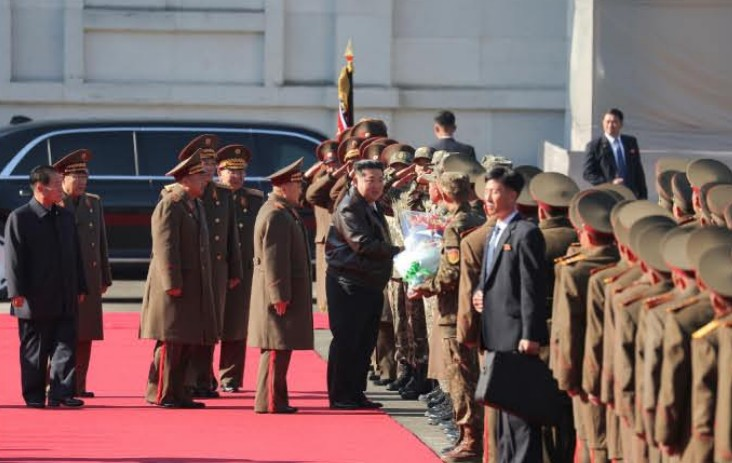
The North Korean state media reported on November 2 that Kim provided “on-site guidance” at the Corps’ command headquarters, praising its troops as models for the entire military. Wearing a black leather jacket, Kim declared, “If the entire army fights like this unit, we can build a powerful, victorious army of heroes—this is the will and aspiration of our Party.”
After receiving briefings on contingency plans, Kim outlined new strategic and organizational directives to strengthen the special operations forces, signaling a broader restructuring of the Korean People’s Army. “Institutional measures are needed to reinforce the core combat capabilities of our armed forces,” he stated.
Emphasizing the importance of ideological unity, Kim said, “The decisive factor in war is ideology,” and lauded the unit’s readiness to defend North Korea’s sovereignty against what he called “the world’s most despicable and vile enemies.” While he did not name specific countries, the phrase was widely interpreted as targeting South Korea and the United States.
Accompanying Kim were key military leaders, including Central Military Commission Vice Chairman Pak Jong Chon, Defense Minister Ro Kwang Chol, Chief of the General Staff Ri Yong Gil, and General Political Bureau Director Jong Kyong Tak.
The following day, North Korea’s Foreign Ministry dismissed Seoul’s claim that denuclearization was discussed at the South Korea-China summit as a “pipe dream.” No such remarks appeared in the state report on Kim’s military inspection.
-
PREV [Feature Article]
-
NEXT [News&Issue]