


North Korea’s Independent Diplomacy and Its Limitations in Seeking Recognition as a Sovereign State

Kim A-rum
Research Fellow, Graduate School of International Studies, Yonsei University
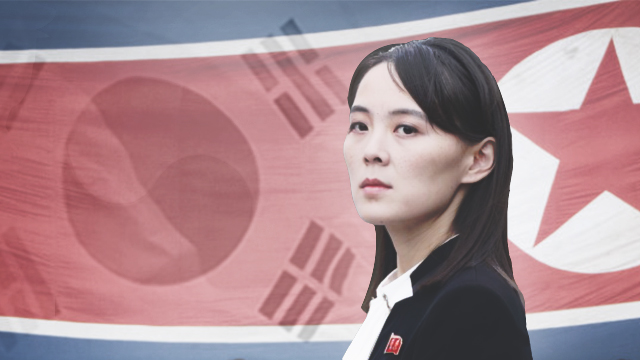
On July 28 and 29, Kim Yo-jong, First Vice Director of the Workers' Party of Korea (WPK), issued back-to-back statements reaffirming Pyongyang’s hardened stance toward the United States. “This is not 2018 or 2019,” she declared, warning that if Washington fails to accept the new reality, renewed U.S.–DPRK dialogue will remain nothing more than “a hope harbored by the United States.”
According to NK News, President Donald Trump attempted in June 2025 to reestablish communication with Kim Jong-un by sending several personal letters through North Korean diplomatic channels in the U.S., but Pyongyang reportedly declined to receive them.
This rejection underscores a significant shift. As recently as 2019, Kim Jong-un had signaled his readiness to engage, stating in his New Year’s address that he was “always prepared” to meet the U.S. president again and sought outcomes that “the international community would welcome.” Pyongyang had also pledged, in the 2018 Singapore Joint Statement, to work toward the complete denuclearization of the Korean Peninsula.
Why, then, has North Korea adopted a more conditional and skeptical posture toward renewed engagement—particularly during Trump’s second term?
Understanding this shift requires examining the strategic priorities of the Kim Jong-un regime. At its core, the regime seeks to preserve its political system and ensure both domestic and international stability. Historically, Pyongyang has viewed engagement with Washington—and the prospect of security guarantees—as a critical pathway to achieving these goals. The summit diplomacy of 2018–2019 was pursued with this calculus in mind.
Yet after three summits with the United States yielded limited substantive outcomes, the Kim regime appears to have reassessed the utility of high-level U.S.–DPRK engagement. Today, Pyongyang seems unwilling to entertain further summits that do not promise concrete results. From the regime’s perspective, political theatrics without tangible progress no longer serve its interests.
This reassessment has coincided with a broader strategic shift: the pursuit of an “independent diplomacy” aimed at bolstering North Korea’s international standing without relying on South Korea—or even the United States. On July 16, North Korea’s state-run Choson Tourism website published an “international train schedule” featuring routes from Pyongyang to Beijing, Dandong, and Moscow.
Regular commercial flights between Moscow and Pyongyang also resumed after more than 30 years, with all seats on the inaugural inbound flight—operated by Russian airline Northwind—reportedly sold out.
North Korea’s diplomatic outreach extends beyond China and Russia. As of April 2025, Pyongyang had established diplomatic relations with 159 countries and held membership in 32 international organizations. Of these 159 countries, all but one also maintain diplomatic ties with South Korea. While Seoul currently maintains relations with 194 countries, Pyongyang’s expanding diplomatic portfolio signals a clear effort to avoid international isolation.
Cultural diplomacy has also played a significant role. In July 2025, North Korea’s Mount Kumgang was designated a UNESCO World Heritage site—its third, following the “Complex of Koguryo Tombs” (2004) and the “Historic Monuments and Sites in Kaesong” (2013). These symbolic achievements contribute to Pyongyang’s ongoing quest for international recognition as a “normal” sovereign state.
However, despite these efforts, North Korea’s independent diplomacy faces inherent limitations. Over the long term, cooperation with South Korea remains essential—not only for sustained political stability but also for the economic development that Pyongyang continues to seek.
Yet on July 28, Kim Yo-jong reiterated North Korea’s disinterest in any proposals from the South, stating unequivocally that Pyongyang has “no intention” of engaging with Seoul or discussing bilateral issues.
In short, North Korea has made it clear that it intends to pursue a diplomatic path that excludes South Korea. While this strategy may yield symbolic victories and help diversify Pyongyang’s international ties, it cannot substitute for the broader legitimacy, economic support, and security assurances that deeper engagement with both Seoul and Washington would provide.
As North Korea continues to assert itself diplomatically, its core challenge remains unchanged: gaining recognition as a sovereign and equal actor in the international community—while maintaining the policies and posture that perpetuate its isolation.