


Kim Jong-un Skips Russia’s Victory Day—Will He Meet Putin
for North Korea-Russia Pact Anniversary?
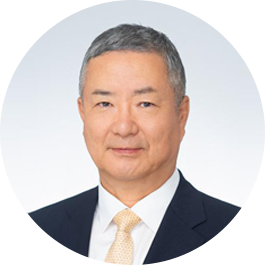
Kwon Tae-oh,
Retired Lieutenant General, Republic of Korea Army
May 9 is Victory Day in Russia, marking its World War II triumph. Unlike Europe’s May 8 observance, Russia celebrates a day later as the German surrender was signed after midnight Moscow time. Russians honor veterans with flowers, visit the Tomb of the Unknown Soldier, and join the “Immortal Regiment” march with photos of relatives who served. The day’s highlight is a grand military parade in Red Square.
Red Square lies at the heart of Moscow, flanked by historic landmarks like the Kremlin, Saint Basil’s Cathedral, GUM department store, and the State Historical Museum. Walk past the museum opposite Saint Basil’s and turn left, and you’ll encounter the “Eternal Flame” outside the Kremlin walls—a solemn tribute to those who perished in World War II, guarded around the clock by ceremonial troops. Together with the thousands of teardrop-shaped glass beads in the Victory Museum, symbolizing the sorrow of soldiers’ mothers, the scene powerfully reflects Russian patriotism.

Major international events organized by states often serve as strategic tools to elevate national prestige and attract worldwide attention. This is why countries pursue hosting the Olympics or World Expos—to showcase national strength and gain diplomatic capital.
Similarly, military parades or weapons exhibitions can highlight a country's strategic assets. Russia uses Victory Day not just as a celebration, but as a reminder of its role as a victorious Allied power and a vow to prevent the recurrence of wars that claimed over 20 million lives.
This year marked a milestone anniversary—years ending in “5” or “0” tend to be commemorated with larger events. The 2024 ceremony drew leaders from 27 nations, including Chinese President Xi Jinping, and featured military contingents from 13 countries. Although South Korea received an invitation, it ultimately declined to attend after weighing various factors.
There was speculation that Kim Jong-un might attend, potentially creating a symbolic moment featuring the leaders of China, Russia, and North Korea together. However, this scenario did not materialize. Instead, North Korea sent a high-level military delegation, including Colonel Generals Kim Yong-bok and Ri Chang-ho, Major General Shin Geum-chul, and Ambassador to Russia Shin Hong-chol—all closely involved in North Korea’s military cooperation with Russia.
Instead, Kim Jong-un visited the Russian Embassy in Pyongyang with his daughter Kim Ju-ae and gave a congratulatory speech, emphasizing the “unbreakable alliance” between the two countries. This was a gesture of goodwill in place of an actual visit. His absence from the ceremony, contrary to earlier predictions, appears to stem from several key reasons.
First, concerns about Kim’s safety were likely a major factor. Given his reluctance to fly, he would have needed to travel by train, a round trip of more than ten days. Ensuring his security over such a long journey—particularly to a country engaged in an active war—would have been extremely difficult.
Second, Kim may be saving his appearance for a more strategic moment—June 19, the first anniversary of the North Korea-Russia “Comprehensive Strategic Partnership.” For Pyongyang, it’s a prime chance to boost its global profile and highlight support for Moscow. A visit now could lessen the impact. A Kremlin aide’s comment about an “upcoming interesting meeting” supports this view.
Third, North Korea’s internal situation seems increasingly unstable. On April 27, Rodong Sinmun officially revealed the troop deployment to Russia, likely causing unrest among the population.
Soon after, the long-anticipated return of the Pyongyang Spring International Trade Fair was suddenly canceled—reportedly to prevent outside information from entering the country. Then, on May 8, North Korea fired multiple missiles into the East Sea for over an hour. These developments suggest mounting domestic anxiety following the troop dispatch disclosure.
Going forward, Russia and North Korea are poised to further strengthen and diversify their relationship.
Sanctions aimed at curbing Pyongyang’s nuclear and missile programs have largely lost impact, given active support from Russia and China. Meanwhile, the U.S.’s continued engagement has only elevated North Korea’s global posture. The trade wars initiated under the Trump administration have also fostered tighter anti-American alliances. Judging by the scale and rhetoric of countries attending Russia’s Victory Day,
a global anti-U.S. coalition appears to be forming. Closer ties between Moscow and Beijing are clearly to Pyongyang’s benefit, while South Korea finds itself increasingly vulnerable—both economically and in terms of national security.
Although upcoming elections in South Korea—held amid the country’s worst political vacuum since the Korean War—may bring unexpected breakthroughs or policy shifts, the severe national security and economic crises currently unfolding show no clear signs of short-term resolution.
-
PREV [News&Issue]
-
NEXT [Feature Article]