

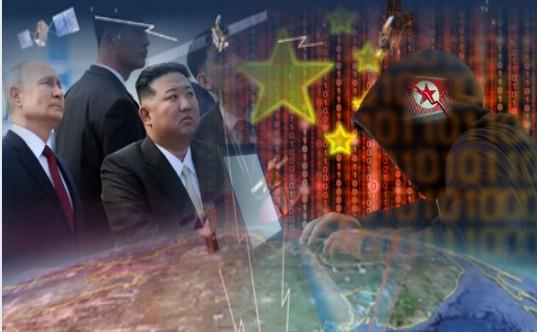
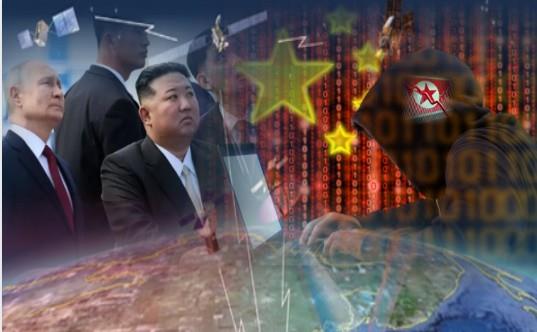
North Korea Confirms Troop Deployment, Flaunts Russia Alliance—Targets China with Cyberattacks

Lee Seung-hyun
Research Fellow at the SAND Institute
I. North Korea–Russia Ties Move Beyond Troop Dispatch to Open Military Coordination
Six months after initially deploying troops to Russia, North Korea has officially acknowledged the move and is now actively highlighting its cooperation with Moscow to signal a strengthened military alliance.
North Korea’s Rodong Sinmun devoted its April 29 front and second pages to praise from President Putin and comments by Russian defense officials. The KCNA also shared the story with international audiences.
Meanwhile, a delegation led by Pak Yong-il of the KPA General Political Bureau departed for Russia to attend the 3rd International Anti-Fascist Congress—underscoring deepening ties.
Russia responded enthusiastically, with state TV host Vladimir Solovyov posting Telegram videos of North Korean troops training in Kursk—showing grenade drills, trench maneuvers, and marching while singing military songs.
These scenes suggest more than joint exercises; they hint at a real battlefield alliance. Reports indicate North Korean troops are already engaged in combat, signaling direct involvement.
With the battlefield tilting in Russia’s favor, Kim Jong-un is likely using the troop deployment as domestic propaganda, framing it as strong leadership against external threats to strengthen internal control and his image.
Portraying Kim as a wartime leader could be politically useful amid deepening isolation, economic decline, and public fatigue with hereditary rule—making the troop deployment a bold move to rally domestic unity.
Some analysts link the KPA delegation’s visit to Russia’s upcoming Victory Day parade on May 9, speculating that Kim Jong-un may attend or send troops. However, his past avoidance of multilateral events fuels continued skepticism.
II. Cyber Espionage Against China: A Silent Offensive
While aligning openly with Russia, North Korea appears to be targeting China—its traditional ally—with covert cyberattacks to steal military technology.
Some reports say an IT worker from the Workers’ Party’s Munitions Industry Department was arrested in Shenyang while attempting to obtain Chinese military secrets.
China’s Foreign Ministry dodged questions, with spokesperson Guo Jiakun citing lack of information. The issue was also omitted from the ministry’s usual press briefing transcript.
This suggests China aims to contain the issue quietly. Despite economic reliance on China, North Korea continues bold espionage efforts to enhance its strategic capabilities.
At first glance, Pyongyang seems to be balancing ties with both Russia and China. But beneath the surface, it is recalibrating its strategy.
Through military aid to Russia, North Korea hopes to secure arms, food, and fuel. Against China, it’s seeking to extract technology to bolster its own defense systems.
China likely won’t criticize North Korea publicly, but behind the scenes, it may step up internal monitoring, reflecting growing distrust.
By deepening military ties with Russia and targeting China for tech theft, North Korea is playing both sides—redefining its role in the traditional Pyongyang–Beijing–Moscow triangle.