

Kim Jong-un–Donald Trump Summit Outlook – From North Korea’s Perspective

Park, Hyeong Jung,
Emeritus Research Fellow, Korea Institute for National Unification
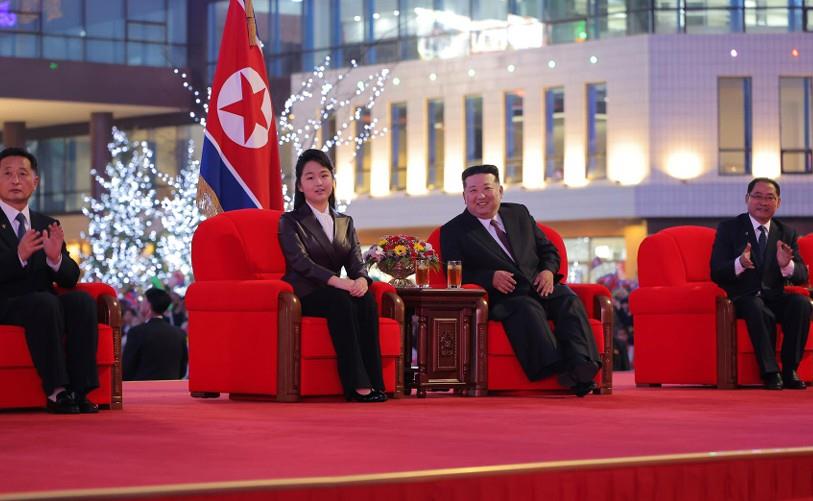
Since being named the Republican nominee on July 18, 2024, Donald Trump has repeatedly expressed optimism about meeting Kim Jong-un again. He’s referred to North Korea as a nuclear power, highlighted his personal rapport with Kim, and noted ongoing outreach. This article examines four key points: the current state of U.S.–North Korea relations under Trump, North Korea’s official view of his apparent enthusiasm, how the North is preparing for a possible summit, and whether such a meeting is likely to occur.
U.S.–North Korea Relations Since Trump’s Return
As of mid-April, both Washington and Pyongyang are taking dual-track approaches. Trump is sending conciliatory signals to Kim Jong-un, but his administration still emphasizes “complete denuclearization” and maintains military pressure and sanctions. North Korea, meanwhile, remains officially hostile in its rhetoric and military stance, yet likely evaluates the risks and potential opportunities in Trump’s seemingly friendly posture.
North Korea’s Official Response to Trump’s Enthusiasm
On July 23, 2024—just days after Trump accepted the Republican nomination—North Korea responded, stating that the future of DPRK–U.S. relations hinges on America’s actions.1) A KCNA commentary outlined four points: First, while Trump emphasizes personal ties, diplomacy must be grounded in national interests. Second, the U.S. proposal for dialogue is viewed as a tactic to weaken North Korea and is therefore rejected. Third, the U.S. is seen as untrustworthy, often delaying talks and breaking promises with each administration change. Fourth, after 80 years of hostility, Washington’s calls for dialogue lack credibility.
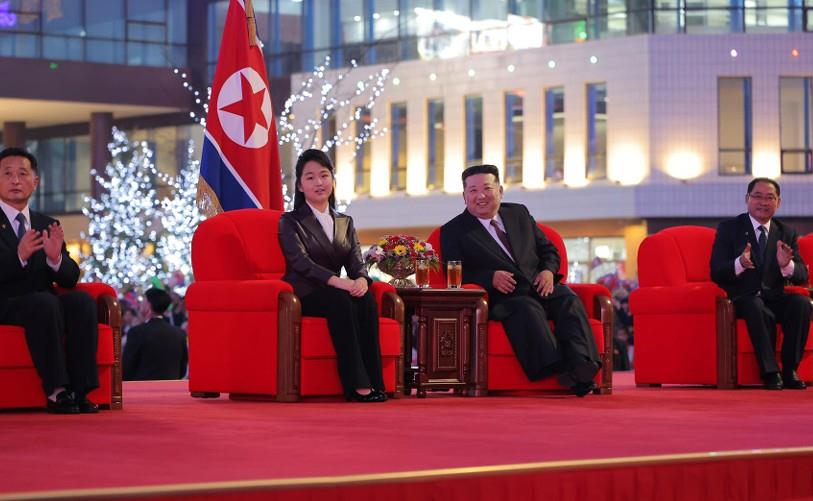
After Donald Trump was confirmed as the 47th U.S. President on November 6, 2024, North Korea announced a “maximum hardline strategy toward the United States” during the 11th Plenary Meeting of the 8th Central Committee of the Workers' Party in late December, citing long-term national interests and security.2) The details of the strategy, however, were not made public.
Around Trump’s inauguration on January 20, 2025, North Korea’s Foreign Ministry issued multiple statements reaffirming this hardline stance (Jan. 15, 26; Mar. 9). By late March, Pyongyang criticized the Trump administration for easily overturning previous policies—except for its “hostile policy” toward North Korea, which it claimed had only intensified.3)
North Korea’s Strategic Thinking on a Summit
Trump’s open eagerness may lead Pyongyang to believe that it can raise the bar for U.S. concessions. From the North’s viewpoint, Washington seems to be approaching them—or Russia, in the Ukraine conflict—from a position of weakness. Pyongyang is likely monitoring how Trump deals with Putin, especially if he sidesteps Ukraine and opts for direct talks. North Korea may aim to apply the same dynamic to U.S.–North Korea relations. Kim Jong-un could demand generous, one-sided concessions upfront, and then leverage those to push for more—while staying deliberately vague on whether he will even agree to a summit.
Kim Jong-un likely has a firm grasp of how Trump negotiates—and where he is vulnerable. It’s not just North Korea; countries like South Korea, the U.S.’s Western allies, China, and Russia have all scrutinized Trump’s behavior and tailored their strategies accordingly. Trump is known to use overt flattery and subtle threats to push his agenda. Kim is expected to take a similar approach with him. In particular, Kim may closely study Putin’s dealings with Trump to find effective tactics. But fundamentally, Kim doesn’t trust Trump—and that mistrust will frame how he engages with him.
Kim is likely biding his time, watching for the right moment to signal interest in a summit. But choosing when to act won’t be easy. Trump’s unorthodox policies have created an unusually high level of uncertainty. North Korea will likely observe how the domestic and global crises triggered by Trump evolve before making any move. They’ll be looking for the moment when Trump is most desperate to meet—when his bargaining power is weakest. Whether that moment will ever arrive remains to be seen.
Kim Jong-un–Donald Trump Summit Outlook
There’s a real chance that Trump and Kim might eventually reconnect and hold a summit. While nuclear issues will likely be the stated topic, both sides may have very different motives. For Trump, a summit could dominate global headlines, boost his image, and distract from political troubles. If Kim plays along, Trump wins big; if not, there’s little to lose. For Kim, just entertaining the idea of a summit elevates North Korea’s status and reinforces the legitimacy of its nuclear program. It also showcases North Korea as an equal to the U.S., boosting Kim’s leverage with China, Russia, and especially South Korea. Even if no summit takes place, the buzz around renewed contact would still benefit both leaders.
For real negotiations to happen, both countries would need to face severe consequences from inaction—but that doesn’t seem to be the case yet. The North Korean nuclear issue is notoriously difficult, largely due to deep mutual distrust. Without a shared sense of urgency, it’s hard to start talks—and even harder to keep them going. In fact, it may take a new and dangerous nuclear standoff to push both sides into serious negotiations.
The odds of a summit also depend on how high the Trump administration ranks the North Korean nuclear issue on its priority list—and the answer is likely: not very high. A recent Pentagon memo titled “Interim National Defense Strategic Guidance” suggested that the U.S. should accept greater risks in other areas in order to focus on its rivalry with China. Based on this thinking, the North Korea issue may be left for South Korea, Japan, and China to handle.
Some experts speculate that if the Russia–Ukraine war ends, a Kim–Trump summit could be arranged in Vladivostok under Putin’s mediation. But this is unlikely. For such a scenario to unfold, Trump would have to end the war on terms acceptable to Putin and successfully execute a “reverse Kissinger strategy” to draw Russia away from China. Neither condition seems probable. If the war ends poorly for Putin, he may double down on his support for North Korea to pressure the U.S. Moreover, Putin could exploit Trump’s friendliness toward Russia for unilateral gains.