

North Korea Seeks to Revive Grassroots Control:
The 3rd Inminbanjangs Meeting and Daily Life Under the Regime
Jeong Joon-hee, Auditor,
Korea Institute for National Unification (KINU)
□ Inminban: The Capillaries of the North Korean System
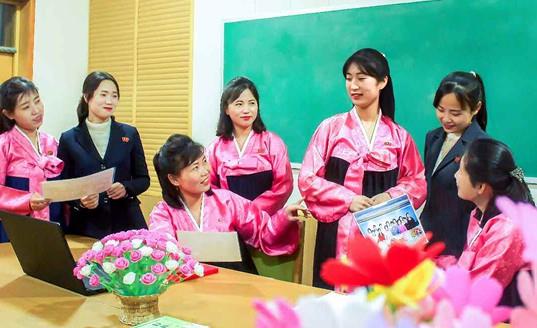
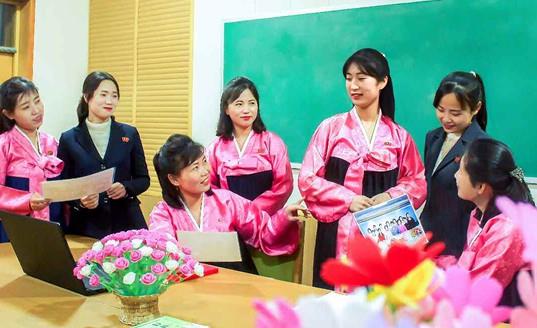
On March 16–17, 2025, North Korea held its 3rd Nationwide Meeting of Neighborhood Unit Leaders in Pyongyang. Attendees included Cabinet Premier Pak Thae-song, party and government officials, top-performing Inminbanjangs (local unit leaders), local administrators, and officials from related sectors.
The Inminban is the smallest administrative unit in North Korea, akin to neighborhood blocks in South Korea. It is defined as a grassroots social structure, formed by grouping households to enforce party policy, carry out public duties, and manage everyday life.
Inminban units handle local matters like sanitation efforts and public order through routine resident meetings. Their leaders, often politically loyal women from trusted families, are appointed by local People’s Committees. This latest meeting can be seen as a move to reactivate the regime’s grassroots control network.
□ Background of the Nationwide Meeting of Inminbanjangs
During the economic collapse of the 1990s, North Korea’s social system weakened, rendering the Inminban ineffective. But as the economy stabilized in the 2000s through limited marketization, the regime began tightening control over both society and markets. In 2007, North Korea held its first nationwide meeting of Inminbanjangs to revamp the system and align it with the Songun (military-first) era (Minju Joson, January 25, 1997). However, with no real incentives and increasing mobilization demands, public resistance grew, and Inminban control was reduced to merely maintaining the status quo.
In Kim Jong-un’s early years, North Korea held over 30 grassroots organization events between 2012 and early 2014 to push task completion.
He appeared at major grassroots events—like the Youth League and Women’s Union meetings, the 4th Party Cell Secretaries Conference, and the Three-Revolution Team gathering—to show closeness to the people. This helped him present himself as both relatable and absolute leader, reinforcing his fragile authority. Now, over a decade into his rule, with changes in both society and foreign policy, the regime sees this as a timely moment to reassert control through grassroots structures.
Since early 2024, North Korea has faced growing strain from massive projects like the 20x10 Regional Development Policy and nationwide housing construction—both championed by Kim Jong-un. To ensure their success, the regime has pushed all citizens and party members into action. This has made it necessary to tighten mobilization efforts, suppress discontent, and root out ideological instability.
At this year’s meeting, Deputy Prime Minister Kim Myong-hun emphasized the need to firmly establish socialist moral discipline and launch a mass campaign against anti-socialist behavior, signaling the regime’s direction. The Inminban was praised for its role in ideological education and party policy promotion over the past decade. At the same time, the regime called for a full overhaul, outlining tasks like honoring past leaders, addressing livelihood issues, promoting patriotism, collecting idle materials, and eliminating legal and safety risks—all to boost mass mobilization.
A key backdrop to the meeting was the enactment of the People’s Unit Organization and Operation Law in December 2023. The law aims to reorganize North Korea’s administrative system by enhancing the role of local unit leaders. It outlines their duties, leadership structure, and status, describing them as loyal servants and messengers of the people.
The law promises preferential treatment for Inminbanjangs, including living expenses and full food rations—an effort to address the disparity from the 2002 reforms, which raised factory workers’ wages by about 30 times while barely adjusting theirs. It also outlines their wide-ranging duties in mass mobilization for state projects.
The law also emphasizes monitoring household conditions, promoting socialist lifestyles, supporting core groups like revolutionary families, and encouraging ideological campaigns such as “learning from model citizens.” It calls for reporting suspicious individuals, cracking down on anti-social behavior, backing the military, and preparing for national resistance—effectively requiring involvement in nearly all state affairs. The Inminban system has evolved to reward those enforcing control, reinforcing the regime’s surveillance network. This legal framework also provides a basis for assessing and revitalizing Inminban units nationwide, laying the groundwork for reorganizing local populations ahead of the expected 9th Party Congress next year.
□ Tightening Social Control and Escalating Public Burdens
The 2010 Jasmine Revolution in Tunisia sparked a wave of anti-government protests across authoritarian regimes in the Middle East and Africa, raising global speculation about whether similar uprisings could reach China or North Korea. In North Korea, however, mass resistance has been absent—likely due to the regime’s strict surveillance system and tightly structured organizations, from the Children’s Union to the Youth League, designed to control ideology and enforce conformity.
Despite tight controls, the spread of marketization and Korean Wave culture has sparked a quiet push for new ideas and personal freedom among younger North Koreans. In response, Kim Jong-un has introduced a series of strict laws—often called the “three evil laws”—including the Reactionary Ideology and Culture Rejection Law (2020), the Youth Education Guarantee Law (2021), and the Pyongyang Cultural Language Protection Law (2023), all aimed at ramping up surveillance and punishment. The 2023 People’s Unit Organization and Operation Law and the recent meeting of neighborhood unit leaders also reflect efforts to more systematically control youth behavior and thought.
Article 19 of the 2023 People’s Unit Organization and Operation Law requires Inminbanjangs to establish systems for citizen reporting, self-defense patrols, and strict lodging registration within their local units. This effectively mandates routine surveillance and obliges reporting of anyone merely suspected of wrongdoing. Such measures violate international legal norms by ignoring the presumption of innocence and enabling arbitrary arrests based on suspicion alone. The law also permits late-night home inspections, posing a serious threat to privacy. Despite these human rights concerns, social control under the regime is expected to grow even stricter.
At the same time, the law includes provisions aimed at addressing long-standing issues in livelihoods and welfare, raising questions about how it should be interpreted.
Articles 30 and 31 mandate full food rations and living expenses for Inminbanjangs, potentially easing the economic burden on ordinary households. Article 10 also outlines their welfare role, requiring them to assess residents’ health and living conditions and take timely action when needed.
Article 14 requires Inminbanjangs to care for retirees and welfare recipients, while Article 24 bans the long-standing practice of collecting money or goods from residents under false pretenses. Article 38 sets penalties for violations.
These provisions appear to balance tighter social control with policies framed as pro-people. While they may curb corruption tied to labor mobilization, it’s unclear whether North Korea can afford expanded welfare nationwide. There’s also the risk that the regime will shift the burden to Inminbanjangs, who may pass it on to residents, repeating past exploitative patterns.
North Korea currently faces the strain of too many high-priority projects being pursued at once under Kim Jong-un. While the regime seeks to boost mass mobilization and control to ensure their success, the burden on citizens is overwhelming. In addition to seasonal land management efforts, they’re expected to support raw material supply centers and infrastructure for the 20x10 Regional Development Policy—such as electricity, roads, and water—alongside reforestation and building raw material production bases.
This year, Kim Jong-un added three more key construction targets: advanced medical facilities, science and culture hubs, and grain management centers—further increasing the workload on citizens. Combined with troop deployments to Russia and growing material demands, public fatigue is rising. If these burdens go unaddressed and the regime continues relying on superficial “people-first” policies and tighter control, rising dissatisfaction and a weakening of the system are inevitable.
Going forward, North Koreans will likely continue to support the regime by adapting to the changing Inminban system—but they also hold the potential to become a driving force for change.
□ Strategic Response
The more North Korea tightens internal control, the deeper its contradictions will grow—and the harsher life will become for its people. South Korea must present itself as a compelling model, so that both North Korean leaders and citizens see unification as the only hopeful path. To do so, South Korea’s liberal democracy must be strengthened to live up to its ideals. Without reform, even successful unification could amplify the South’s own flaws and erode its meaning.
In the short term, South Korean and global culture should serve as a source of hope and comfort for North Koreans. To support this, every effort must be made to deliver uncensored information into the North. Like the U.S.-run Radio Free Asia, similar broadcasts should be supported from third countries, and South Korea’s KBS Hanminjok Radio should expand its transmission capacity to ensure easier access in North Korea and nearby regions.
North Korea should also be encouraged to increase its engagement with the outside world. As Kim Jong-un seeks to present the country as a more “normal state,” indirect support for hosting international events and projects could be valuable. Even under sanctions, expanded human and material exchanges—such as through tourism—can help ease social control and gradually shift North Korean society.
-
PREV [Defectors' Podium]
-
NEXT [Feature Article]